Does Your Calgary-Area Horse Barn Need Insulation?
Does Your Calgary-Area Horse Barn Need Insulation?
Does Your Calgary-Area Horse Barn Need Insulation?
Most horse barns around Calgary don't need to be heated like a house, but they do need to control moisture, drafts, and temperature swings, and that's a job for the right insulation, not just more of it. For acreage owners in Springbank, Priddis, Bragg Creek, Okotoks, and across Rocky View County, barn insulation is less about keeping horses "warm" and more about keeping the building dry and the air quality healthy through an Alberta winter.
Here's what actually matters when insulating a horse barn in this climate, and where spray foam fits in.
Why Horse Barns Are a Different Insulation Job Than a House
Horses generate a surprising amount of body heat and moisture, through breathing, sweat, and manure. In a poorly ventilated or poorly insulated barn, that moisture condenses on cold surfaces: metal roofing, uninsulated walls, and ceiling joists. Over time, that condensation leads to:
- Rot in wood framing and stall boards
- Rust on metal roofing and hardware from the inside out
- Mold growth, which is a real respiratory concern for horses
- Ammonia buildup from urine and manure, which is worse in a sealed-up, poorly ventilated space
This is why barn insulation isn't just a comfort upgrade, it's tied directly to structural longevity and horse health. A barn that's too airtight without proper ventilation can actually make ammonia and moisture problems worse, which is why insulation and airflow need to be planned together, not separately.
Where Insulation Matters Most in a Barn
Not every part of a barn needs the same treatment. The areas that make the biggest difference for Calgary-area barns are:
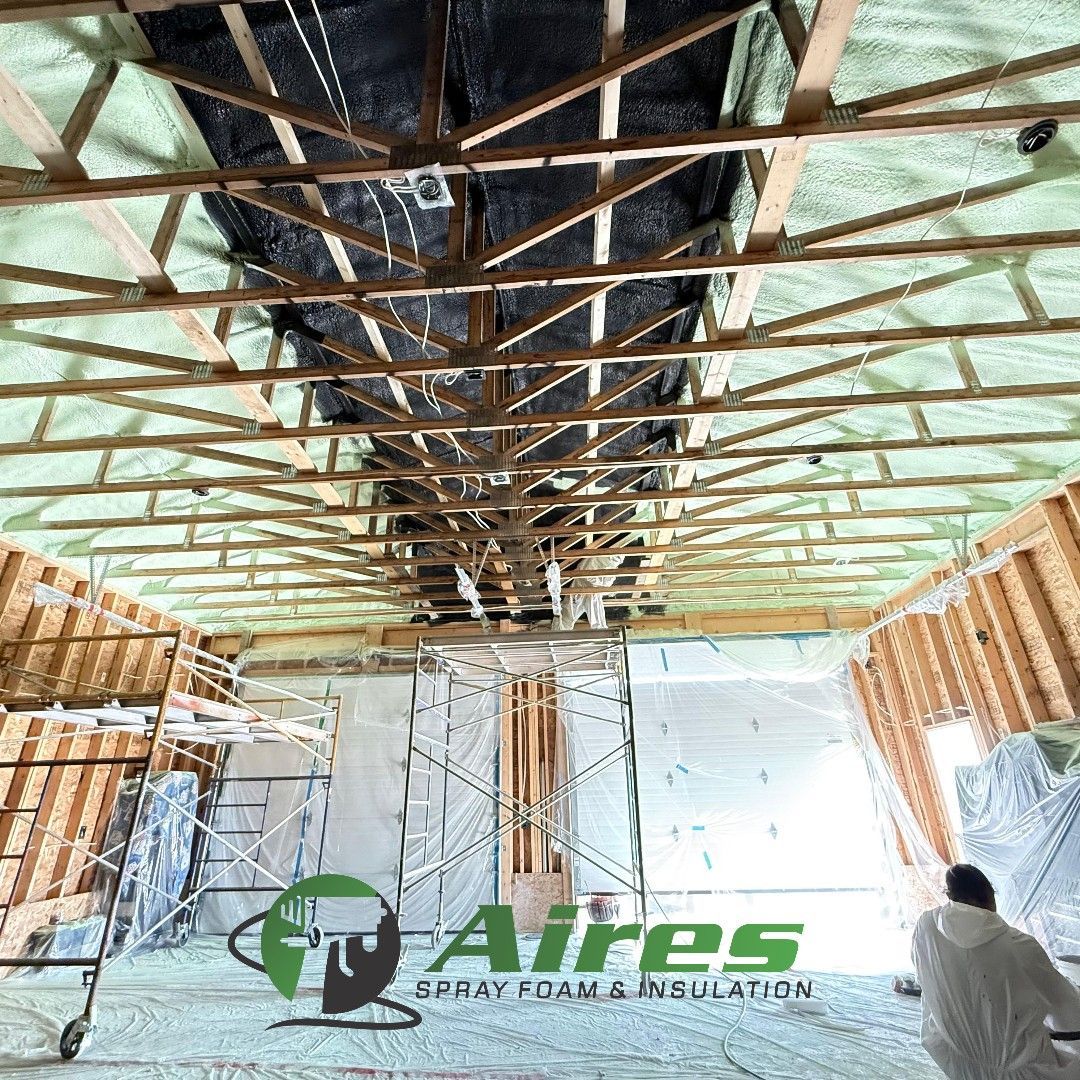
Roof and ceiling — Heat rises, and a lot of moisture-driven condensation happens at the roofline where warm, humid air meets a cold metal roof. Insulating here reduces "barn rain", condensation dripping down in cold snaps.
Tack rooms and feed rooms — These spaces often get insulated and semi-heated even when the rest of the barn isn't, to protect leather, medications, and feed from freezing and humidity swings.
Foaling stalls or areas used for young, old, or recovering horses — Where more temperature stability is actually needed for the animals' health.
Walls facing prevailing wind — Calgary's west winds and chinook-driven gusts hit exposed acreage buildings hard; insulating and air-sealing the windward side cuts down on drafts through the stalls.
Why Spray Foam Works Well for Barns Specifically
Spray foam's moisture-blocking properties are a natural fit for barn environments, for a few reasons:
- It creates a continuous barrier that resists the exact condensation problem barns are prone to
- Closed cell spray foam in particular won't absorb moisture or support mold growth the way fiberglass batt can once it gets damp
- It adheres to metal roofing and irregular barn framing better than batt insulation, which is hard to fit properly around trusses, wiring, and uneven surfaces
- It doesn't sag or settle over time, which matters in a building that isn't climate-controlled like a house
That said, ventilation still has to be part of the plan. Insulating a barn without addressing airflow can trap ammonia and humidity instead of solving the problem, so a proper barn insulation project usually includes a look at existing vents, ridge caps, and airflow paths, not just the insulation itself.
What About Fire Safety?
This comes up often with barn owners, given how much dry hay and bedding is typically stored nearby. Spray foam is required to be covered by an approved thermal or ignition barrier in most applications, the same as it would be in a house. A proper installation accounts for this, and it's worth confirming with any contractor how they're addressing code requirements for exposed foam in an agricultural building specifically, since barns aren't always built or inspected the same way as residential structures.
Is It Worth Insulating an Existing Barn, or Only New Builds?
Both come up regularly. New barn construction is the easiest scenario, since insulation goes in before the interior finishing. But plenty of acreage owners insulate existing barns too, usually starting with the roofline and any rooms where humidity or freezing is causing the most damage, like tack rooms or feed storage, before expanding to the rest of the structure if needed.
If you're dealing with condensation, drafts, or a tack room that won't hold temperature, the Aires team is easy to reach, no hard sell, just straight answers on what your barn actually needs.