
Attic insulation in Calgary
Ice dams in Calgary usually start with warm air leaking into the attic. We seal the leaks first, then blow in fibreglass or cellulose to the depth you need.
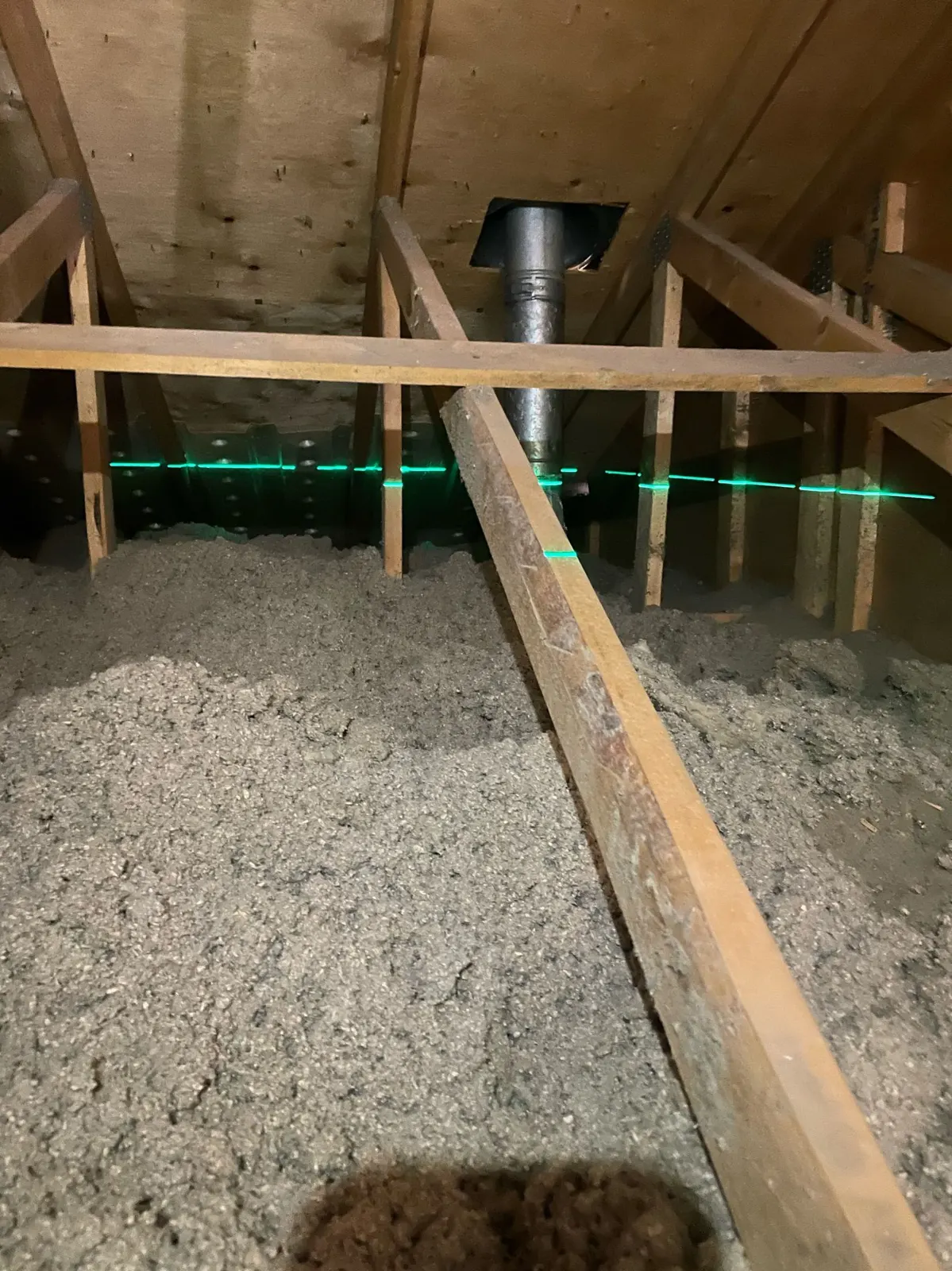 Attic, blown-in fibreglass
Why Calgary attics get ice dams
Aires Spray Foam & Insulation insulates attics in Calgary by sealing air leaks at the ceiling first, then blowing in fibreglass or cellulose to the required depth. We are based in Edmonton and Calgary, with a local team for attic work, removal and vent repair.
An ice dam is a ridge of ice along the eave that traps meltwater behind it. The water backs up under the shingles and finds its way into the ceiling. Most people blame the roof. The real cause is usually heat leaking out of the house and warming the roof deck from underneath.
Chinooks make it worse. Snow that would sit quietly all winter in Edmonton melts on a warm Calgary afternoon, runs to the cold overhang and freezes again by night. If the attic is leaking warm air, it does this every time the arch comes in.
More insulation helps, but only once the leaks are closed. A thicker blanket on top of an air leak is still an air leak.
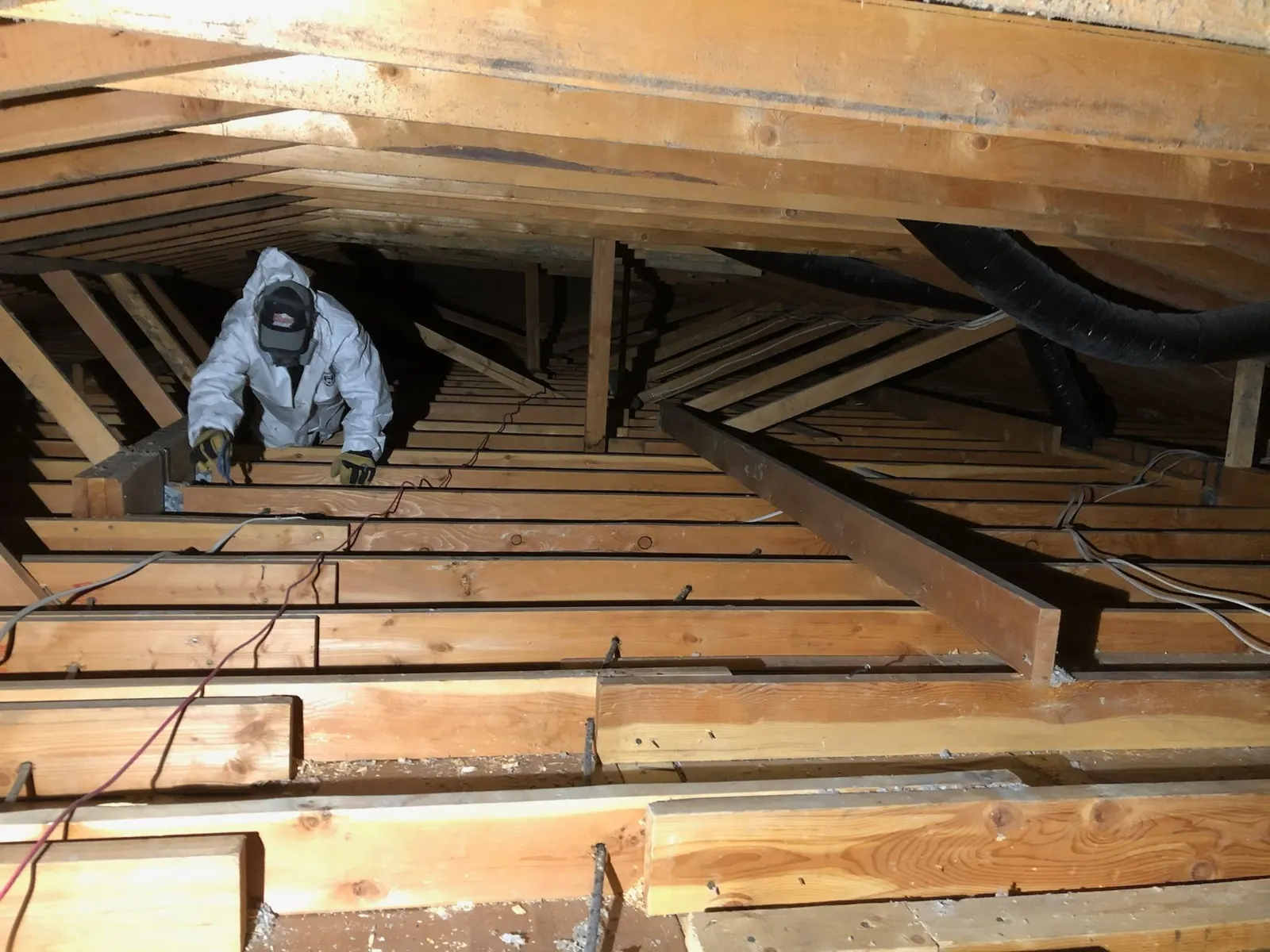
Air sealing comes before insulation
Before any insulation goes in, we go after the holes in the ceiling. These are the usual leaks in a Calgary attic.
- Pot lights and ceiling light fixtures
- The attic hatch, which is often just a loose board
- Plumbing stacks and vent pipes
- Electrical wires and boxes through the top plates
- Bathroom fan housings
- Gaps around chimneys and flues, which need a fire-safe seal
- Top plates over interior walls
- Dropped ceilings and bulkheads over kitchens
Any one of these is a small hole. Together they can add up to a big one, and every one is a path for warm, moist air into the attic. That air carries moisture as well as heat, so it also leaves frost on the underside of the roof deck, which drips when the next chinook rolls in.
Blown-in fibreglass or cellulose
Both work in a Calgary attic. The right one depends on the house, what's already up there and your budget. Our blown-in insulation page goes into more detail.
| Blown-in fibreglass | Blown-in cellulose | |
|---|---|---|
| Made from | Sand and recycled glass | About 85% recycled paper, treated with borates |
| R-value per inch (approx.) | R-2.5 to R-3.7, depending on product | R-3.2 to R-3.8 |
| Settling | Holds its R-value well | Settles more over time |
| Moisture | Dries out more easily | Holds moisture longer |
| Weight | Lighter | Denser and heavier |
| Pests | Not a food source | Borates resist pests and mould |
With all the freeze and thaw a Calgary attic sees, the way fibreglass dries out and holds its depth counts in its favour. Cellulose makes sense on acreage farmhouses where mice are the bigger worry. Spray foam fits cathedral and vaulted ceilings, where there's no attic floor to blow onto. The main attic insulation page covers all three.
When the old insulation has to come out
Plenty of attics can be topped up. Some can't. If the insulation is wet, mouldy, smoke damaged or full of mouse droppings, or the attic has old wood chips, it needs to come out before anything new goes in. We remove it with an industrial vacuum and haul it away.
Signs your attic needs more than a top-up:
- Ice dams or icicles along the eaves
- Water stains on the ceiling below
- Insulation that's flattened, clumped or below the top of the joists
- Droppings, nests or a smell
- Frost on the nails or roof deck in winter
- Rooms upstairs that are much colder or hotter than the rest
One warning: grey-brown, pebbly vermiculite in an older home can contain asbestos. Don't touch it, and don't let anyone vacuum it, until it's been tested. See insulation removal for how we handle it.
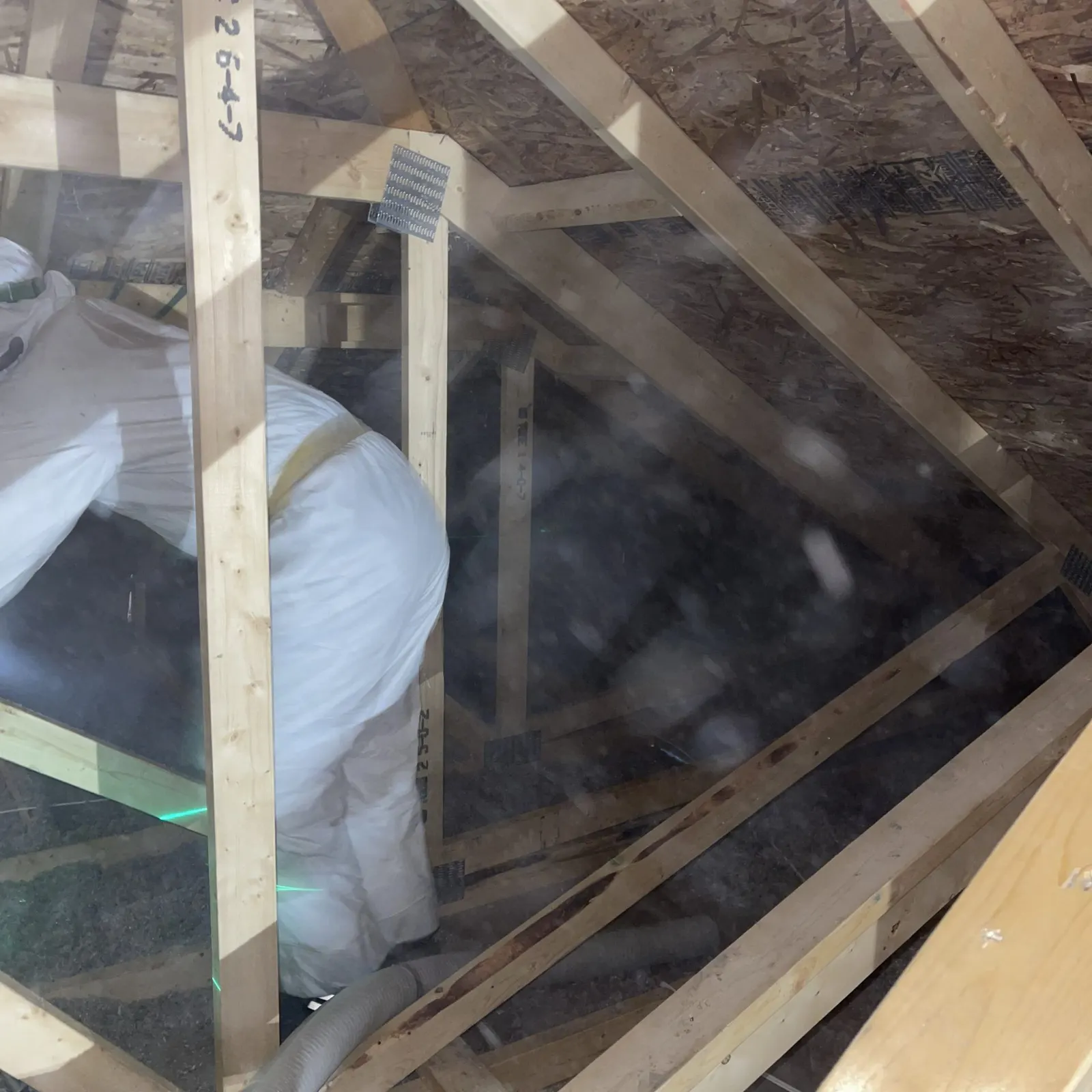
Venting keeps the roof deck cold
An attic needs air moving through it: in at the soffits, out at the roof or ridge vents. That airflow keeps the roof deck close to outdoor temperature, which helps stop melting snow, and it carries away moisture that does get in.
The usual problem is blocked soffits. Blown-in insulation pushed right to the eave can plug the intake, so we keep a channel open at the eaves before the insulation goes in. We also repair damaged vents and torn vapour barrier where we find them. That work is on our attic venting and vapour barrier page.
The order on every job is the same: seal, vent, insulate. Skip the first two and the new insulation just hides the problem.
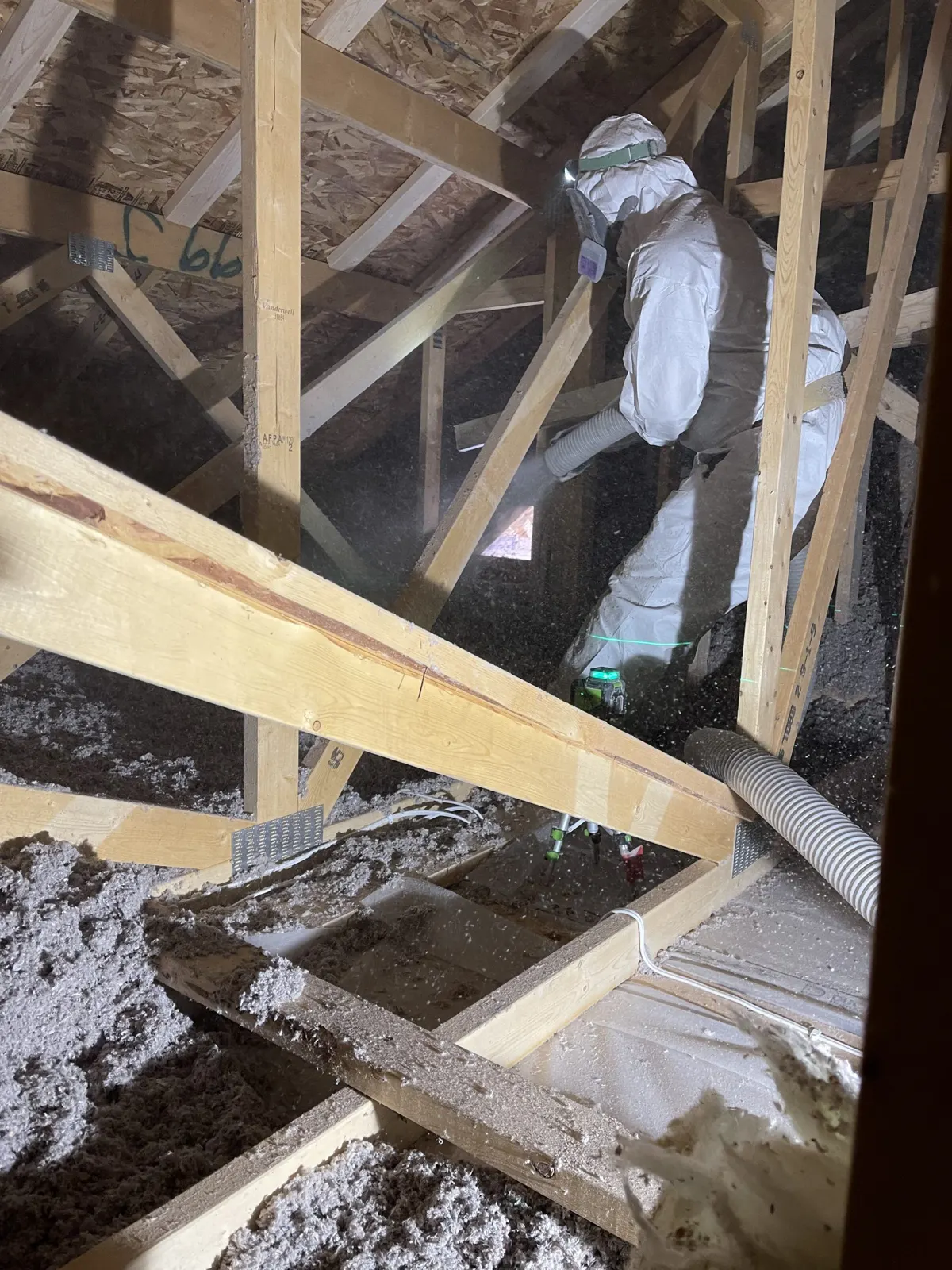
Getting a Calgary attic quote
Our Calgary team plans each attic job around access, removal needs, air sealing and the required insulation depth.
Send photos
A few shots from the hatch, the address and the square footage of the house. We reply within 24 hours.
Estimate
We look at depth, venting, leaks and the condition of what's there. Free.
Install
Air sealing, venting fixes and blow-in on the date in the quote, with quality checks at each stage.
Walkthrough
We walk the attic with you, then clean up. One-year workmanship warranty.
Calgary runs its own CEIP financing program. If you plan to use it, check the city's qualified contractor list first. For everything else we do in the city, see our Calgary insulation page.
Questions we get asked
What causes ice dams on Calgary roofs?
Usually warm air leaking from the house into the attic. It warms the roof deck, snow melts, the water runs down to the cold eave and freezes. Chinooks speed up the melt. Air sealing the attic floor is the main fix.
Should I choose blown-in fibreglass or cellulose?
Fibreglass holds its R-value and dries out more easily. Cellulose is denser, a little higher per inch and resists pests, but it is heavier and settles more. We'll recommend one after looking at your attic.
How much attic insulation do I need?
Many Alberta attics are upgraded to R-50, which is also the CEIP target. With blown-in fibreglass or cellulose that works out to roughly 14 to 20 inches, depending on the product.
Do I need to remove my old attic insulation?
Not always. Dry, clean insulation can often be topped up. Wet, mouldy, smoke-damaged or rodent-contaminated insulation should come out first. Vermiculite needs testing before anyone disturbs it.
How long does an attic insulation job take?
It depends on the size of the attic, how much air sealing it needs and whether old insulation has to come out first. Removal adds time. We'll give you a schedule with the written quote.
Get a free quote
Tell us what you're insulating and where. We'll book a walkthrough, measure it, and send you a written quote. Serving Calgary.