
Blow-in fibreglass
Made from sand and recycled glass. The most common insulation in Canada. Light, and it dries out more easily than cellulose if a roof leak wets it. Roughly R-2.5 to R-3.7 per inch depending on the product.
Blown-in fibreglass, cellulose or spray foam, installed after the air leaks and vents are sorted out. Most attics we see need a top-up to R-50, and some need a full strip-out first.
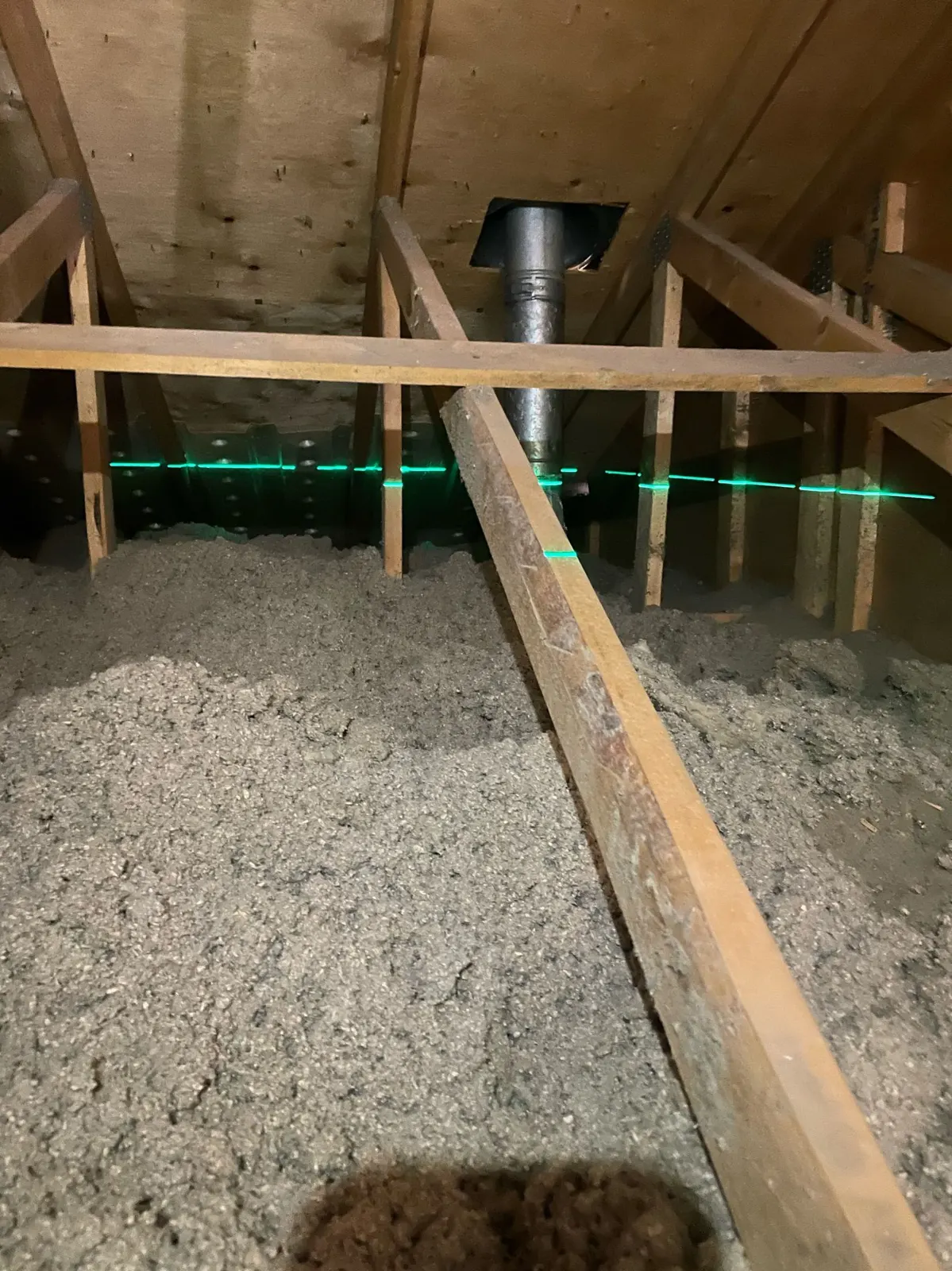 Attic topped up to R-50
Attic insulation is the layer of blown-in fibreglass, cellulose or spray foam on the attic floor or under the roof that keeps your heat in the house. Aires installs it in Edmonton, Calgary and across Alberta, sealing air leaks and checking the venting before we add any insulation.
Older Edmonton houses often have a few inches to a foot of settled insulation up there, with gaps around pot lights, the hatch and the plumbing stack. Warm, damp air leaks through those gaps, and in January it turns to frost on the underside of the roof.
So we look at what's there, fix the air leaks, make sure the roof can breathe, then bring the depth up to R-50. It's part of our insulation work.
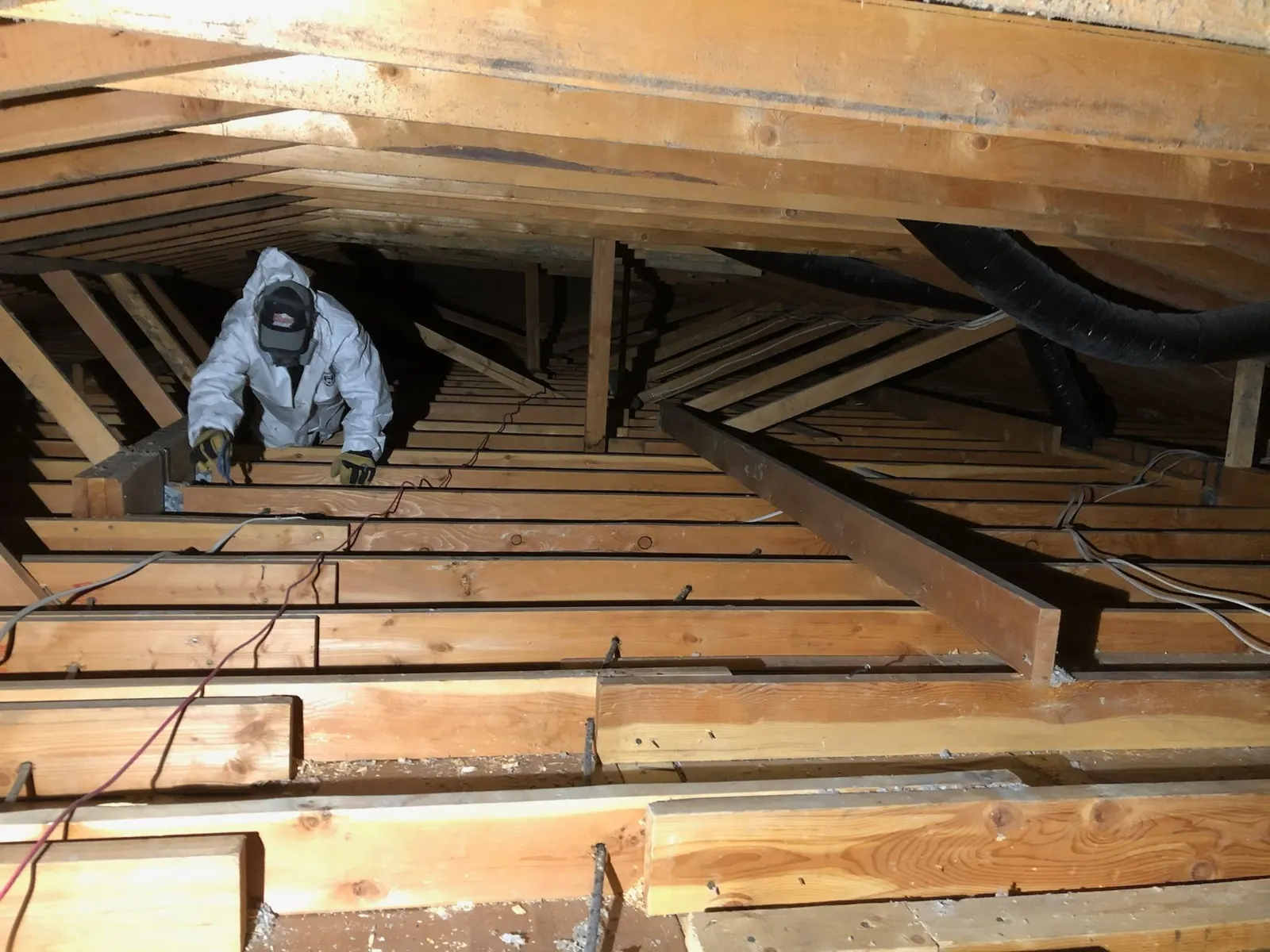
For a wide-open attic floor, loose fill is usually the best value. Spray foam earns its cost where there's no room for depth.
Made from sand and recycled glass. The most common insulation in Canada. Light, and it dries out more easily than cellulose if a roof leak wets it. Roughly R-2.5 to R-3.7 per inch depending on the product.
About 85% recycled paper, treated with borates against fire, pests and mould. Denser, with a slightly higher R per inch (around R-3.2 to R-3.8). It settles more and holds moisture longer. A good pick for farmhouses where mice are a concern.
Closed cell foam goes on cathedral and vaulted ceilings, knee walls and tight spots near the eaves. It insulates and air seals in one pass, at roughly R-6 to R-7 per inch. Too expensive to fill an open attic floor with.
The full comparison of the two loose fills is on our blown-in fibreglass and cellulose page.
You can spot most of these without climbing into the attic.
Most attics only need a top-up. If the existing insulation is dry, clean and not packed flat, it stays and we blow new material over it. It still counts toward your R-value, and you don't pay to haul it away.
Wet or mouldy insulation, smoke damage, heavy rodent contamination and old wood chips should come out first. We use industrial vacuum equipment for that, and the process is on our insulation removal page.
One exception: if you have vermiculite, we don't touch it until it has been tested for asbestos.
Ice dams start inside the house. Warm air leaks into the attic around light fixtures, wiring holes, the hatch and the top plates of interior walls. It warms the roof deck, snow melts, and the water runs down to the cold eaves and freezes until it backs up under the shingles.
Insulation slows heat but does little to stop air, since loose fill is mostly air itself. Blow 16 inches over an unsealed ceiling and the leaks are still there, just buried.
So we seal the ceiling plane first, often with spray foam, and then insulate. In Calgary, chinooks can melt and refreeze the snow several times a winter, which makes a leaky attic worse.
A vented attic pulls cold air in at the soffits and lets it out through roof vents near the peak. That airflow carries moisture away. When soffit vents are painted shut or buried under old insulation, the moisture stays and shows up as frost, then mould on the sheathing.
Before we blow in a top-up we install baffles at the eaves so the new insulation can't block the intake. If the vents themselves need repair, we handle that too. Details are on our attic ventilation and vapour barrier page.
Insulating before sealing is how attics end up with a foot of new insulation and the same ice dams.
We measure the existing depth, look for moisture, frost marks, droppings and vermiculite, and check the soffits and roof vents.
Contaminated or damaged material is vacuumed out. Clean, dry insulation stays.
Gaps around pot lights, pipes, wires, top plates and the hatch get sealed at the ceiling plane.
Baffles go in at every rafter bay along the eaves, and any vent repairs are done.
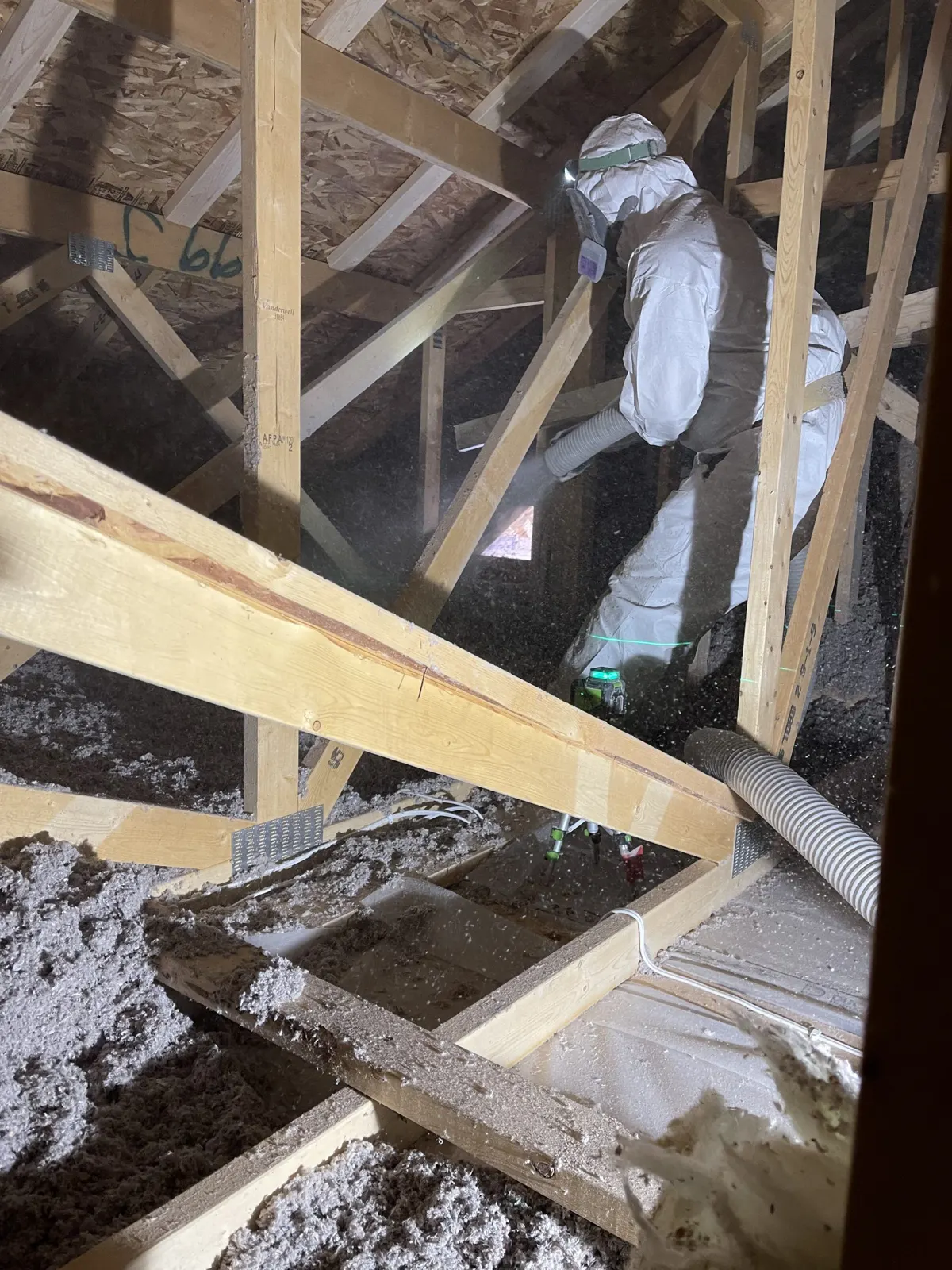
Blown-in fibreglass or cellulose to R-50, at an even depth across the whole attic floor.
We go over the finished work with you and clean up before we leave.
R-50 is our standard target for an attic, and it's also the threshold for the Clean Energy Improvement Program. Aires is a CEIP Qualified Contractor in Edmonton and surrounding approved municipalities. If your home qualifies, you can finance the work and repay it through your property tax bill over as long as 25 years.
CEIP needs at least three qualifying upgrades on a home unless you're going to net zero, so attic insulation is often paired with basement wall insulation or other upgrades. Flat and cathedral ceilings qualify at R-28. The steps are on our CEIP financing page.
We don't offer CEIP financing in Calgary, though the attic work is the same.
Our Edmonton and Calgary teams provide local attic work in both regions.
It depends on the attic's size, how much insulation is already there, which material you pick and whether anything has to come out first. We measure the depth on site and give you a written quote for free.
We aim for R-50 in a standard attic. That is also the minimum CEIP asks for when it finances attic insulation. Flat and cathedral ceilings have less room, so CEIP sets their threshold at R-28.
If the old insulation is dry, clean and not crushed, topping up is usually fine. If it is wet, smoke damaged, full of mouse droppings, or old wood chips, it should come out before anything new goes in.
Both work. Cellulose is a little denser with a slightly higher R per inch and resists pests well. Fibreglass is lighter, settles less and dries out faster if it gets wet. We'll tell you which suits your attic.
Yes. Blowing loose fill into an attic works in any season, and the house below stays heated while we work. Winter is also when frost and ice dams show you exactly where the problems are.
Tell us what you're insulating and where. We'll book a walkthrough, measure it, and send you a written quote. Serving Edmonton, Calgary and across Alberta.