
Fireproofing and fire protection coatings in Edmonton
Exposed spray foam needs a fire-rated cover before a building passes inspection, and structural steel often needs fireproofing too. We spray both.
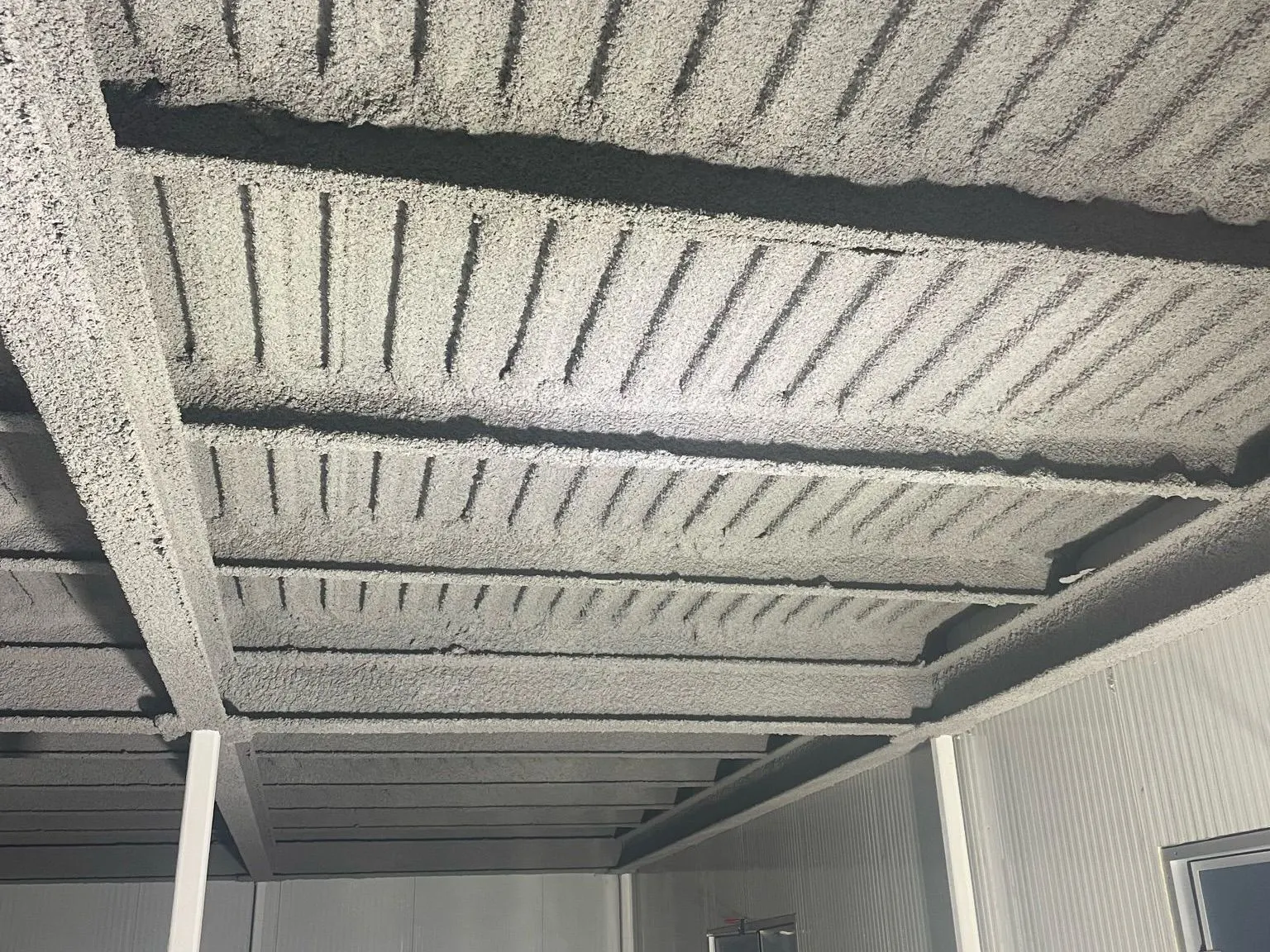 Steel deck, cementitious fireproofing
Two kinds of fire protection, one process
Aires Spray Foam & Insulation applies fire protection coatings in Edmonton and across Alberta: DC315 intumescent paint as a thermal and ignition barrier over exposed spray foam, and MONOKOTE Z-146 cementitious fireproofing on structural steel.
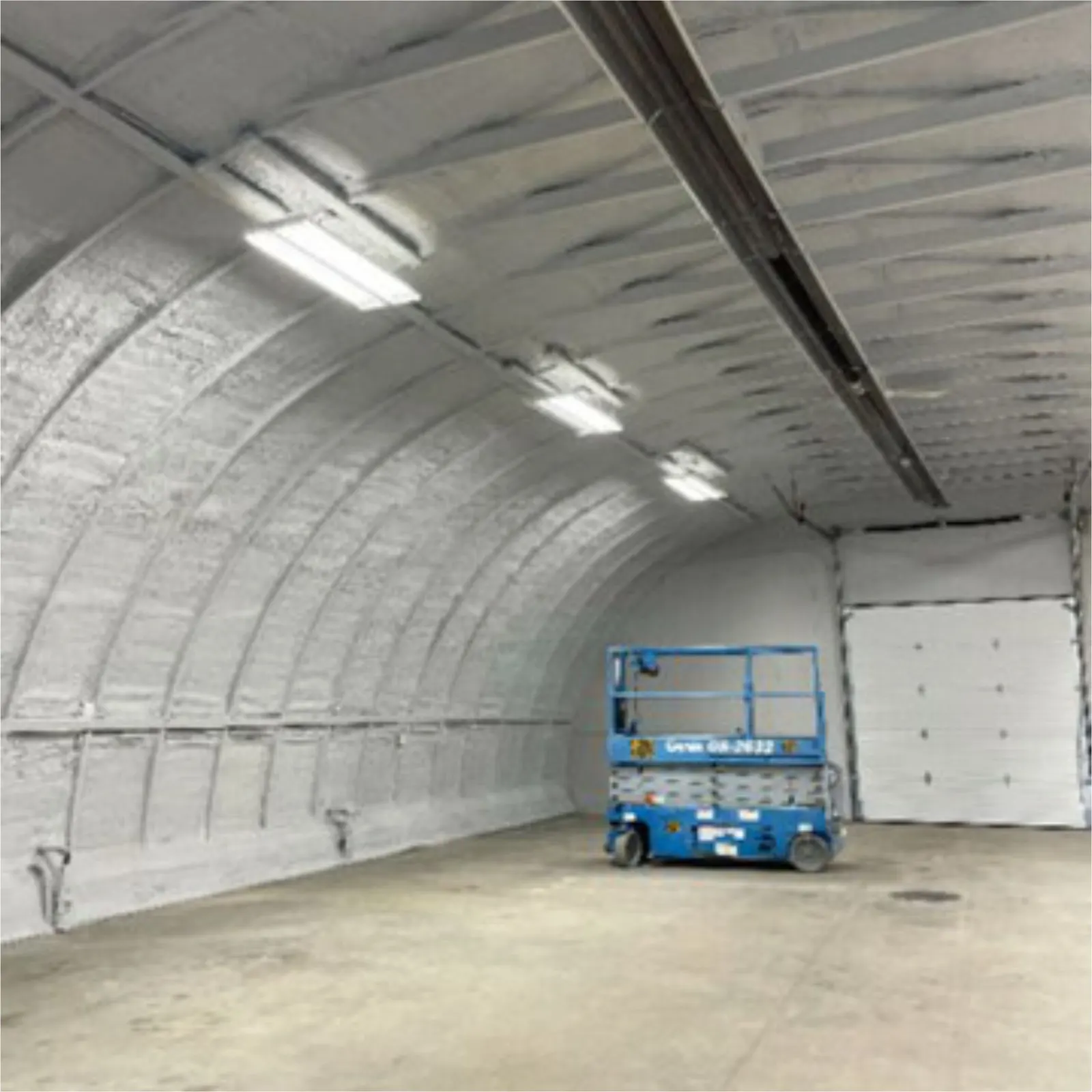
Most of the fireproofing we do in the Edmonton area follows our own insulation work. A farmer gets a Quonset foamed and wants to leave the arches open. A shop owner doesn't want to hang drywall on a 16 foot ceiling. Both need something between that foam and the people working under it.
The steel side is different. Cementitious fireproofing goes on commercial projects where an architect or engineer has called for a fire rating on the beams and columns, and the job is about hitting the thickness in the spec.
Why exposed spray foam needs a cover
Spray foam is a plastic. It insulates well, but it burns, and the code treats it that way.
The building codes used in Canada and the US require foam plastic insulation to be separated from occupied space by a thermal barrier. The most common one is 1/2 inch gypsum board. The other option is a coating that has been fire tested over foam and listed for the job. A thermal barrier doesn't make the foam fireproof. It slows the heat reaching the foam so people have time to get out before it starts to burn.
Some spaces get a lighter requirement. Attics and crawlspaces that people only go into for service can sometimes use an ignition barrier instead, which keeps a small flame from lighting the foam. Which one applies depends on the code edition, the building and how the space is used.
Pick the coating that fits the job
DC315 covers foam. MONOKOTE covers steel. They solve different problems and rarely end up on the same quote.
DC315 thermal and ignition barrier
An intumescent coating sprayed over spray foam. Listed as a 15-minute thermal barrier and as an ignition barrier, so you can leave foam exposed in shops, barns and Quonsets where drywall doesn't make sense.
Read moreCementitious steel fireproofing
MONOKOTE Z-146, a factory-mixed Portland cement fireproofing, sprayed on structural beams and columns. Up to 4 hours of fire resistance depending on the tested design. Holds up in parkades and outdoors.
Read moreSteel doesn't burn. It bends.
A steel beam won't catch fire, but it softens as it heats up and loses the strength it needs to carry the floor or roof above it. Fireproofing slows that heating. The thicker the coating and the heavier the steel, the longer the beam holds.
Ratings are written in hours, and each rating comes from a tested design that lists the steel shape and the coating thickness. That is why the spec matters more than the sprayer. We follow the thickness the drawings call for, and the inspector checks it.
The jobs that end up needing a coating
Most DC315 jobs start as insulation jobs.
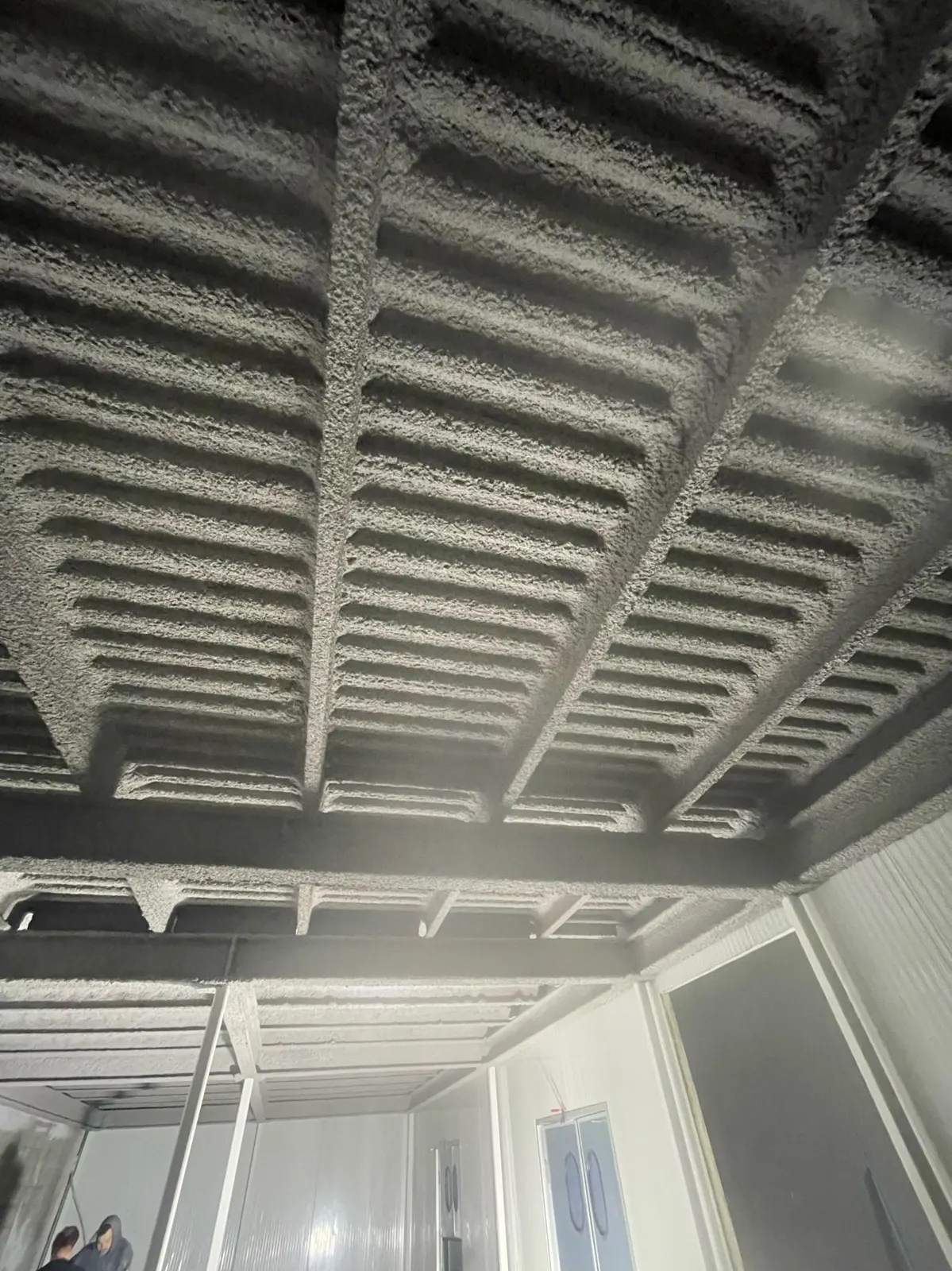
- Quonsets with closed cell foam left open on the arches
- Machine shops and heated garages with foamed walls and ceilings
- Barns and horse barns where drywall would get wrecked
- Warehouses and retail units with exposed foam on the deck
- Parkades and mechanical rooms with structural steel
- Exterior steel that sees freeze and thaw
If your building is still at the insulation stage, start with agricultural spray foam for farm buildings or commercial spray foam for shops and warehouses. We can price the foam and the coating together so the inspection isn't a surprise. Most of that foam is closed cell, which DC315 is commonly sprayed over.
Every coating job follows our SECOR-verified safety process and carries a 1-year workmanship warranty. For a quote, send us the building size or the drawings.
Services in this category
Questions we get asked
Does spray foam need to be covered in Alberta?
In most occupied spaces, yes. Building codes require foam plastic insulation to be separated from the interior by a thermal barrier, such as 1/2 inch gypsum board or a tested coating like DC315. Your inspector or designer confirms what your building needs.
What is the difference between a thermal barrier and an ignition barrier?
A thermal barrier slows heat reaching the foam long enough for people to get out, and it is the usual requirement for occupied space. An ignition barrier is a lighter cover allowed in some attics and crawlspaces that people only enter for service.
Can I paint over spray foam instead of putting up drywall?
Only with a coating tested and listed for that purpose. Ordinary paint does nothing for fire. DC315 is an intumescent coating listed as a 15-minute thermal barrier over spray foam, and it is what we use in Quonsets, shops and barns.
Do you fireproof structural steel?
Yes. We spray MONOKOTE Z-146, a Portland cement based fireproofing, on steel beams and columns. The fire rating it reaches depends on the tested design your architect or engineer specifies, up to 4 hours.
How much does fireproofing cost?
It depends on the square footage, the coating and the thickness the listing calls for. We look at the space or the drawings and give you a written quote for free.
Get a free quote
Tell us what you're insulating and where. We'll book a walkthrough, measure it, and send you a written quote. Serving Edmonton, Calgary and across Alberta.