
Parking garages
Cold, damp and full of road salt in winter. Z-146 is built for that kind of exposure.
We spray MONOKOTE Z-146 on steel beams, columns and deck to the thickness your fire-rated design calls for.
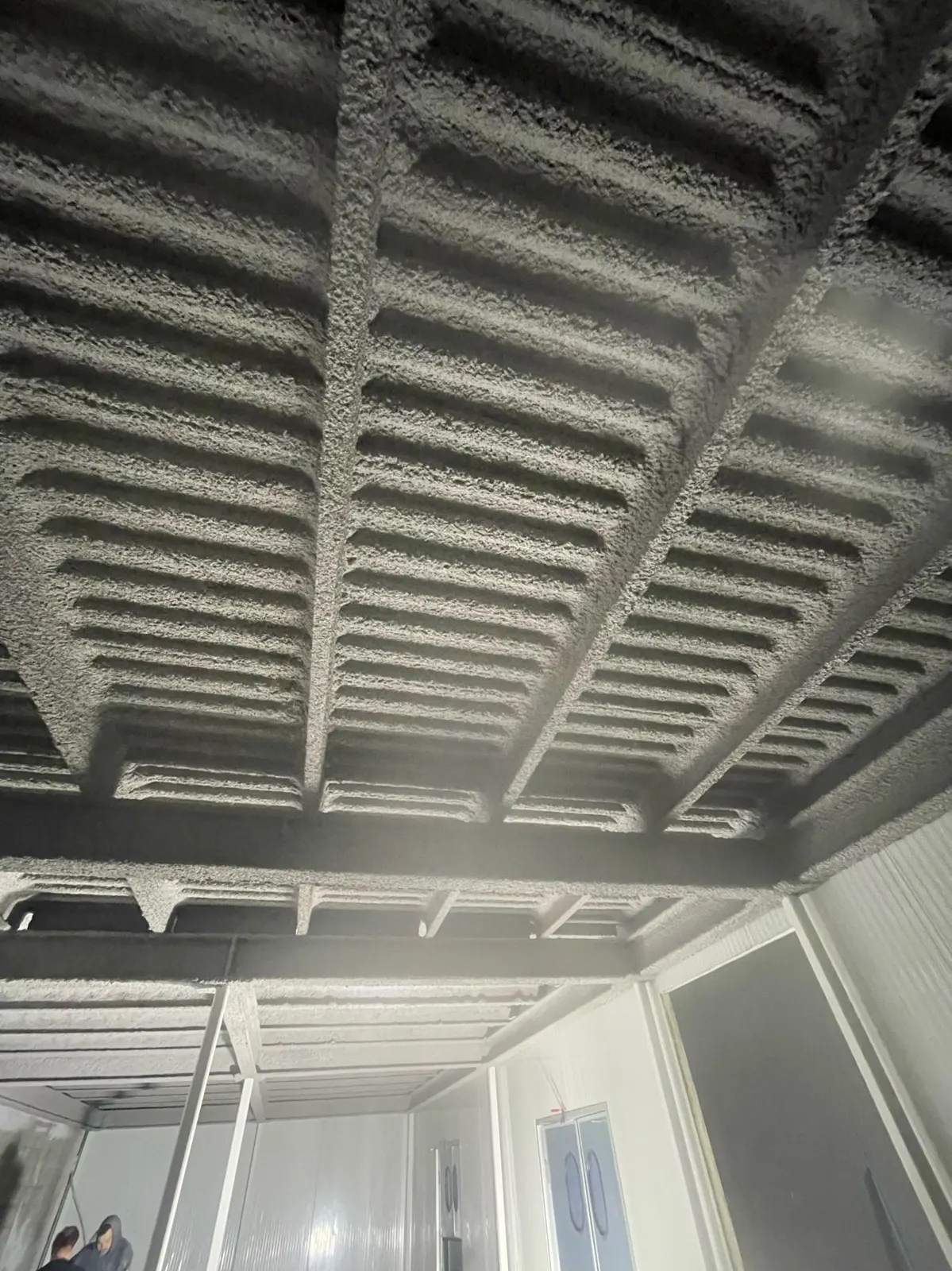 Steel deck and joists
Cementitious fireproofing is a Portland cement based coating sprayed onto structural steel so beams and columns hold their strength longer in a fire. Aires applies MONOKOTE Z-146 by GCP Applied Technologies on commercial projects in Edmonton and across Alberta.
Steel doesn't burn, but it loses strength as it heats. A beam carrying a parkade deck or a mechanical room floor has to stay up long enough for people to get out and for firefighters to work. Fireproofing slows the heat getting to the steel.
MONOKOTE Z-146 comes factory mixed, so the blend is the same from one bag to the next. It goes on as a thick grey coat with a rough texture, like the steel deck in these photos.
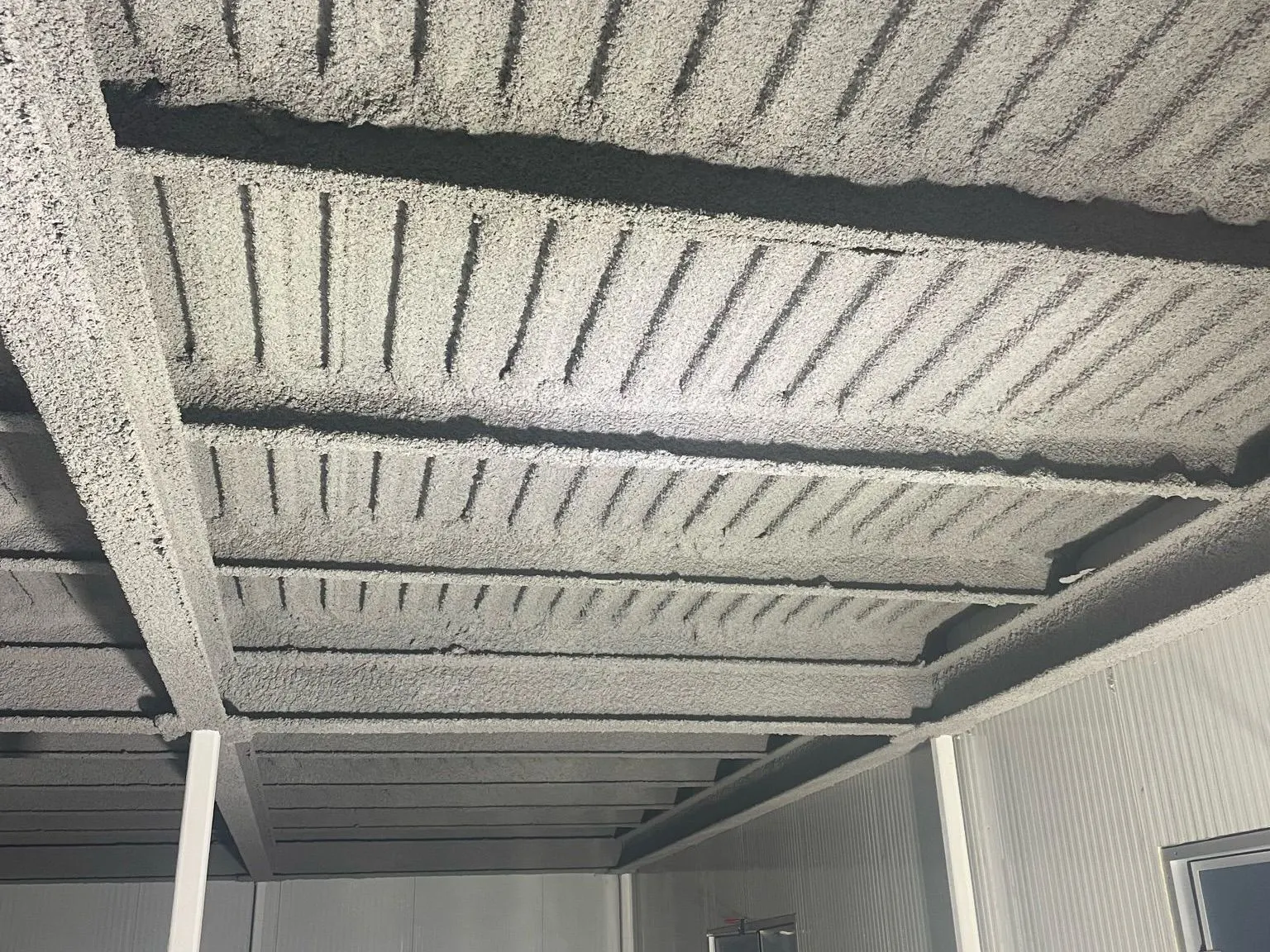
The hourly rating always comes from the tested design, never from the product alone.
| Item | MONOKOTE Z-146 |
|---|---|
| Manufacturer | GCP Applied Technologies |
| Base | Portland cement, factory mixed |
| Application | Spray applied |
| Substrate | Structural steel beams, columns and deck |
| Fire resistance | Up to 4 hours, depending on the tested design |
| Typical locations | Parking garages, mechanical rooms, exterior areas |
| Durability | Durable, withstands freeze/thaw |
We don't pick the rating. The project designer does.
On a commercial job, the architect or structural engineer decides how many hours each part of the frame needs. They pick a tested fire-resistance design, and that design says which steel sizes it covers and how thick the fireproofing must be for one, two, three or four hours. A heavy column and a light beam in the same building can need different thicknesses for the same rating.
Our job is to put the material on at that thickness, everywhere it's called for, and leave it in a state the inspector can sign off. If the drawings are unclear, we raise it with the general contractor before we start, not after.
If you're a GC pricing the job, send the fireproofing section of the spec along with the drawings. It tells us the product, the designs and what the inspector will want to see.
Cold, damp and full of road salt in winter. Z-146 is built for that kind of exposure.
Steel near boilers, ducts and pipe racks that crews bump into during maintenance.
Canopies and outdoor framing that go through freeze and thaw every spring and fall.
Schedules are set around the other trades, since fireproofing goes on before ducts, sprinklers and ceilings close things in.
We go through the fire-rated designs and the steel schedule so we know the thickness for each member.
The steel has to be clean and free of anything that would stop the coat from bonding. We check it against the spec before we spray.
Anything that shouldn't get fireproofing on it gets covered: walls, windows, finished surfaces.
We build the coat up to the specified thickness on beams, columns and deck.
We measure as we go, patch thin spots, clean overspray and walk the area with the GC or inspector.
Cementitious fireproofing is one of two coatings we apply. The other is DC315, a thin intumescent paint that goes over exposed spray foam. Both sit under our fireproofing and fire protection services.
The same commercial buildings often need insulation too. See commercial spray foam for warehouses, schools and retail, or industrial and pipeline foam for facility work.
Send the drawings and the fireproofing spec through our contact page and we'll quote it for free.
It is a Portland cement based material sprayed onto structural steel to slow how fast the steel heats up in a fire. We use MONOKOTE Z-146 by GCP Applied Technologies on beams, columns and deck.
Up to 4 hours, depending on the tested design. The design lists the steel size and the thickness of fireproofing needed for each rating, and your architect or engineer picks the design.
MONOKOTE Z-146 is made for tougher spots: parking garages, mechanical rooms and exterior areas. It is rated to handle freeze and thaw cycles, which matters on Alberta jobs.
The project designer. The architect or engineer specifies a rating and a tested design, and that design sets the thickness. We spray to it and the inspector checks it.
No. Cementitious fireproofing protects structural steel. DC315 is a thin intumescent coating that goes over spray foam as a thermal barrier. They solve different code requirements.
Tell us what you're insulating and where. We'll book a walkthrough, measure it, and send you a written quote. Serving Edmonton, Calgary and across Alberta.