
Rim joists
Batts against a rim joist let damp basement air reach cold wood, and by January it frosts. Two or three inches of closed cell stops that.
Closed cell foam for rim joists, basements, garages, bonus rooms, shops and new builds across Edmonton. Most jobs are sprayed and cleaned up in one day.
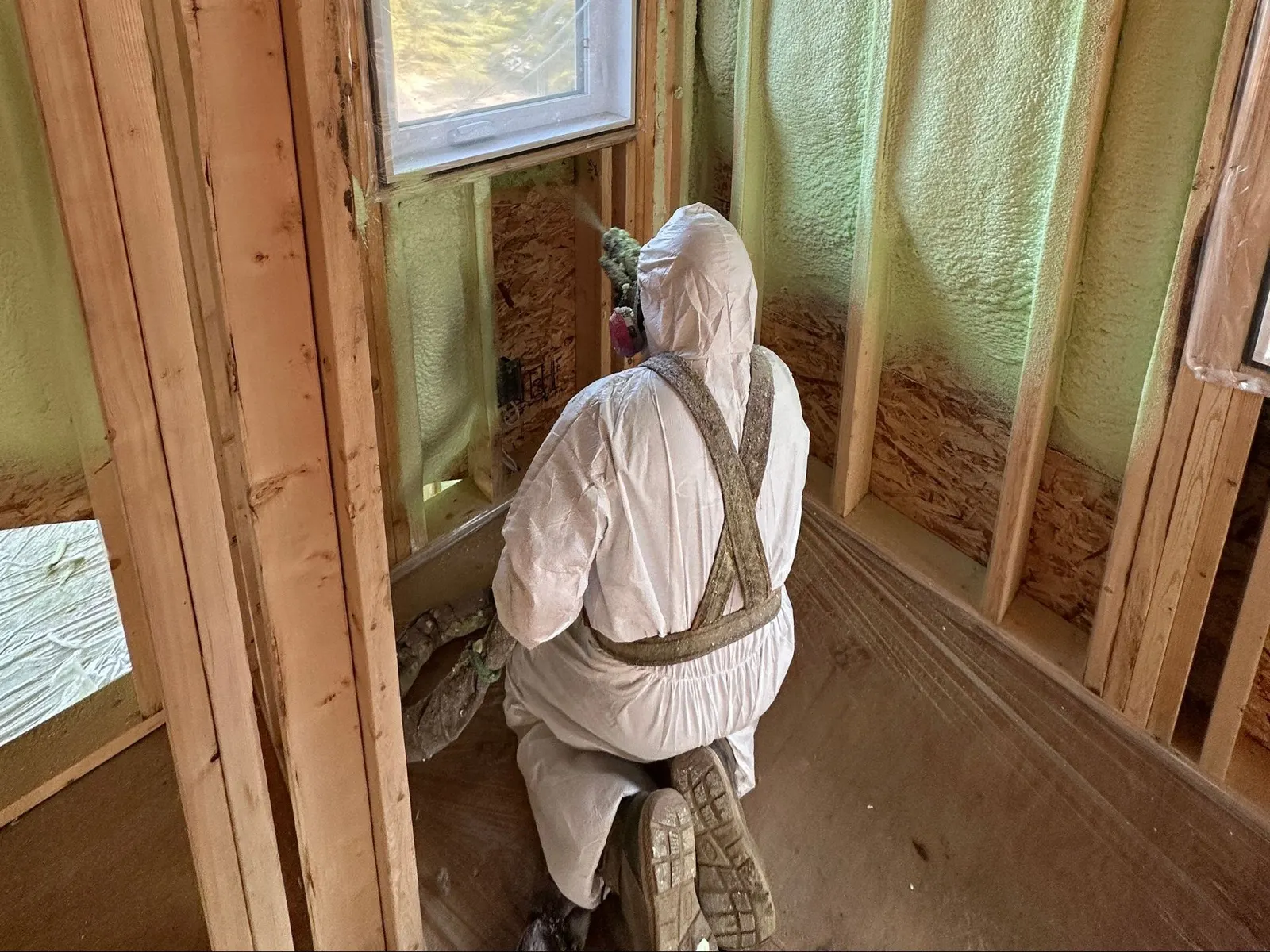 Wall cavities, closed cell
Aires Spray Foam & Insulation sprays closed cell foam in Edmonton homes, garages, shops and acreage buildings. It insulates, air seals and, at two inches or more, acts as the vapour barrier, which matters in a city that sits below -20 for weeks.
Here we focus on the Edmonton region: where foam pays off in local houses, when to book and how a job runs. For the product itself (chemistry, R-values, open versus closed cell), read the main spray foam insulation page first.
These are the usual places foam goes in an Edmonton house. Closed cell is the main product we use, at roughly R-6 to R-7 per inch.
Batts against a rim joist let damp basement air reach cold wood, and by January it frosts. Two or three inches of closed cell stops that.
Foam bonds straight to the concrete or the framing and handles moisture far better than batts and poly. Good for basements you plan to finish.
The floor over an unheated garage is cold in many Edmonton two-storeys built with batts. Foam in the floor cavity seals the air leaks from the garage too.
Detached garages and heated shops get foam on the walls and roof deck. Exposed foam in a shop usually needs a thermal barrier coating like DC315.
There's no room for R-50 of blown-in in a vaulted ceiling. Closed cell gets the most R-value into a shallow rafter bay.
In new subdivisions we spray exterior walls and ceilings after rough-in, before drywall. The usual window is between the framing inspection and the insulation inspection.
For a deeper look at the house side, see residential spray foam. Shops, warehouses and schools are covered on commercial spray foam.
Most people decide to insulate in the fall, once the basement floor goes cold, and they want it done before Christmas. If you already know the rim joists or the bonus room need foam, book in spring or early summer and you'll have more choice of dates.
Winter work is fine indoors. The foam needs warm surfaces to stick and cure, so a heated basement is no problem. An unheated garage or shop in January needs heat brought in first, and we'll talk that through at the walkthrough.
New builds run on the builder's schedule. Give us a call when framing is up and we'll pencil in a date around your inspections.
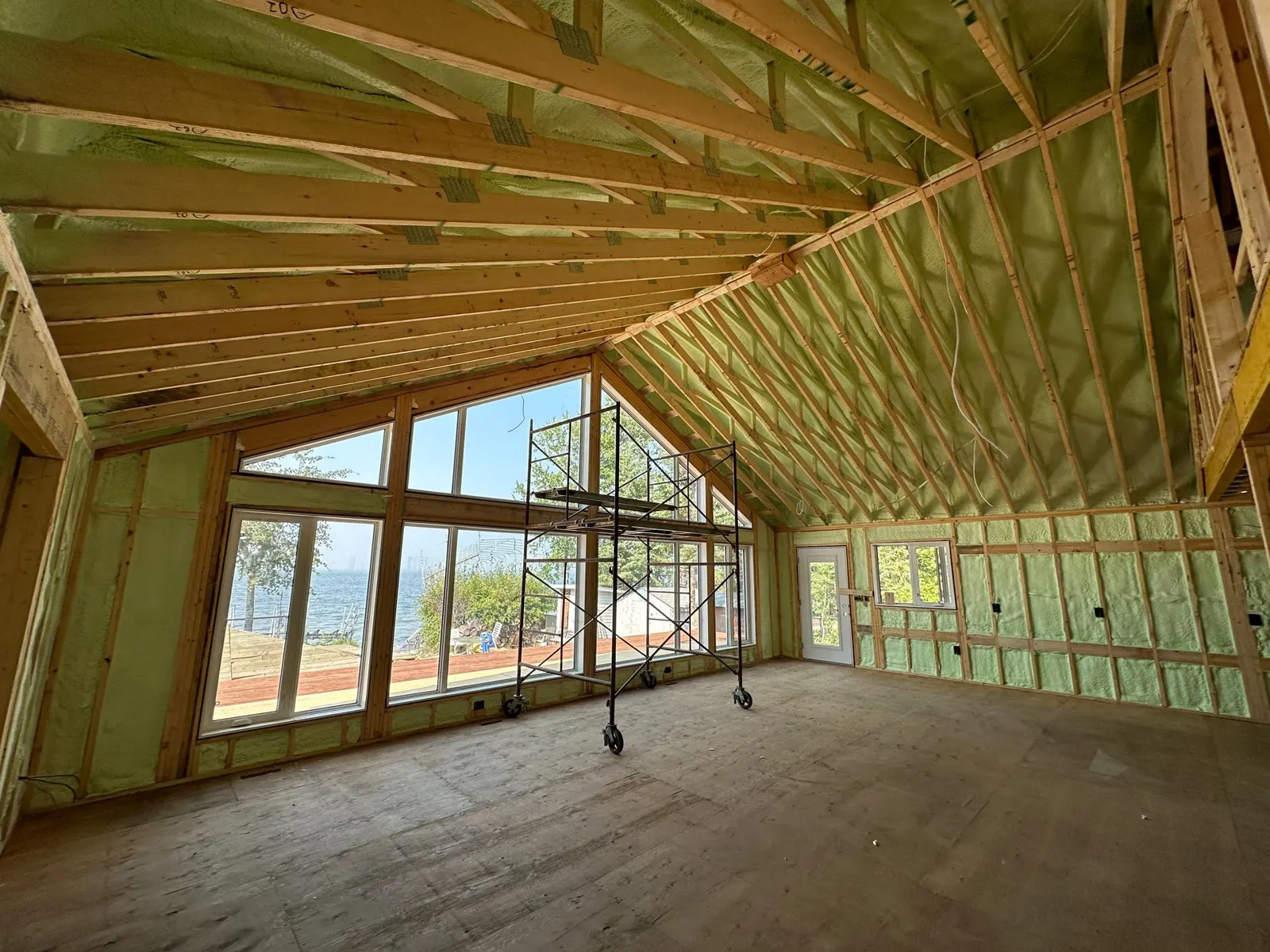
Closed cell foam at two inches or more works as a vapour barrier in most wall assemblies. Whether it can go in without a separate layer of poly is up to your inspector. On permitted work in Edmonton, the vapour barrier is the thing we confirm with the inspector before we spray: foam alone, or foam plus poly.
The same goes for exposed foam. In a garage, shop or unfinished basement, foam left uncovered usually needs a thermal barrier. We can apply DC315 intumescent coating for that, so you don't need drywall over the foam in a shop.
Most residential jobs are finished in one day.
Tell us what the space is and roughly how big. We reply within 24 hours and set up a free walkthrough or phone consultation.
We measure, check for moisture and old insulation, and ask what the inspector has asked for if there's a permit.
Area, thickness, foam type and any thermal barrier, priced by the board foot so you can see where the money goes.
Our crew arrives on the booked date, masks windows, outlets and finished surfaces, then sprays in passes with quality checks built into the work.
Overspray trimmed, debris bagged and hauled away, floors swept. We walk the job with you before we leave.
Aires is a Qualified Contractor for Edmonton's Clean Energy Improvement Program. Basement or crawlspace walls that get at least R-12 added can count as one qualifying upgrade, repaid through your property tax bill over up to 25 years. Residential projects need three qualifying upgrades unless the home reaches net zero, so foam in the basement is often paired with an attic top-up and something mechanical. The CEIP page covers the steps.
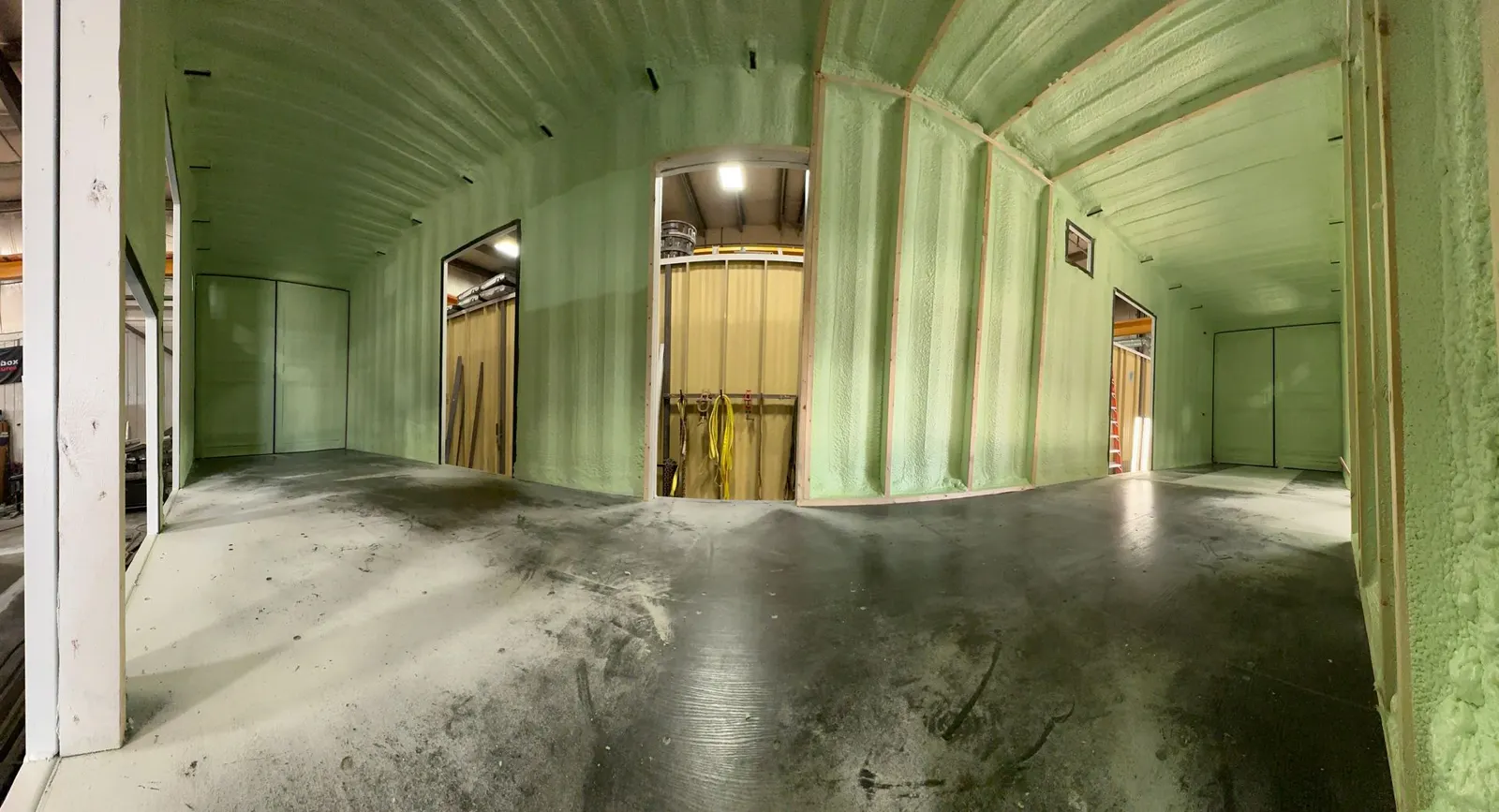
Outside the city we spray barns, Quonsets and machine shops. Closed cell cuts condensation on the steel and keeps mice out of the walls.
A wide-open attic floor in a 1970s Edmonton house is usually cheaper to bring to R-50 with blown-in fibreglass or cellulose. Foam earns its price on rim joists, basement walls, vaulted ceilings and metal buildings. We'll say which at the walkthrough. If the job is closed cell all the way, read more on closed cell spray foam. More on the city itself is on our Edmonton page, and if you have a property in the south we also cover spray foam in Calgary.
Spray foam is priced by the board foot: one square foot, one inch thick. Your cost depends on the area, the thickness and open or closed cell. We measure on site in Edmonton and quote in writing for free.
Yes, inside a heated or heatable space. The surfaces need to be warm enough for the foam to stick and cure. In an unheated garage or shop we'll talk about temporary heat before we book.
At two inches or more, closed cell acts as a vapour barrier in most wall assemblies. Your building inspector makes the final call, so we confirm what they want for your permit before we spray.
Most of our spray foam jobs are done in one day. We'll tell you when the space is ready to re-enter, and we keep everyone out while we spray.
It can. Basement and crawlspace walls need at least R-12 added to qualify, and residential projects need three qualifying upgrades unless the home reaches net zero. Aires is a CEIP Qualified Contractor in Edmonton.
Foam costs more per square foot but seals the rim joist and wall in one pass and handles moisture far better. Batts with poly can work on a dry basement wall. The rim joist is where foam pays off most.
Tell us what you're insulating and where. We'll book a walkthrough, measure it, and send you a written quote. Serving Edmonton.