
Bedrooms
Walls shared with a bathroom, a kid's room or a hallway. Filling the wall cavity cuts down on voices and plumbing noise.
Open cell spray foam and blown-in insulation in interior walls and floors to cut the noise moving between rooms. We'll also tell you what insulation can't do on its own.
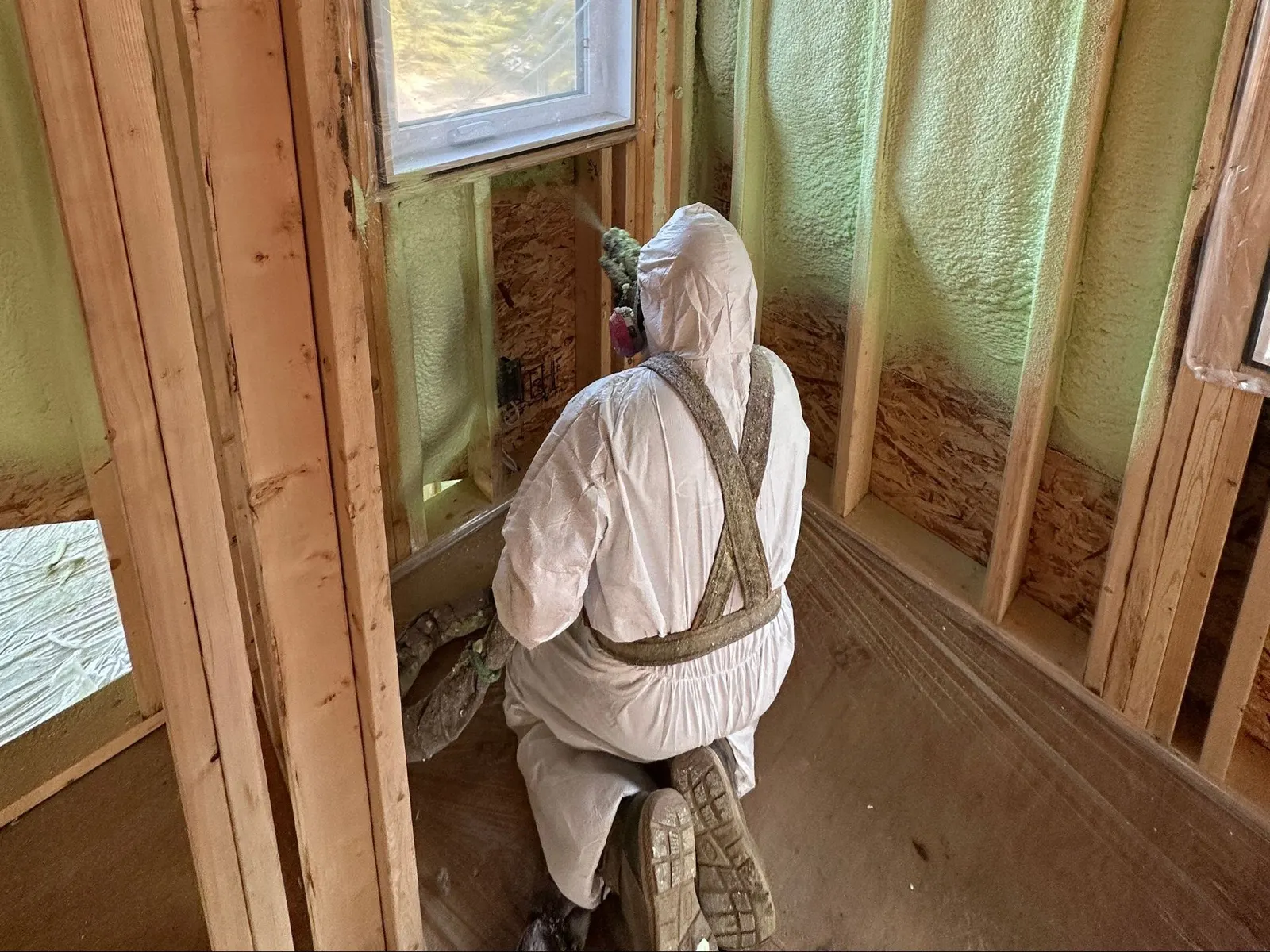 Open wall cavities
Soundproofing insulation is open cell spray foam or blown-in fibreglass or cellulose installed in interior walls, floors and ceilings to absorb sound moving between rooms. Aires installs it in homes and offices in Edmonton, Calgary and across Alberta.
Most interior walls in Alberta houses are empty. Two sheets of drywall with a hollow cavity between them act a bit like a drum, and voices, TV and music carry straight through. Filling that cavity with a soft, porous material takes a lot of the edge off.
It's a small part of our insulation work, and it fits best when walls are already open for a renovation or a basement development.
The goal is usually one quiet room, or keeping one loud room to itself.
Walls shared with a bathroom, a kid's room or a hallway. Filling the wall cavity cuts down on voices and plumbing noise.
Bass is the hardest to stop, but filled walls and ceilings keep a basement theatre from filling the main floor with sound.
Calls and video meetings from a room next to the kitchen or the kids' playroom. Start with the wall the noise actually comes through.
Insulation in the floor joists between levels, or in a basement ceiling, cuts voices and TV coming up or down.
Soft, porous materials absorb sound. Rigid, dense ones mostly don't. That's why the best foam for an exterior wall isn't the best foam for a bedroom wall.
Open cell expands roughly 100 times or more and fills the cavity completely, around wires and boxes, with no gaps for sound to slip through. Its spongy structure soaks up airborne noise. See open cell spray foam.
Loose fill packed into a cavity absorbs sound well, and cellulose in particular is dense. It also goes into closed walls through small holes. More on our blown-in insulation page.
Closed cell is a better insulator and air barrier, but it's rigid and absorbs less sound. We don't recommend it for soundproofing interior walls.
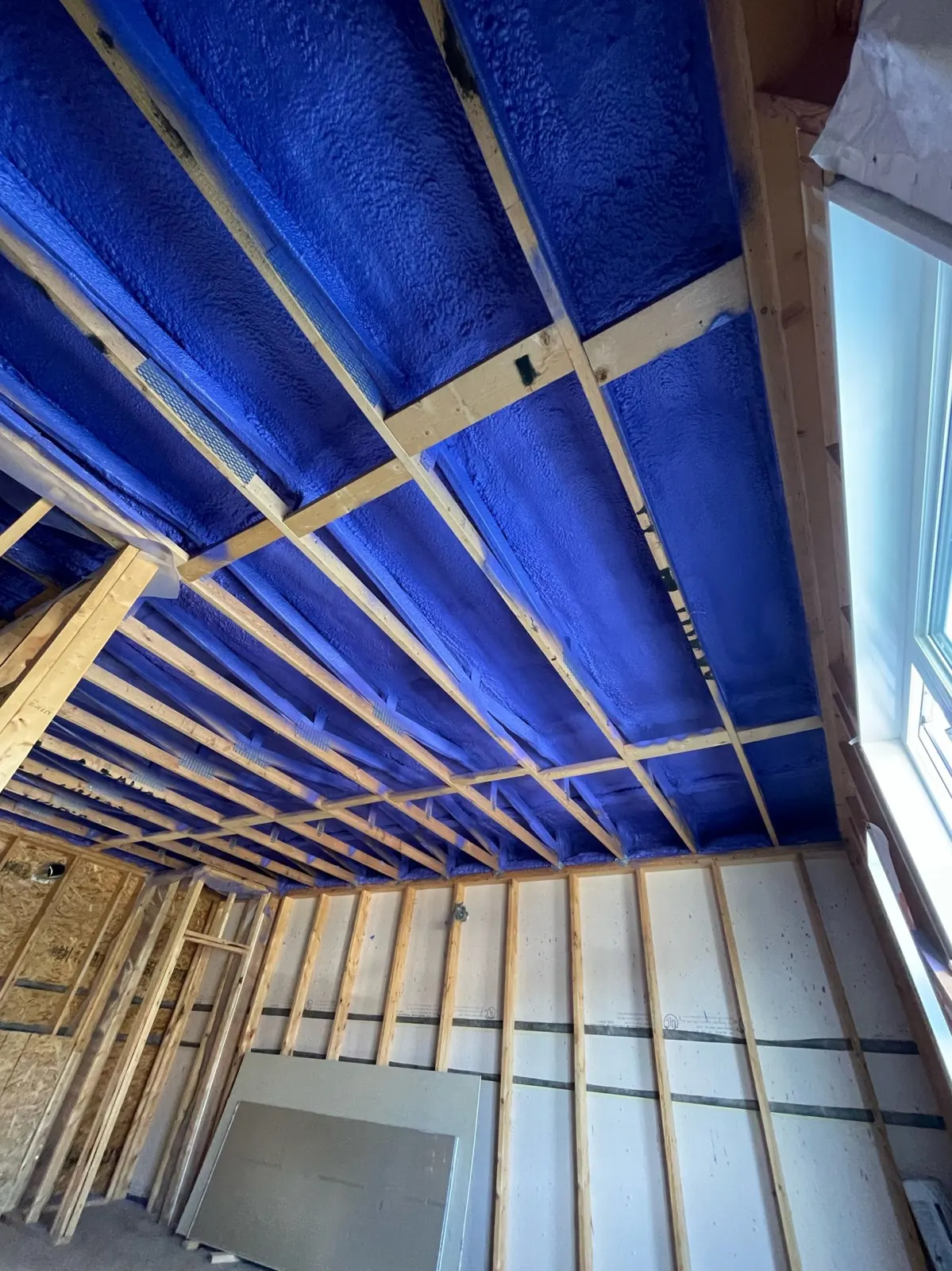
A quick comparison for interior walls and floors.
| Open cell foam | Blown-in | Closed cell foam | |
|---|---|---|---|
| Absorbs airborne sound | Good | Good | Weaker |
| Fills around wires and boxes | Yes, fully | Mostly | Yes, fully |
| Works in closed walls | No, wall must be open | Yes, through small holes | No, wall must be open |
| Best use | Open walls and floors during a reno | Existing walls, floors between levels | Exterior walls, rim joists |
Insulation is good at one kind of noise: airborne sound like voices, TV and music. It does much less for two others.
Impact noise is footsteps, a dropped pot, a chair dragged across the floor upstairs. That energy travels through the joists and studs themselves, not through the air in the cavity. Filling the floor with insulation helps a little. Stopping it properly takes resilient channel to separate the drywall from the framing, or extra layers of drywall.
Flanking is sound going around the wall instead of through it: under the door, through a shared heating duct, along a continuous floor or ceiling. On a shared wall in a duplex or townhouse, flanking can undo most of what the insulation gains.
Those fixes belong to a drywaller or a contractor, not an insulation crew. We fill the cavities, and you'll get the best result if your drywaller follows with resilient channel or a second layer where it counts.
Soundproofing is cheapest when the walls are already open. In a basement development, it can be done on the same visit as the rim joists and basement walls.
For blocking airborne noise between rooms, open cell spray foam and blown-in fibreglass or cellulose absorb sound better than closed cell foam. Closed cell is rigid and better at insulating and sealing than at absorbing sound.
Not much. Footsteps are impact noise travelling through the framing. Insulation in the floor helps with voices and TV, but footfall needs other measures like resilient channel or extra drywall, which a drywaller installs.
Sometimes. Blown-in insulation can be added to closed interior walls through small holes that are patched afterwards. Results are better when the wall is open, so renovation time is the best moment.
Open cell. Its soft, porous structure soaks up sound inside a wall or floor cavity. Closed cell is dense and rigid, which makes it a great insulator and air barrier but a weaker sound absorber.
It depends on how many walls or floors, how big the cavities are, and whether we're spraying open cell or blowing in loose fill. We give free written quotes after seeing the space.
Tell us what you're insulating and where. We'll book a walkthrough, measure it, and send you a written quote. Serving Edmonton, Calgary and across Alberta.