Smoke damage
After a house fire, attic insulation soaks up soot and the smell. It rarely airs out, so it usually has to go before the house is put back together.
We vacuum out wet, smoke-damaged, rodent-contaminated or outdated attic insulation with industrial equipment, then air seal and reinsulate the bare attic.
 Attic removal
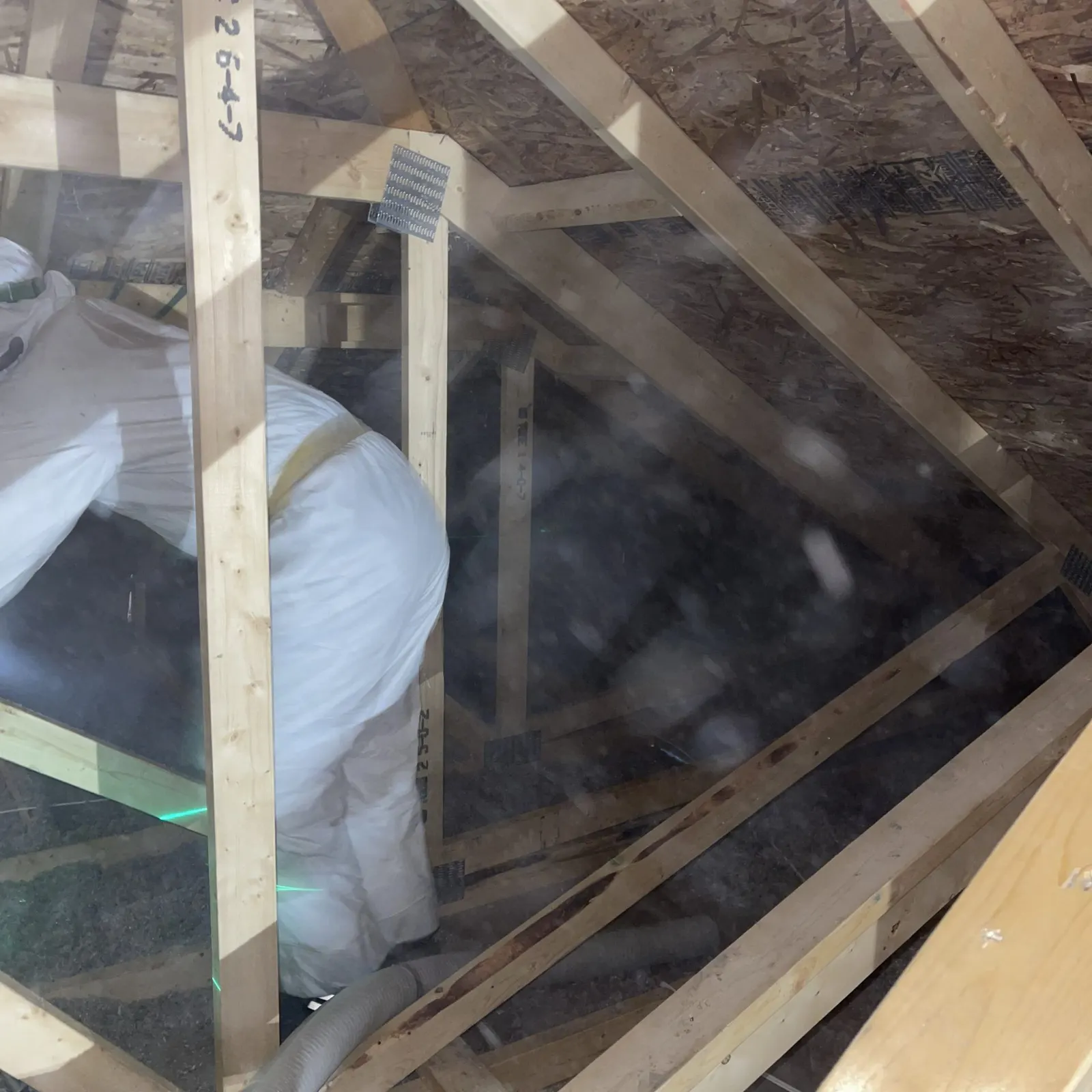
Insulation removal is the job of vacuuming damaged or contaminated insulation out of an attic so the space can be cleaned, sealed and reinsulated. Aires does it in Edmonton, Calgary and across Alberta with industrial vacuum equipment that sends the material straight to bags outside.
Most attics don't need it. If the insulation is dry and clean, a top-up over the old layer is cheaper and works fine. Removal is for attics where the old material is causing a problem, or hiding one.
It's part of our insulation work, and it usually ends with a fresh layer of blown-in fibreglass or cellulose.
If any of these describe your attic, a top-up on its own would just bury the problem.
After a house fire, attic insulation soaks up soot and the smell. It rarely airs out, so it usually has to go before the house is put back together.
A roof leak or years of attic frost leaves insulation matted, stained and sometimes mouldy. Wet insulation loses much of its R-value.
Mice, squirrels and raccoons leave droppings, urine and nests. The smell can come down into the house, and the contamination is a health concern.
Some older Alberta homes still have wood shavings in the attic. They're a poor insulator by today's standards and a fire concern.
Compressed batts, the wrong material for the space, or insulation covering every soffit vent. Sometimes it's easier to start clean.
Roof repairs, new wiring, a ceiling being opened up. Clearing the attic first gives the trades room to work.
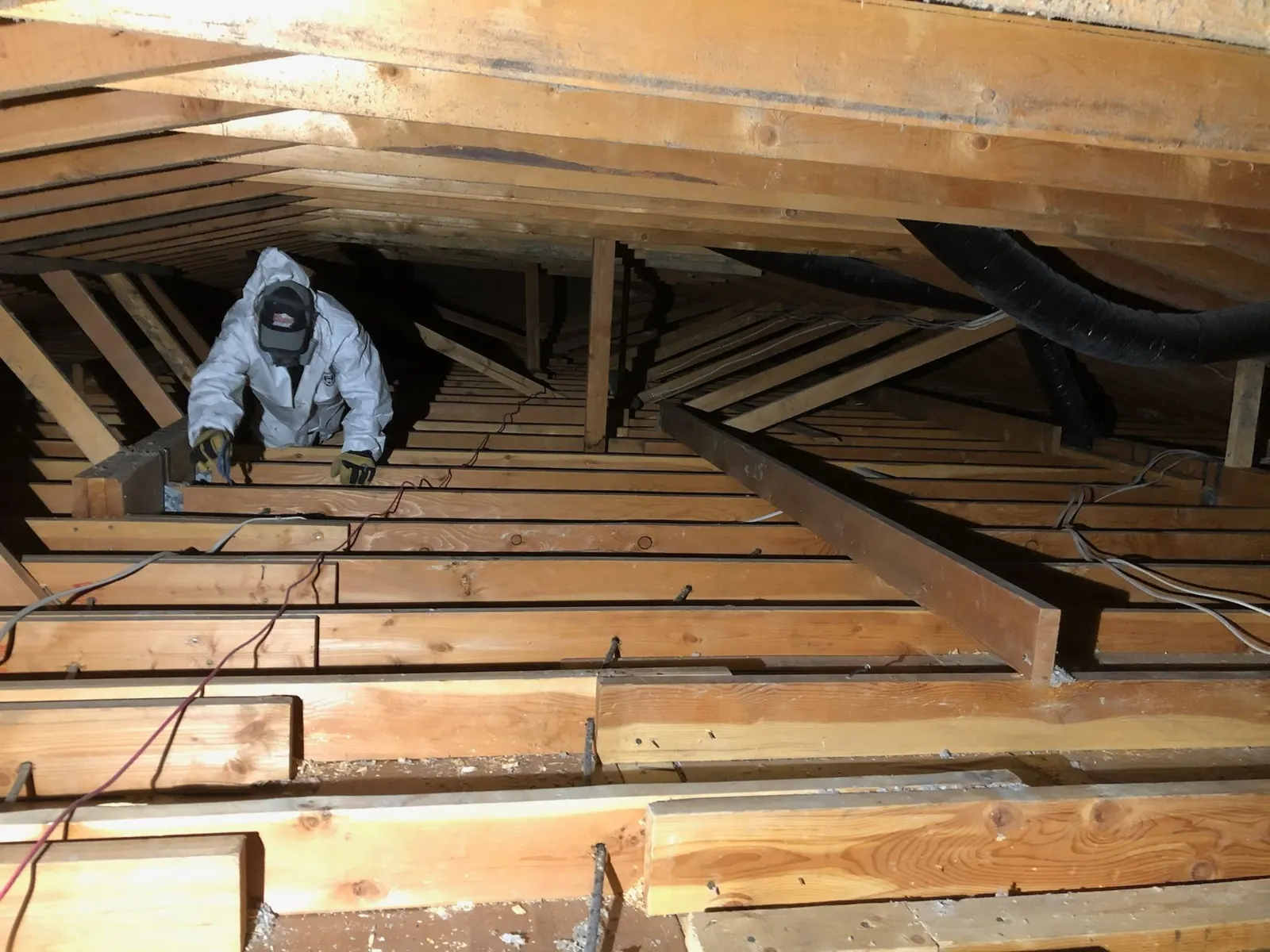
A shop vac and a box of garbage bags look like enough until you're up in the attic. Here's what you'd be working around:
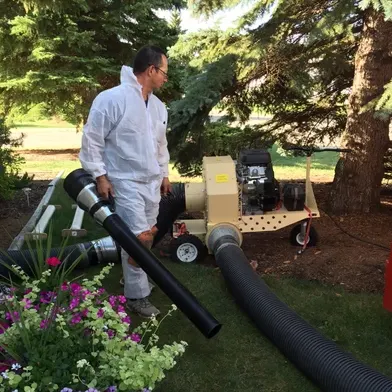
The equipment does the heavy lifting, and the old material goes out through the hose.
We check what's in the attic, how deep it is, and look for vermiculite, mould, droppings and leaks before quoting.
The vacuum unit stays outside. A large hose runs from the unit up to the attic, so the old material isn't carried through your house in bags.
The crew works across the attic in suits and respirators, pulling the old insulation into collection bags outside.
Once the joists are bare, we can see the ceiling, the wiring, the top plates and every air leak that was buried.
The bagged material is hauled away and we clean up the work area.
An empty attic is the best chance you'll get to do the job properly. With nothing in the way, we seal the gaps around pot lights, pipes, wires and the top plates of interior walls, often with spray foam. That air sealing is what stops frost and ice dams.
Next we check the soffit vents and install baffles so intake air can reach the roof. If venting or the vapour barrier needs repair, that's covered on our attic ventilation and vapour barrier page.
Then we blow in fibreglass or cellulose to R-50. In Edmonton and approved nearby municipalities, the reinsulation can be financed through CEIP. See attic insulation for the full picture.
It depends on the attic's size, how deep the old material is and what's in it. Rodent-contaminated or smoke-damaged insulation takes more care than clean, dry fill. We look first and give you a free written quote.
We don't recommend it. Attics hide droppings, live wires and joists you can step through, and old fibreglass is harsh on skin and lungs. If there's any chance of vermiculite, nobody should touch it before it's tested for asbestos.
We don't disturb suspected vermiculite until it has been tested. If the test comes back positive for asbestos, removal has to be done by a qualified abatement firm. Once the attic is cleared, we can reinsulate it.
Not always. Dry, clean insulation can stay and be topped up. It should come out if it's wet, mouldy, smoke damaged, contaminated by rodents, or if it's old wood chips.
It depends on the attic's size, how deep the old material is and how contaminated it is. A clean, dry attic goes faster than one full of droppings. We'll give you a schedule with the quote.
Tell us what you're insulating and where. We'll book a walkthrough, measure it, and send you a written quote. Serving Edmonton, Calgary and across Alberta.