
Attic top-ups
New material goes over the old, as long as the old is dry and clean. We install baffles at the eaves first so the top-up doesn't block the soffit vents.
Loose-fill insulation blown into attics and closed walls. We install both fibreglass and cellulose, and we'll tell you which one fits your house.
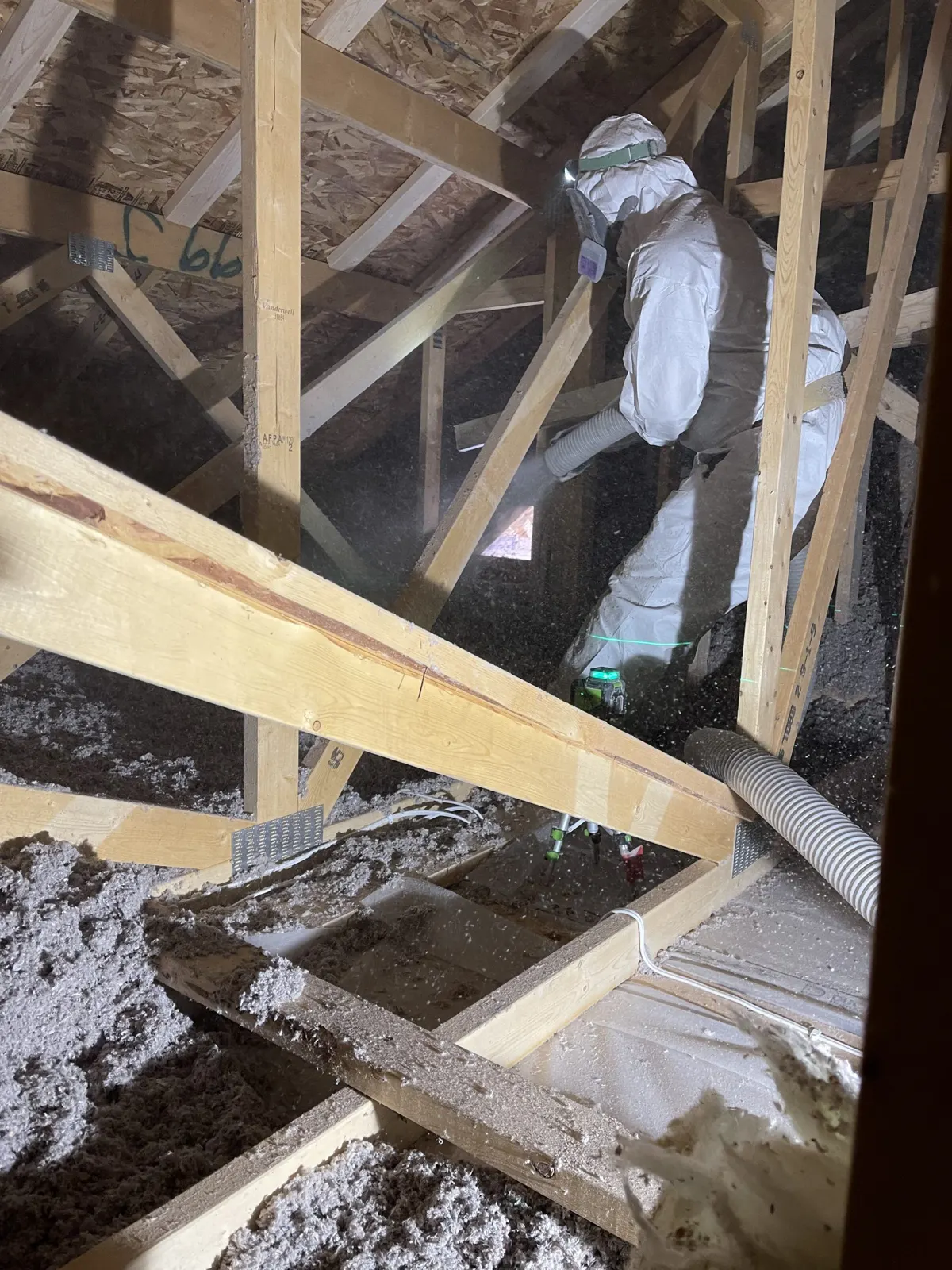 Attic blow-in
Blown-in insulation is loose fibreglass or cellulose fed through a machine and a long hose into attics and wall cavities. Aires installs both types in Edmonton, Calgary and across Alberta, mostly as attic top-ups to R-50.
The machine sits outside or in the truck, and the hose runs up through the attic hatch. Because the material arrives loose, it fills around trusses, wiring and odd framing that batts never fit properly. It's the most cost-effective way we know to add a lot of R-value to an open attic floor in a short time.
It's one part of our insulation work. For the bigger picture on attics, including air sealing and venting, see our attic insulation page.
The R-values are close. The differences that matter show up years later: settling, how each one handles a roof leak, and whether mice move in.
| Blown fibreglass | Blown cellulose | |
|---|---|---|
| Made from | Sand and recycled glass | About 85% recycled paper, borate treated |
| R per inch (approx.) | R-2.5 to R-3.7, depending on product | R-3.2 to R-3.8 |
| Weight | Light | Denser and heavier |
| Settling | Holds its R-value, settles less | Settles more, so it goes in deeper |
| If it gets wet | Dries out more easily | Holds moisture longer |
| Pests and mould | Not a food source, but mice will tunnel in it | Borates help resist pests, mould and fire |
| Where we like it | Most city attics, homes with any roof leak history | Farmhouses and acreages where mice are a problem |
Fibreglass is the most common insulation in Canada, and the blown version is the same material chopped into loose tufts. It's light, so it won't load up an older ceiling, and it keeps its R-value well over time.
Its strongest point is how it handles water. If an ice dam or a cracked vent boot drips into the attic, fibreglass dries out more easily than cellulose once the leak is fixed. That's why we lean toward it in houses with a history of roof problems.
The trade-off is a slightly lower R per inch on some products, so you need a bit more depth to reach R-50.
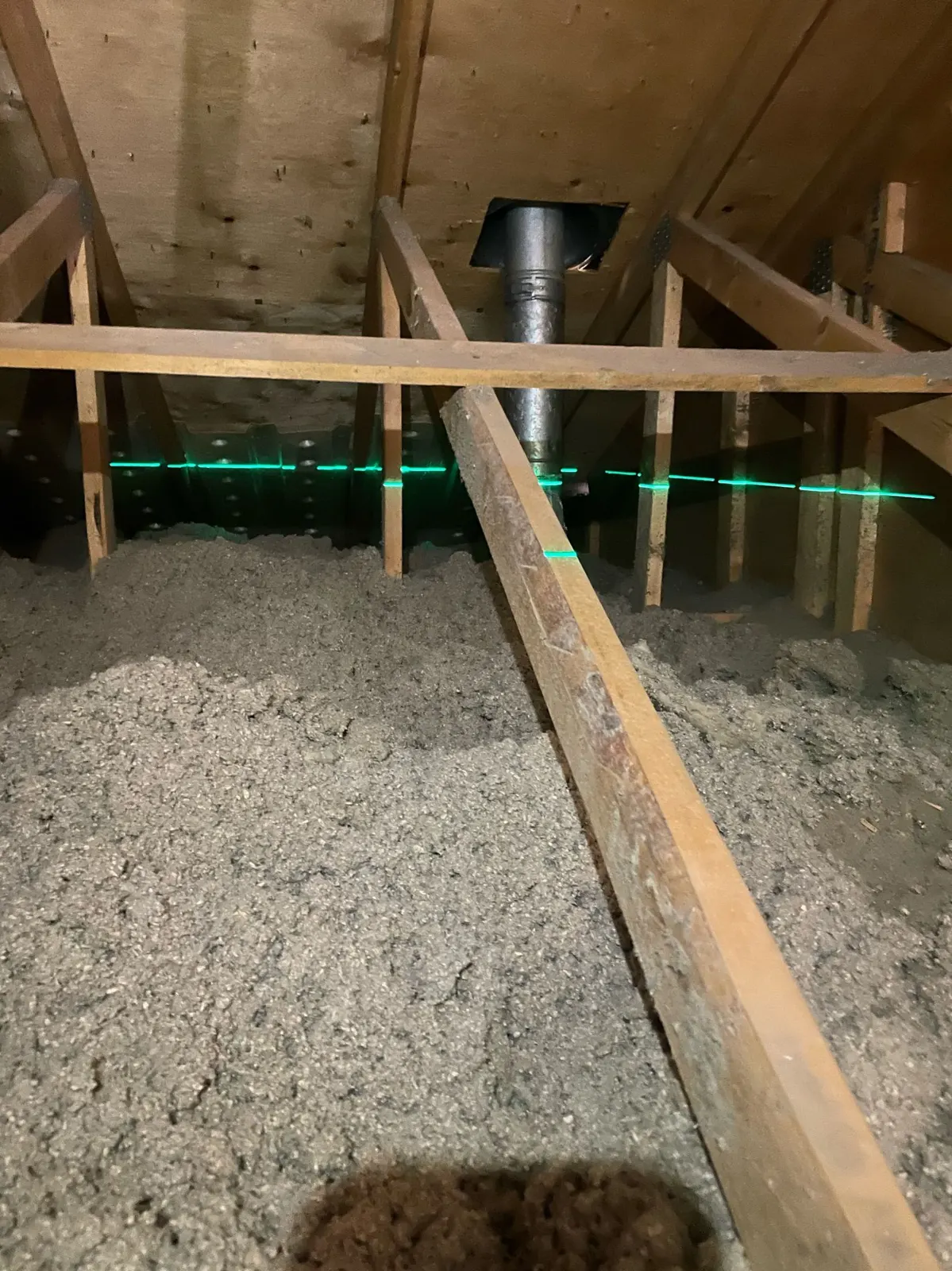
Cellulose is about 85% recycled paper, treated with borates for fire, pest and mould resistance. It's denser than fibreglass and has a slightly higher R per inch, so the same depth gives you a little more.
That density has costs. Cellulose is heavier and settles more after it's installed, so we blow it in deeper to start with. It also holds moisture longer than fibreglass, which is why a roof leak needs fixing fast in a cellulose attic.
Where it shines is pest resistance. On farmhouses and acreages, where mice and other critters find their way into the attic every fall, we often recommend cellulose. The borate treatment makes it a poor place to nest.
Most of our blown-in work is on attic floors. Some of it is in walls that were never insulated properly.
New material goes over the old, as long as the old is dry and clean. We install baffles at the eaves first so the top-up doesn't block the soffit vents.
After damaged insulation is vacuumed out, we air seal the bare ceiling and blow in a fresh layer to R-50. See insulation removal.
Older houses with empty or half-filled wall cavities can be insulated without tearing off drywall. Dense-pack blowing, which packs the material tight so it won't slump, is the method commonly used. The material goes in through small holes that are patched afterwards.
Loose fill needs depth, and some spaces don't have it. Cathedral ceilings, the low edges of an attic near the eaves, knee walls and rim joists all have too little room for 16 inches of fluff. Closed cell foam gets roughly R-6 to R-7 per inch and seals air in the same pass, so it fits where blown-in can't.
Lots of attics get both: foam to seal the ceiling plane and the tight edges, then blown-in over the open floor. Compare the foam options on our closed cell spray foam page. Blown-in also works well for sound control between floors, covered on our soundproofing page.
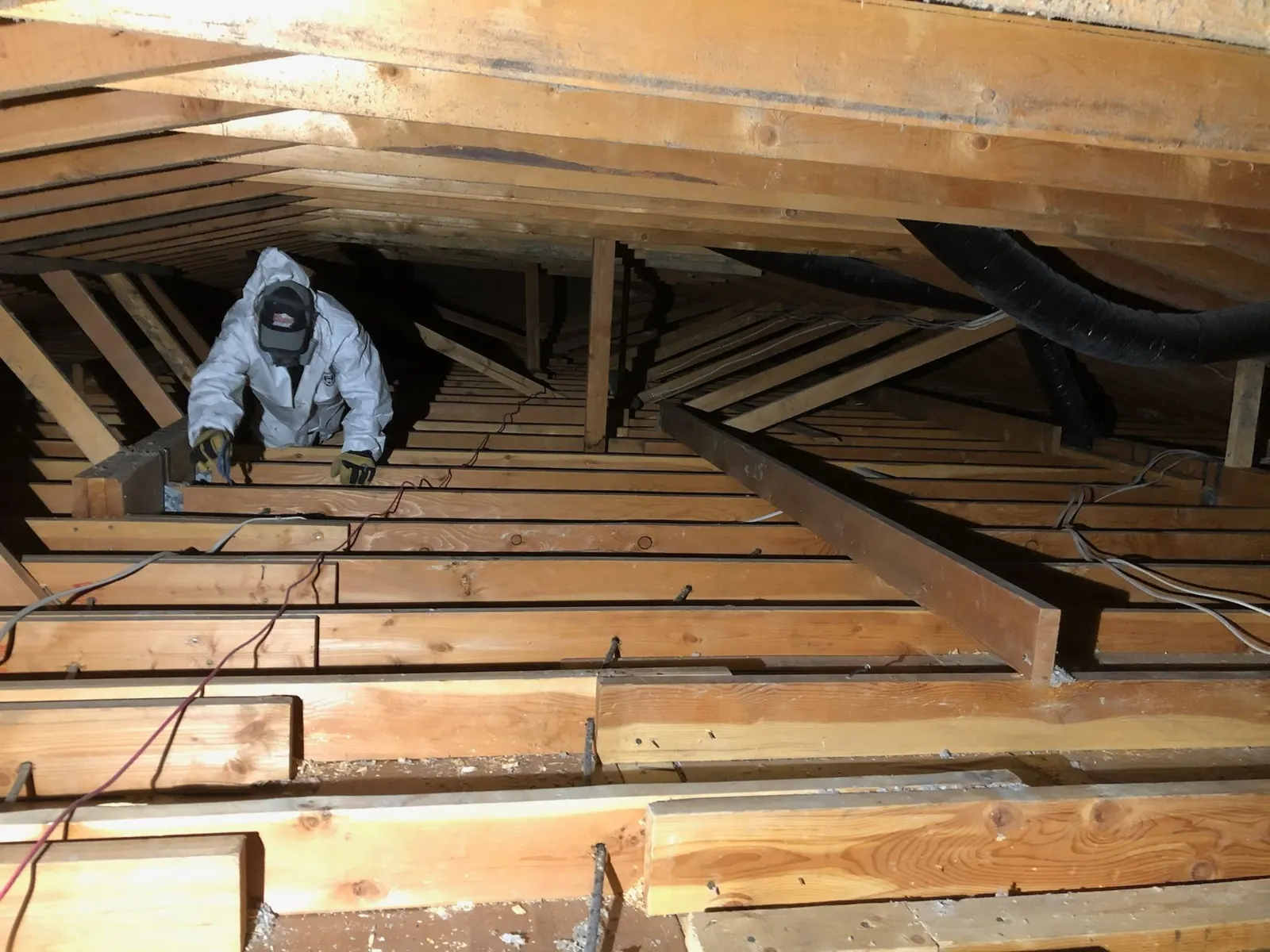
Neither wins everywhere. Cellulose is denser, has a slightly higher R per inch and resists pests. Fibreglass is lighter, settles less and dries faster if it gets wet. The right pick depends on the attic and what you're worried about.
It depends on the area, the depth you need to reach R-50 and how much insulation is already there. We measure on site and give you a free written quote.
Yes, both types settle some, and cellulose settles more than fibreglass. We account for that when we set the installed depth so the attic still reaches its target R-value after it settles.
Often, yes. Walls with empty or partly filled cavities can be insulated by blowing material in through small holes, which are patched afterwards. We look at the wall first to see if it's a good candidate.
Installed and left undisturbed, yes. Our crew wears suits and respirators while blowing because of the dust. Once it's in place and the attic hatch is closed, it stays put.
Tell us what you're insulating and where. We'll book a walkthrough, measure it, and send you a written quote. Serving Edmonton, Calgary and across Alberta.