
Closed cell spray foam in Edmonton and Calgary
The dense, rigid foam we spray most. High R-value per inch, an air and vapour barrier in one layer, and it stiffens whatever it's sprayed on.
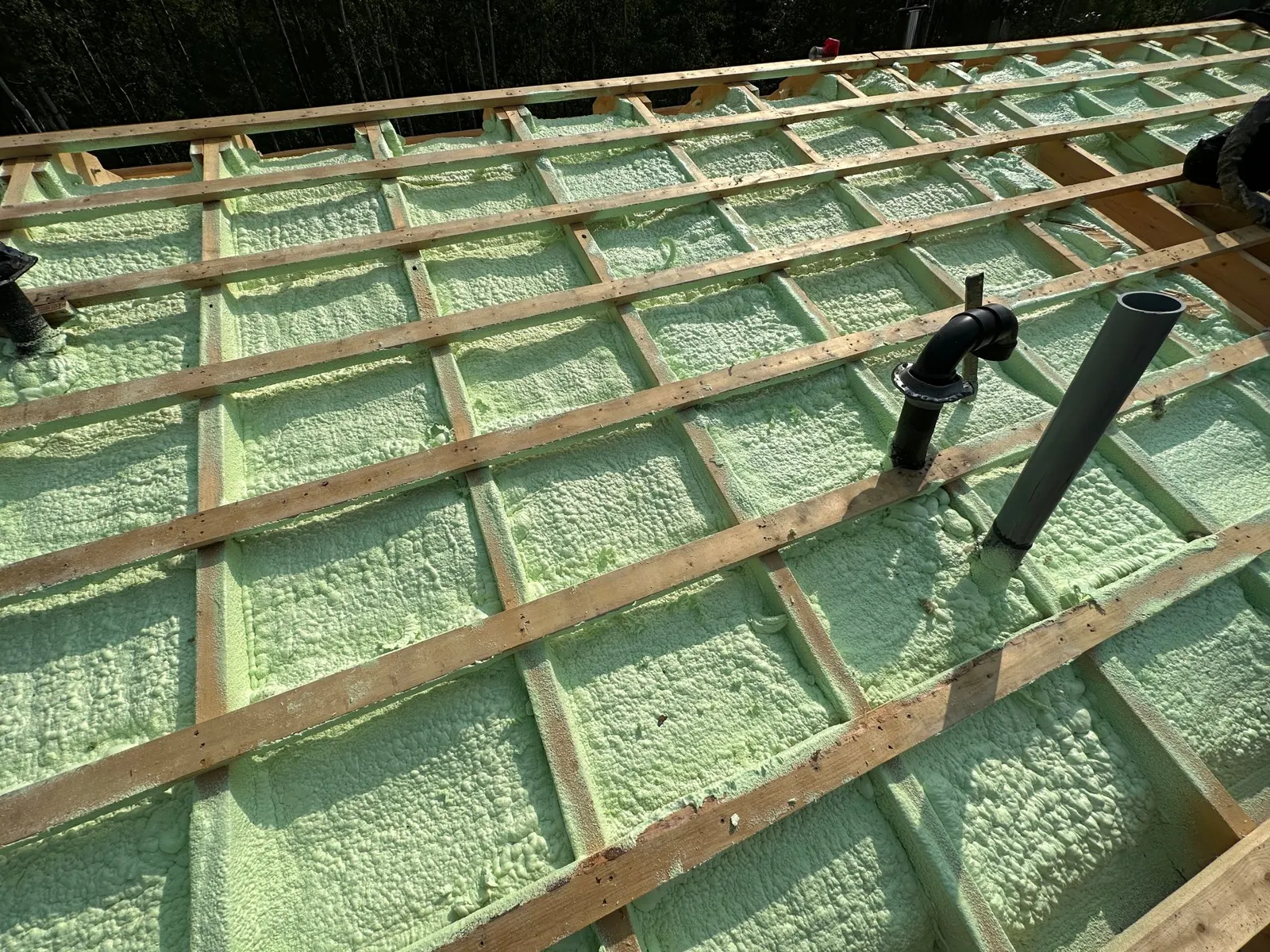 Roof deck, closed cell
Closed cell spray foam is a dense, rigid polyurethane insulation rated about R-6 to R-7 per inch that also blocks air and vapour. Aires sprays it on rim joists, basement walls, shops and roof decks in Edmonton, Calgary and across Alberta.
It's the main product we use. Inside, the foam is made of tiny sealed cells packed tight, which is where it gets its strength and its resistance to moisture. On the gun it expands about 30 to 40 times its liquid volume, then sets hard.
Closed cell is one of two types of spray foam insulation. The other, open cell, is softer and does a different job.
What closed cell foam gives you
Approximate figures. The exact R-value depends on the product.
| Property | Closed cell | Open cell |
|---|---|---|
| Approx. R per inch | R-6 to R-7 | R-3.5 to R-3.8 |
| Feel once cured | Hard, rigid | Soft, spongy |
| Expansion | About 30 to 40 times | About 100 times or more |
| Vapour | Barrier at 2 in or more | Lets vapour through |
| Adds structural strength | Yes | No |
Cold, damp or tight spaces
Closed cell earns its price wherever moisture, cold steel or limited depth is the problem.
Rim joists
The band of wood on top of your foundation wall is one of the leakiest spots in an Alberta house. Batts stuffed in there trap moisture against cold wood. Two or three inches of closed cell seals it and stops the frost. Our basement and rim joist page has more.
Basement walls
Concrete stays cold and a bit damp. Foam goes straight onto it, so there's no warm, moist air reaching the concrete to condense behind the framing.
Metal buildings and Quonsets
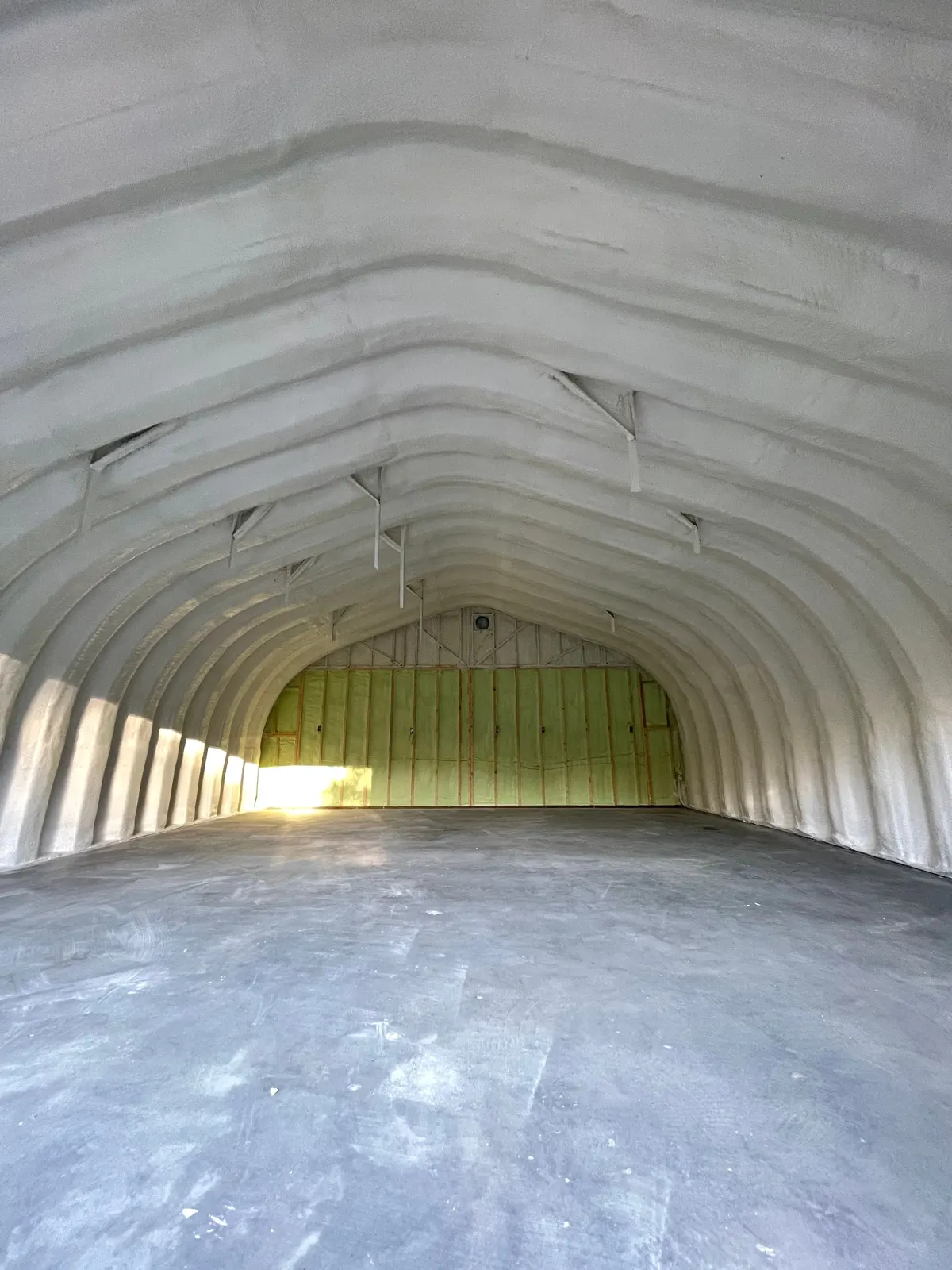
Steel sweats every time the temperature swings. Closed cell sticks to steel, stops the condensation and keeps rust off equipment. See agricultural spray foam for barns and machine shops.
Roof decks and cathedral ceilings
Rafters only give you so much depth. At about R-6 to R-7 per inch, closed cell gets more R-value into that space than anything else we install. It also seals the deck from the inside, so warm, moist air from the house can't reach the cold sheathing and turn to frost.
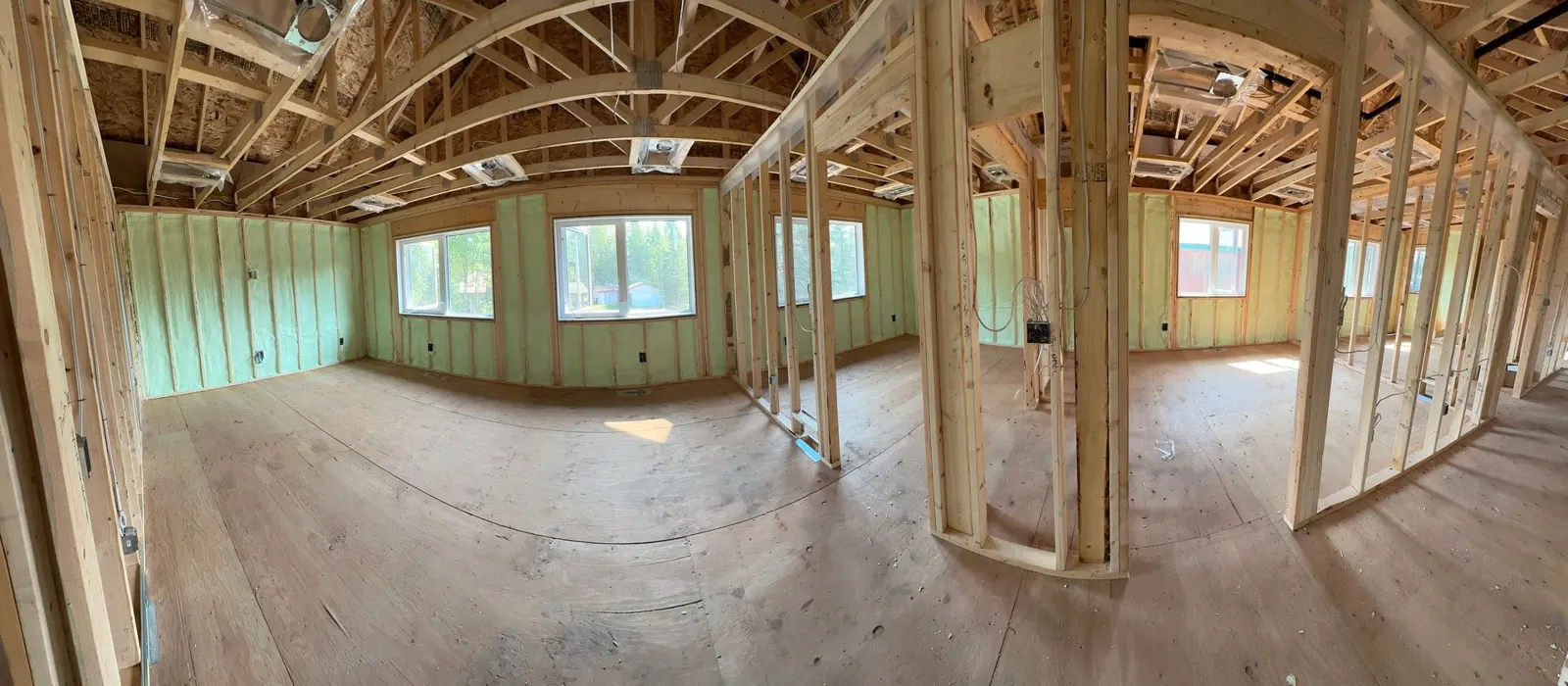
Why we spray it on steel
A Quonset or steel shop at -25°C has a lot of cold metal. Heat the inside and the moisture in the air lands on that steel and drips. Batts can't fix it because they let the damp air through.
Closed cell bonds directly to the steel. No air gets behind it, so there's nowhere for condensation to form. It also isn't something mice eat or nest in, which matters in a farm building. If the foam stays exposed, we can coat it with DC315 as a thermal barrier.
Where closed cell isn't the right pick
Closed cell costs more per board foot than open cell or blown-in. In some places you're paying for properties you don't need.
- Open attic floors. Blown-in fibreglass or cellulose gets you to R-50 for much less.
- Interior walls between rooms, where sound is the goal. Open cell absorbs noise better.
- Walls that need to dry toward the inside in a particular design. Your designer may spec vapour-open insulation.
- A basement with active water coming through. Fix the drainage first.
There's also a strength bonus people don't expect. Cured closed cell bonds the sheathing to the studs and adds racking strength to the wall, which helps in a detached garage or shop wall that feels a bit loose.
Not sure which you need? We'll tell you at the estimate. Every job carries our one-year workmanship warranty, and most are done in one day. See the full insulation services list, or how we work in Edmonton.
Related services
Questions we get asked
What is the R-value of closed cell spray foam?
Closed cell spray foam is about R-6 to R-7 per inch, depending on the product. That's roughly double fibreglass at the same thickness, which is why it's used where wall or rafter depth is tight.
Does closed cell foam need a vapour barrier?
At 2 inches or more, closed cell foam works as its own vapour barrier, so most assemblies don't need separate poly. Your building inspector confirms what your project needs.
Is closed cell better than open cell?
For rim joists, basements, metal buildings and roof decks, yes. It blocks moisture and adds strength. For interior walls and sound control, open cell is often the better and cheaper choice.
How thick should closed cell spray foam be?
It depends on the R-value you need and the code requirement for the space. Two inches is the point where it acts as a vapour barrier. We set the depth in your written quote.
Does closed cell foam stop mice?
Cured closed cell foam isn't a food source and mice don't nest in it the way they do in batts. It's one reason farm and shop owners choose it.
Get a free quote
Tell us what you're insulating and where. We'll book a walkthrough, measure it, and send you a written quote. Serving Edmonton, Calgary and across Alberta.