
Soffit intake
The vented panels under your eaves are where fresh air enters. They get painted over, blocked by old insulation, or were never vented in the first place on some older houses.
Frost on the roof sheathing, ice dams and mould in the attic usually come from air leaks and blocked vents, not thin insulation. We fix the venting and seal the ceiling, then insulate.
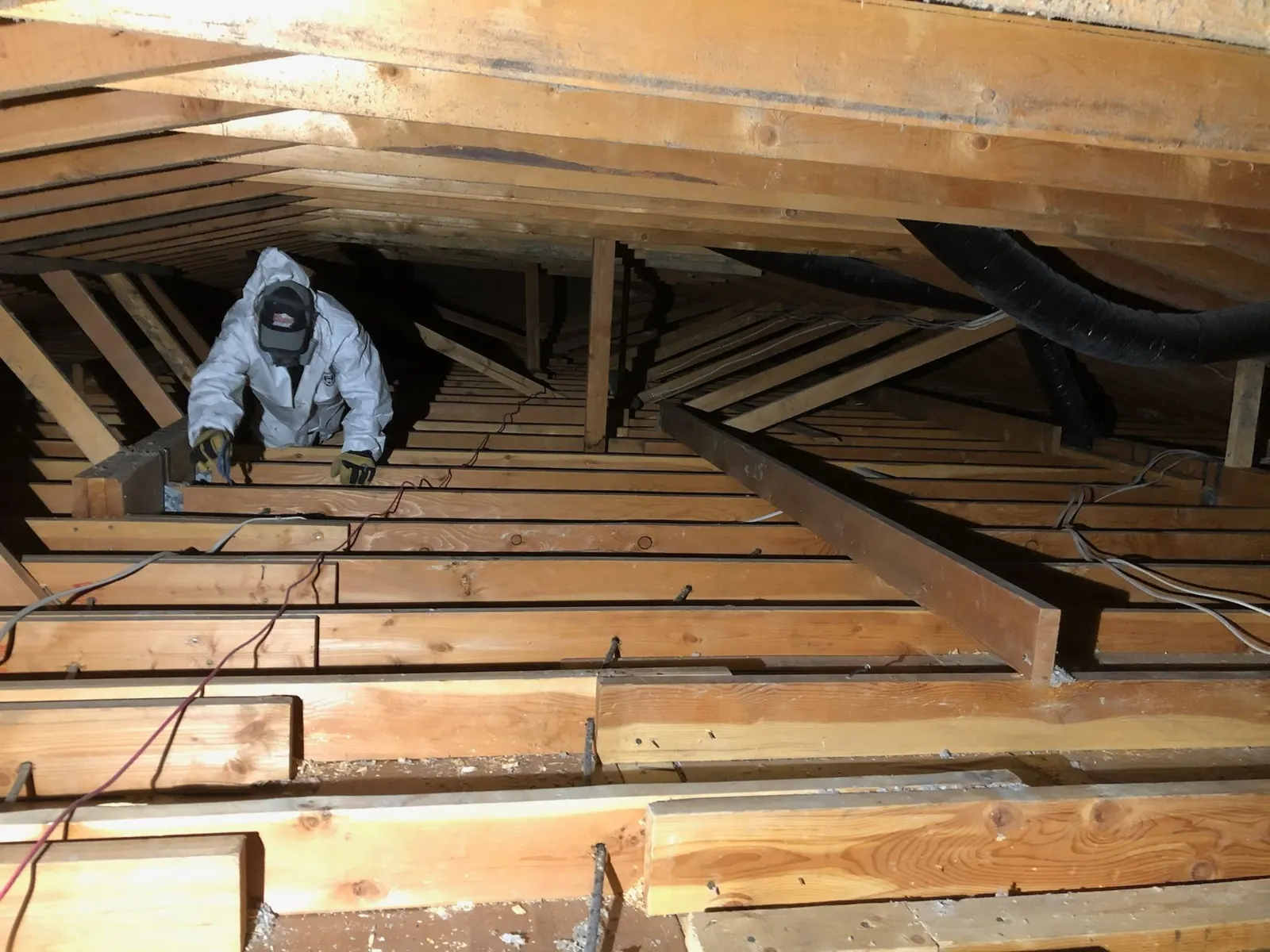 Attic access and inspection
Attic ventilation and vapour barrier repair means fixing the soffit intake, baffles and roof vents that let an attic breathe, and sealing the ceiling so household moisture can't get up there. Aires does this work in Edmonton, Calgary and across Alberta, usually alongside an attic insulation upgrade.
An attic in a Prairie winter should be cold and dry. The ceiling below it does two things: keeps warm, damp house air out, and holds the insulation. The vents above it let any moisture that does get in escape before it freezes on the roof deck.
When either side fails, you get frost, dripping, stained ceilings and eventually mould on the sheathing. This page covers the repair. The insulation side is on our attic insulation page, and both sit under our insulation services.
Cold air comes in low at the eaves and leaves high near the peak. Every part of that path has to be open.
The vented panels under your eaves are where fresh air enters. They get painted over, blocked by old insulation, or were never vented in the first place on some older houses.
Channels fitted between the rafters at the eaves. They keep insulation from spilling into the soffit and hold an air gap open under the roof deck. Older attics are often missing them.
Box vents, ridge vents or gable vents let warm, moist air out up high. Damaged, blocked or too few exhaust vents leave moisture trapped against the sheathing.
Most Alberta houses have a poly vapour barrier behind the ceiling drywall. Over the years it gets cut for pot lights, bathroom fans, wiring and plumbing stacks, and those holes are rarely sealed. The attic hatch is often the worst one: a loose panel with no gasket.
Every one of those gaps lets warm, wet air rise into the attic. From inside the attic, we seal around penetrations, top plates and the hatch. Spray foam is often the quickest way to close odd-shaped gaps around wires and boxes, and it doesn't shift when insulation is blown over it.
Where the poly itself is torn or missing over a section, we repair it before the attic is reinsulated. On cathedral and vaulted ceilings with no attic space, closed cell foam at 2 inches or more takes care of the air and vapour barrier in the same layer. See closed cell spray foam.
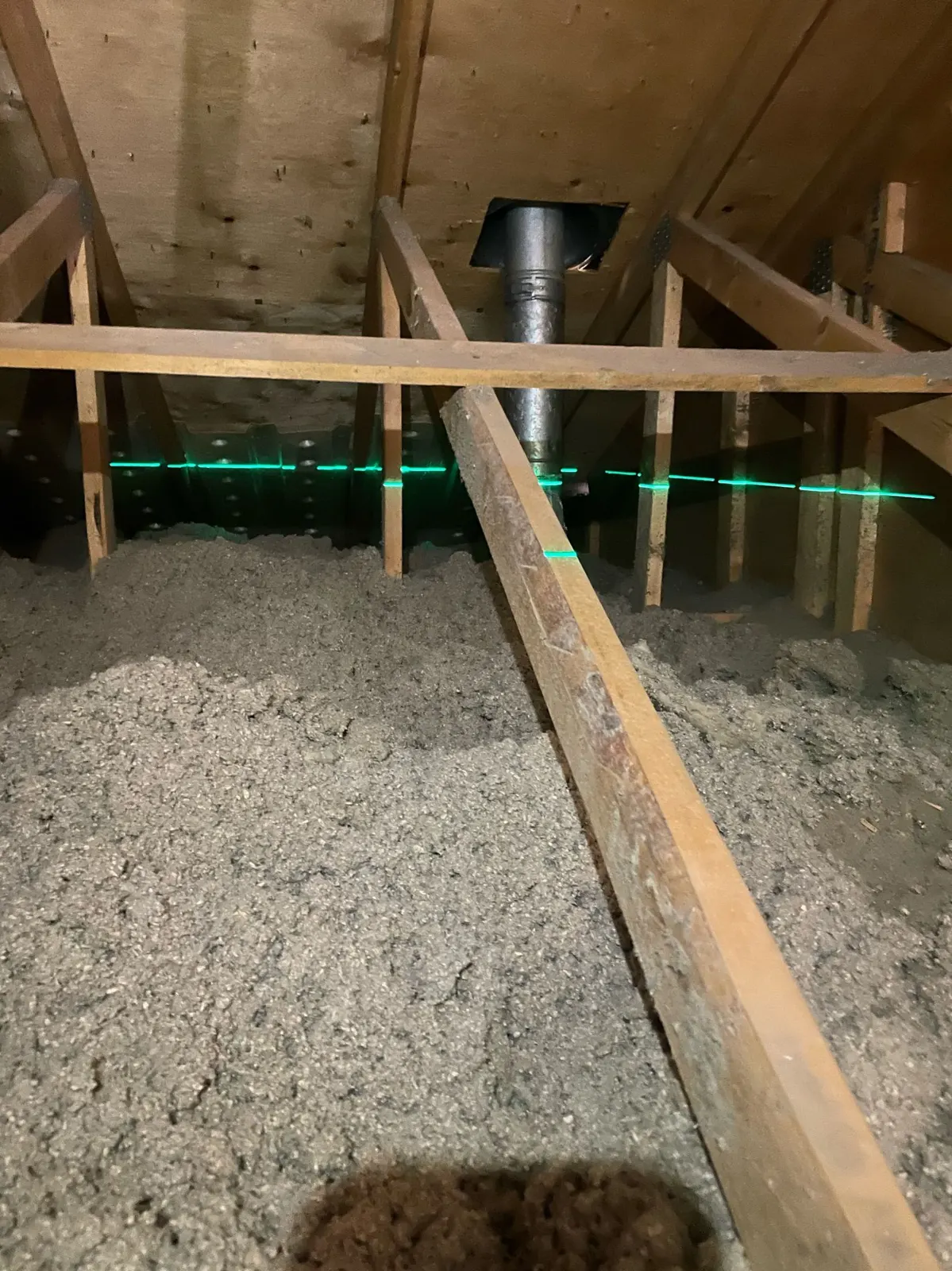
All three usually trace back to the same two faults: air leaking up from the house and an attic that can't vent it out.
On a cold January night, house air leaking into the attic hits the underside of the roof and freezes. You'll see white frost on the nail tips and sheathing. When it warms up, that frost melts all at once, and it can drip through the insulation and stain the ceiling. People often mistake it for a roof leak.
Warm air heats the upper roof deck, snow melts, and the water refreezes at the cold eaves. The ridge of ice grows until meltwater backs up under the shingles. In Calgary, chinook thaws can run this cycle several times a winter.
Repeated frost and poor venting leave the sheathing damp for weeks at a time. Black staining on the north side of the roof deck is a common result. Fix the air leaks and venting and the sheathing can dry out. Heavy growth may need a mould remediation company before we reinsulate.
From a review left for Aires, word for word.
Used them for Attic insulation service. They also fixed the vents in the attic. They were fast, efficient, professional and responsive.
If the old insulation is wet or full of mould, it comes out first. See insulation removal.
We look for frost marks, staining and mould on the sheathing, check every soffit bay and count the roof vents.
Penetrations, top plates and the hatch get sealed. Torn poly gets repaired.
Blocked soffits are cleared, baffles go in at each rafter bay, and exhaust vents are repaired or added where needed.
The attic is topped up or reinsulated to R-50, with the vents kept clear.
Warm, moist air from the house is leaking into the attic and freezing on the cold roof sheathing. The usual fix is sealing the leaks at the ceiling and making sure the soffit and roof vents can move air through.
Not by itself. Ice dams come from warm air reaching the roof deck. Insulation slows heat but does little to stop air, so the ceiling has to be air sealed and the attic properly vented first.
Baffles are channels installed at the eaves between the rafters. They hold insulation back from the soffit vents so cold outside air can flow up under the roof deck.
Most Alberta houses have a poly vapour barrier on the warm side of the ceiling. It needs to be continuous and sealed at penetrations. Where it's torn or missing, we repair it or air seal with spray foam.
It's a sign that moisture has been building up for a while. The moisture source needs fixing first, usually air leaks and poor venting. Heavy growth may need a remediation company before we reinsulate.
Tell us what you're insulating and where. We'll book a walkthrough, measure it, and send you a written quote. Serving Edmonton, Calgary and across Alberta.