
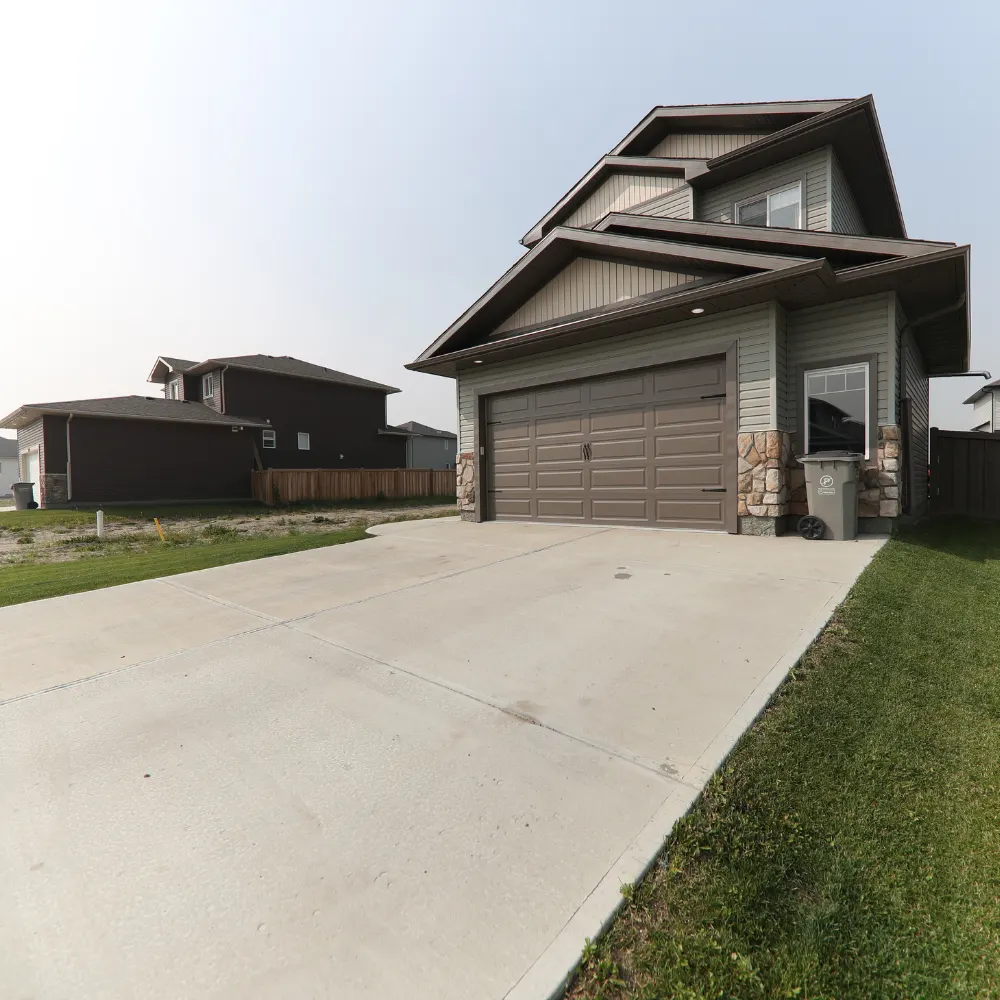
Poorly compacted fill
The soil around a new house is often backfill. If it wasn't packed down well before the driveway was poured, it keeps settling for years.
We raise sunken driveways, walks, patios and garage slabs with polyurethane foam injected through small holes. No tear-out, and far less mess than replacing the slab.
 Driveways, walks, slabs
Same polyurethane chemistry we spray as insulation, used for a different job.
Concrete lifting, sometimes called slab jacking, raises a sunken concrete slab by injecting expanding polyurethane foam underneath it. Aires lifts driveways, sidewalks, garage floors and patios in Edmonton and the surrounding towns.
We drill small holes through the slab, pump foam into the void below, and watch the concrete come back up. The cured foam is strong, water resistant and permanent. It costs less than tearing the slab out and pouring a new one, and your yard doesn't turn into a construction site.
Polyurethane is what we work with every day. On the insulation side it's spray foam. Under a slab, the same kind of material fills the gap where the soil used to be.
Concrete is heavy and the ground under it moves. A slab drops when something takes away its support.
The soil around a new house is often backfill. If it wasn't packed down well before the driveway was poured, it keeps settling for years.
A downspout dumping onto the edge of a walk or driveway washes soil out from under it, one rainstorm at a time.
Water in the soil freezes, expands and thaws again every spring and fall. That movement loosens the base and opens voids.
We lift a little at a time and keep checking the level, so the slab comes up without cracking.
We look at how far the slab has dropped, where the low spots are, what's causing it and whether the concrete is sound enough to lift.
Small holes go through the slab at the spots where the foam needs to go.
Polyurethane goes in under pressure. It expands, fills the void and lifts the slab back toward grade.
The foam cures under the slab. We patch the holes and check the finished level.
All three fix a sunken slab. They differ in cost, weight and disruption.
| Polyurethane lifting | Mudjacking | Replacement | |
|---|---|---|---|
| What goes under | Expanding foam | Cement and soil slurry | New base and new concrete |
| Holes | Small | Larger | None, the slab is removed |
| Added weight on the soil | Light | Heavy | Full new slab |
| Water resistance once set | Water resistant | Can wash out over time | Depends on the base |
| Cost and mess | Lower | Lower | Highest |
| Fixes broken concrete | No | No | Yes |
Pick the slab that's giving you trouble.
Lifting puts a slab back where it was. It doesn't repair the concrete. If the slab is broken into small pieces, crumbling on top or heaved and cracked all the way through, it needs to come out and be replaced. We'll tell you that at the assessment rather than lift something that won't last.
We also look at the water. If a downspout caused the problem, it will cause it again unless it gets moved or extended.
Our Edmonton team quotes lifting jobs across the city and nearby towns like St. Albert, Sherwood Park and Spruce Grove. See our Edmonton service area, or book a free assessment. Every job carries our 1-year workmanship warranty.
We drill small holes through the slab and inject a two-part polyurethane foam underneath. The foam expands, fills the voids and pushes the slab back up to grade. Once it cures it stays put and doesn't wash out.
Usually, yes. Lifting skips the demolition, the disposal and the new pour. It only makes sense if the concrete itself is in decent shape. Badly broken or crumbling slabs need to be replaced.
Polyurethane uses smaller holes and a much lighter material than the cement slurry used in mudjacking, so it adds less weight to soil that already settled once. It also doesn't absorb water once cured.
Most often it's poorly compacted fill under the slab, water from downspouts washing soil away, and years of freeze and thaw moving the ground. Once a void forms, the slab drops into it.
It depends on the size of the slab, how far it has dropped and how big the void is underneath. We look at it on site and give you a written quote for free.
Tell us what you're insulating and where. We'll book a walkthrough, measure it, and send you a written quote. Serving Edmonton, Calgary and across Alberta.