
Blown-in fibreglass
Made from sand and recycled glass, about R-2.5 to R-3.7 per inch depending on the product. Light, holds its R-value and dries out more easily if a roof leak gets to it.
Old wood chips out, new insulation in, vents fixed. We top up Edmonton attics to R-50 with blown-in fibreglass or cellulose, and we're a CEIP Qualified Contractor.
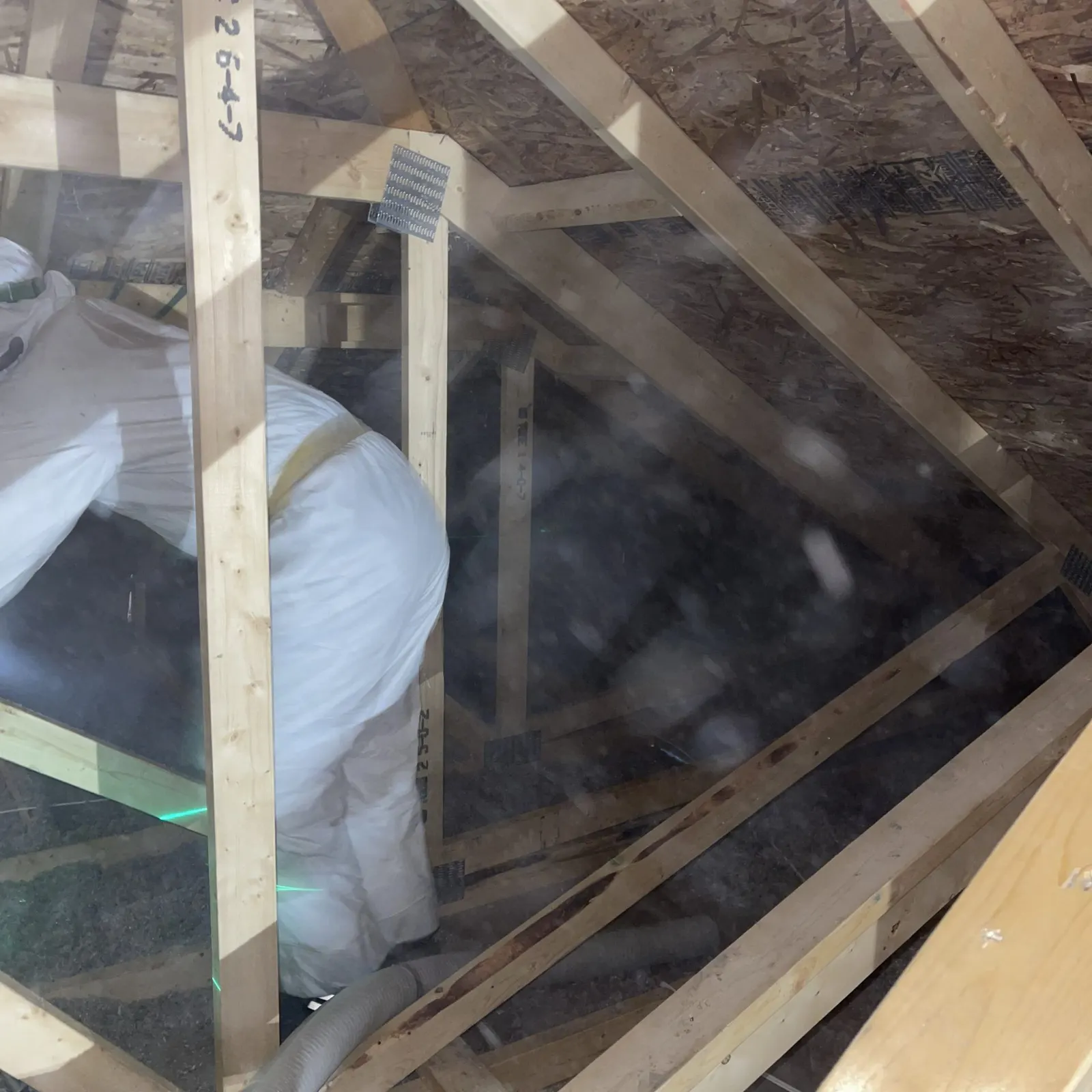 Attic removal, vacuum
Aires Spray Foam & Insulation removes old attic insulation, blows in new fibreglass or cellulose and repairs attic venting for homes across Edmonton. Most top-ups go to R-50, the level CEIP requires for attic financing.
In a lot of Edmonton houses the attic loses more heat than anywhere else, and it's usually the cheapest place to fix. Below is what we find in local attics and how we deal with it. For the general version, including materials and how blown-in works, see our main attic insulation page.
Lift the hatch in a bungalow from the 1950s or 60s and there's a fair chance you'll find wood chips, or wood chips with a thin layer of batts thrown over them years later. Wood chips settle, hold moisture and don't add up to much R-value. Mice like them too. Topping up over wood chips is possible, but if they're damp or full of droppings they should come out first.
Homes from the 1970s and 80s usually have fibreglass, but not enough. It was installed to the standard of the day and has packed down since. A lot of these attics are sitting well under R-50.
Some older attics have vermiculite: grey-brown, pebbly, a bit shiny. It may contain asbestos. Don't disturb it or try to vacuum it out yourself. It needs testing before anyone touches it, and if we see it on a walkthrough we'll stop and tell you so.
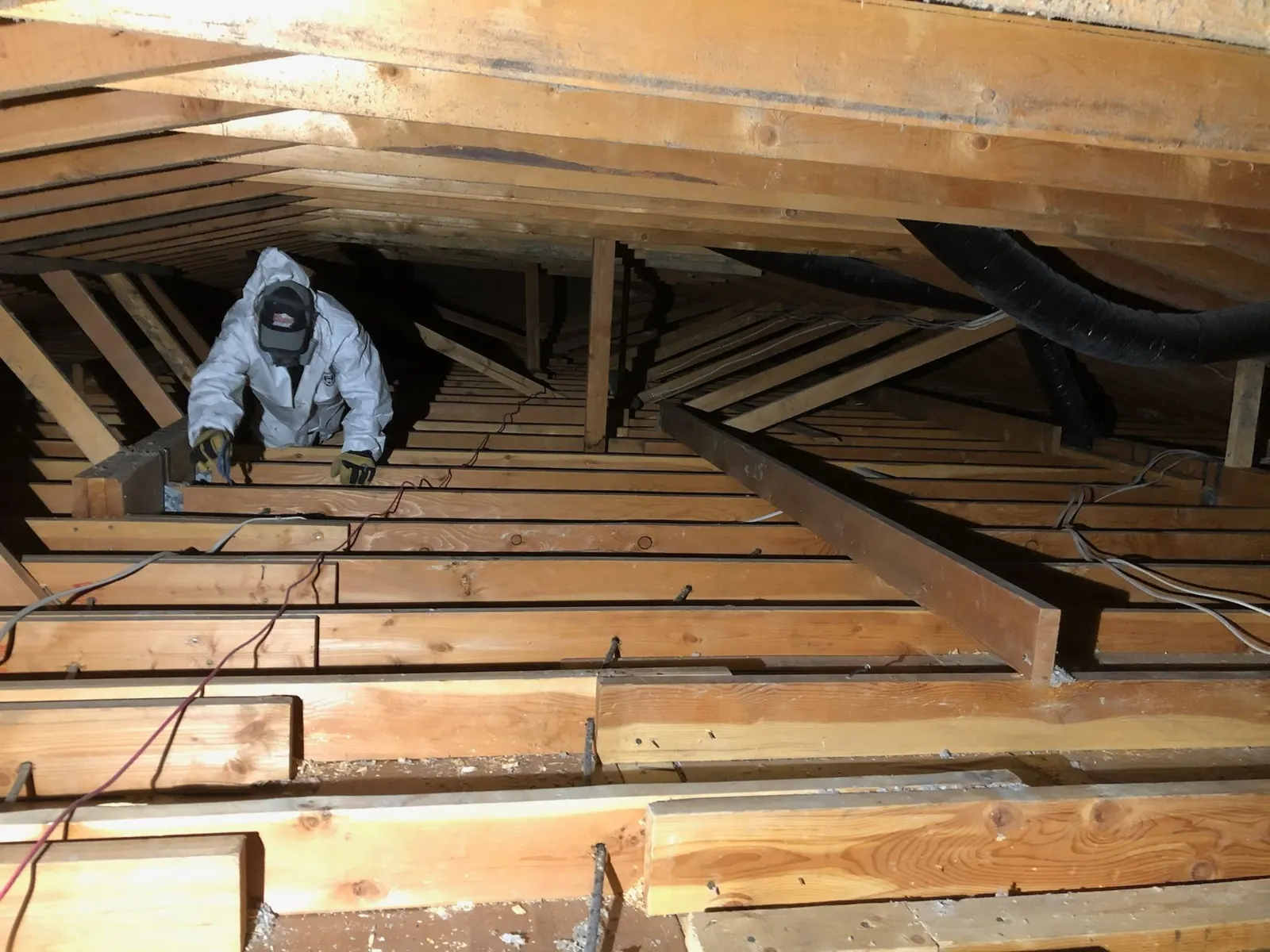
Not every attic needs all five steps. Plenty only need the top-up.
We check what's up there, how deep it is, whether it's wet or contaminated, and whether the soffit and roof vents are doing their job.
Wood chips and old, wet, smoke-damaged or rodent-contaminated insulation come out with industrial vacuum equipment. It's much faster than bagging it out by hand.
Blocked soffits, missing baffles, torn poly around the hatch or light fixtures. We repair them while the attic floor is open. See attic venting and vapour barrier.
Blown-in fibreglass or cellulose to the R-value in the quote, usually R-50.
Hatch area and work path cleaned, and a walkthrough with you before we leave.
More detail on the removal side is on our insulation removal page.
An ice dam starts with heat. Warm air leaks from the house into the attic through pot lights, the hatch and plumbing stacks, and warms the roof deck. Snow on the upper roof melts, runs down to the eaves where the deck is still cold, and freezes again. The ridge of ice grows, and water backs up under the shingles.
Edmonton gets the conditions for this every winter: snow on the roof for months and freeze-thaw swings in late winter. The fix is in the attic, not on the roof. Seal the air leaks, bring the insulation up so heat stays in the house, and keep the vents clear so the roof deck stays cold.
One customer put it simply: "They also fixed the vents in the attic."
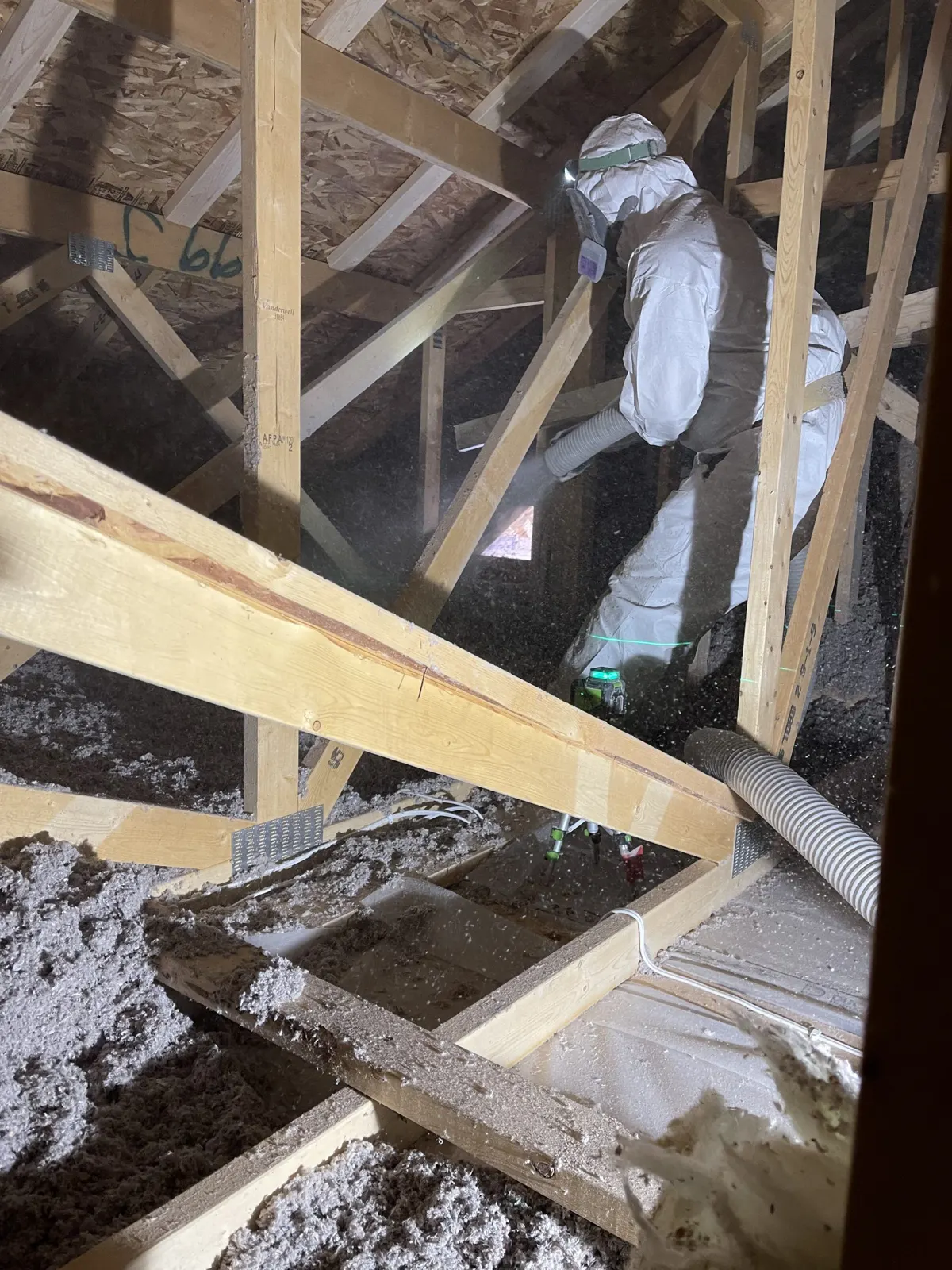
Both get an Edmonton attic to R-50. The choice comes down to the house.
Made from sand and recycled glass, about R-2.5 to R-3.7 per inch depending on the product. Light, holds its R-value and dries out more easily if a roof leak gets to it.
About 85% recycled paper treated with borates for fire, pest and mould resistance. Roughly R-3.2 to R-3.8 per inch. Denser and heavier, and it settles more, so we blow it deeper.
For cathedral and vaulted ceilings where there's no room for loose fill. Closed cell gets the most R-value into a shallow rafter space.
The blown-in fibreglass and cellulose page compares them in more depth.
Aires is a Qualified Contractor for Edmonton's Clean Energy Improvement Program. An attic brought up to at least R-50 (R-28 for flat or cathedral ceilings) counts as a qualifying upgrade. You repay it through your property tax bill over up to 25 years, and the balance stays with the house if you sell.
Residential projects need three qualifying upgrades unless the home reaches net zero, so the attic is usually one part of a bigger plan. CEIP stacks with other rebates. Read how CEIP works before your EnerGuide evaluation.
We cover the whole city and the towns around it, St. Albert, Sherwood Park, Spruce Grove, Leduc and Fort Saskatchewan among them. The full list is on our Edmonton page.
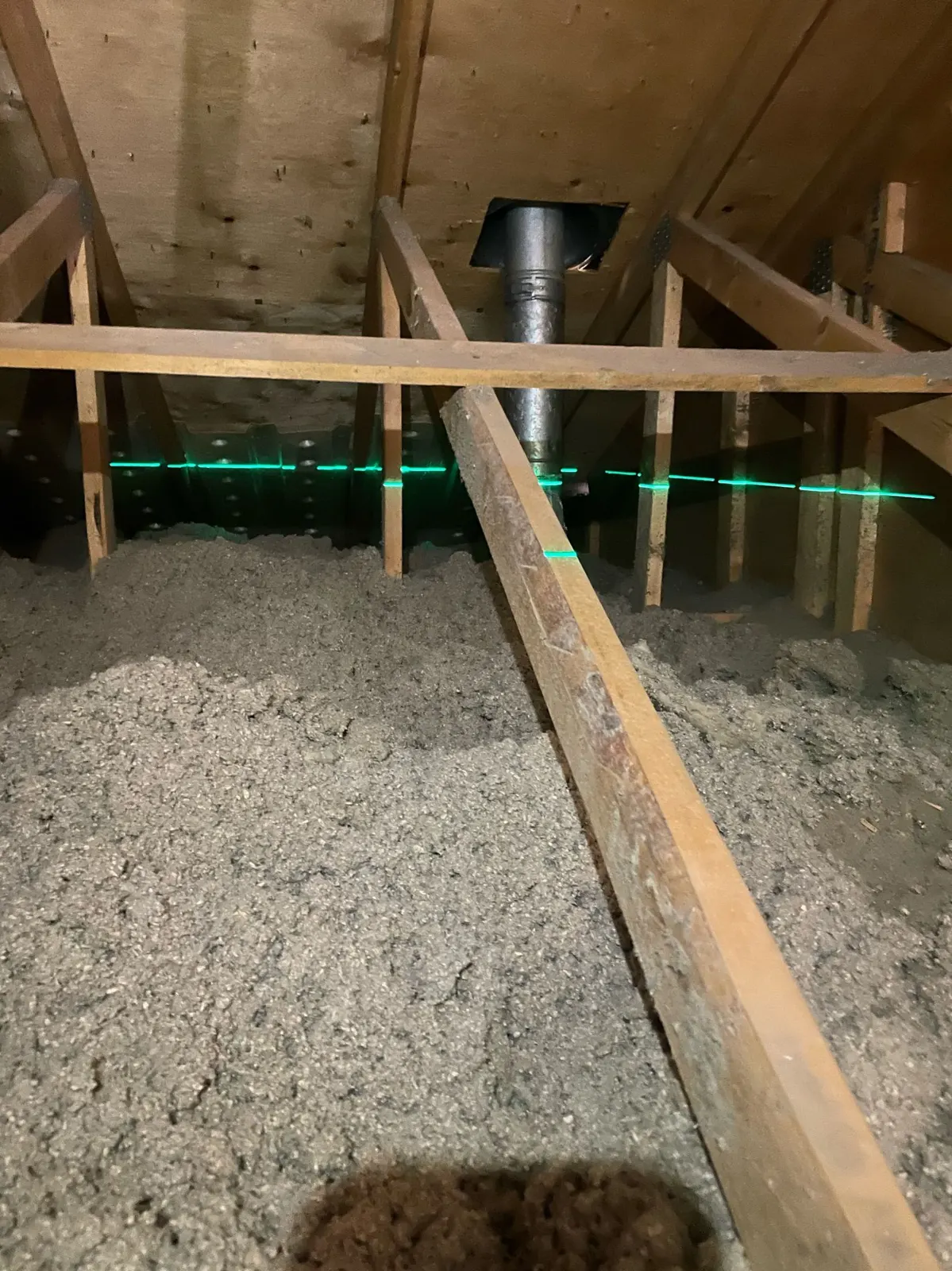
It depends on the attic area, how much is already there, the target R-value and whether old material has to come out first. We look in the attic, measure, and give you a free written quote.
R-50 is a good target and it's the minimum for an attic to qualify under CEIP. Flat or cathedral ceilings qualify at R-28 because there's less room. Many older Edmonton attics are well short of R-50.
Yes. We pull wood chips and old, wet, smoke-damaged or rodent-contaminated insulation out with industrial vacuum equipment. If there's vermiculite, it has to be tested for asbestos first.
Both work. Cellulose is denser, slightly higher R per inch and resists pests, but it's heavier and holds moisture longer. Fibreglass dries out more easily. We'll recommend one after seeing your attic.
It helps a lot. Ice dams form when heat leaking into the attic melts snow on the roof and the water refreezes at the cold eaves. Sealing air leaks, adding insulation and keeping the vents clear deal with the cause.
Tell us what you're insulating and where. We'll book a walkthrough, measure it, and send you a written quote. Serving Edmonton.