
Warehouses and storage
Tall walls and big roof areas, often steel. The goal is cutting the heat bill and keeping stock dry.
Warehouses, retail units, workshops, schools and steel buildings. We spray closed cell foam on walls and roof decks and can coat it to meet code in the same job.
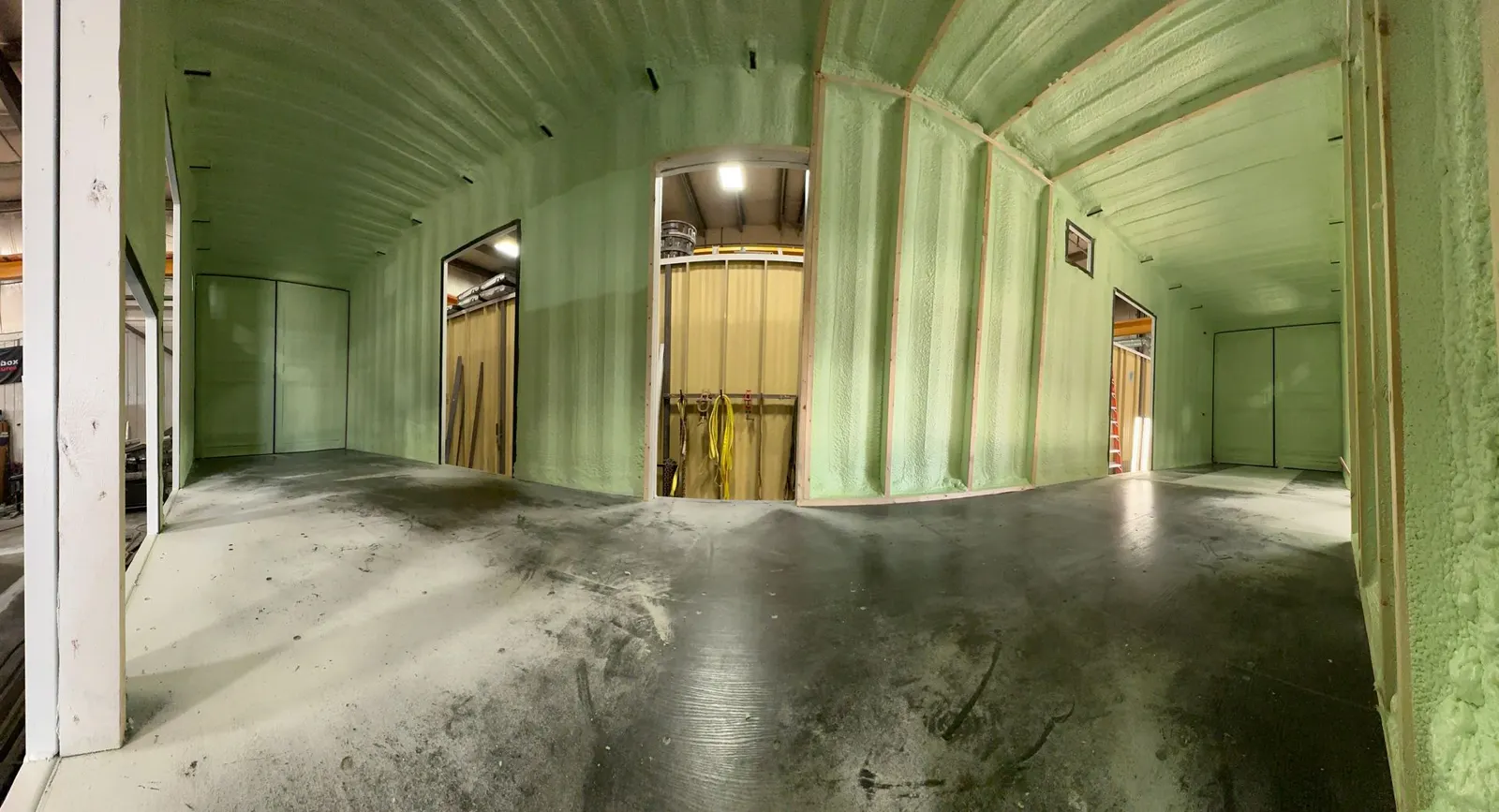 Commercial shop, walls and ceiling
Commercial spray foam is closed cell polyurethane insulation sprayed onto the walls, roof decks and steel of business buildings. Aires insulates warehouses, retail units, workshops, storage buildings, multi-storey units and schools in Edmonton, Calgary and across Alberta.
Commercial work is bigger and the schedule is tighter than on a house. There's also an inspector who will want to know what covers the foam when we're done. We sort that out at the quote stage, before the rig shows up.
Closed cell is the product for nearly all of this work. It runs about R-6 to R-7 per inch, sticks to steel, concrete and wood, and at 2 inches or more it acts as its own air and vapour barrier. It also adds racking strength to the wall. The full material breakdown is on our closed cell spray foam page.
These are the commercial jobs we see most often, and what each one is usually about.
Tall walls and big roof areas, often steel. The goal is cutting the heat bill and keeping stock dry.
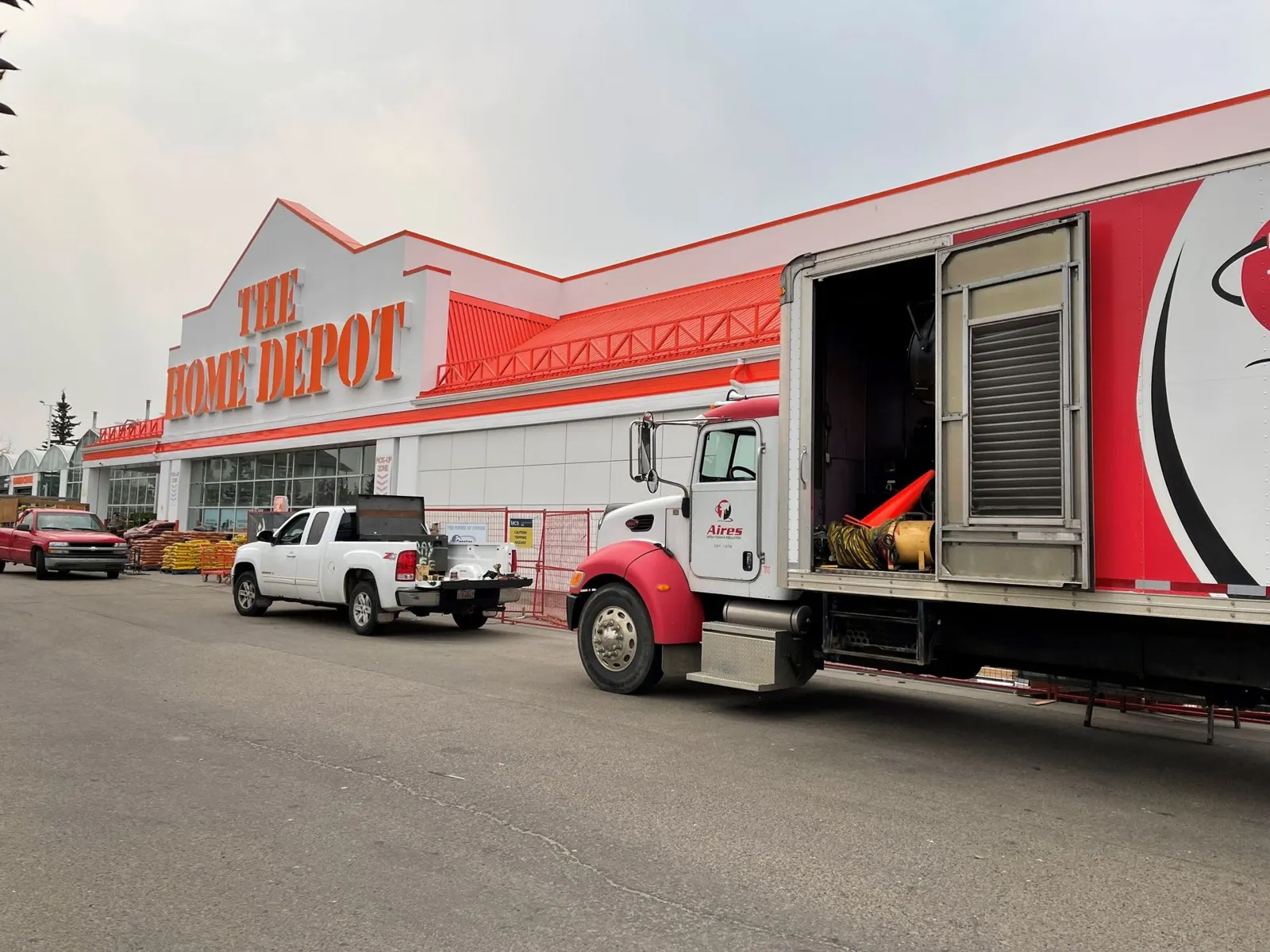
Bay walls, demising walls and ceilings in retail buildings. Our rig has worked a Home Depot job, so we know how to set up in a parking lot.
Overhead doors, high ceilings and heaters that run all day. Foam on the walls and roof deck holds the heat near the floor where people work.
We've sprayed exterior walls on school buildings. Work like this is usually scheduled around the school calendar.
Foam sprayed to the underside of the deck insulates and air-seals the roof in one layer, with no gaps at the joists.
Bare steel sweats when it's cold outside and warm inside. Closed cell bonds to the panel and stops the drip.
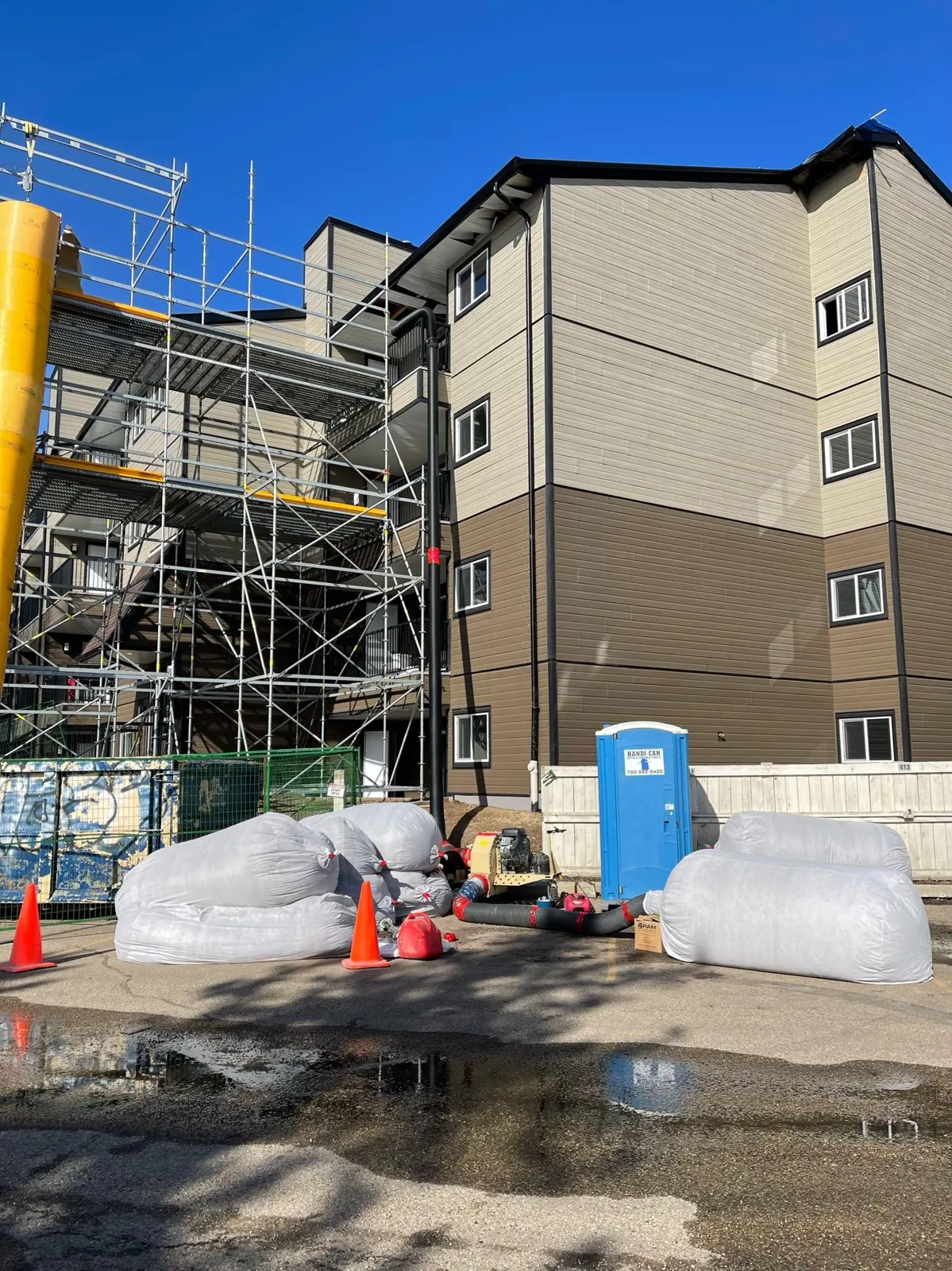
Aires has the equipment and spray setup to insulate vertical construction, including tall exterior walls, multi-storey assemblies and other elevated work areas.
We review access, staging, fall-protection requirements and the spray sequence before work begins. The scope and equipment plan are included in the project schedule so the insulation work can fit around the other trades.
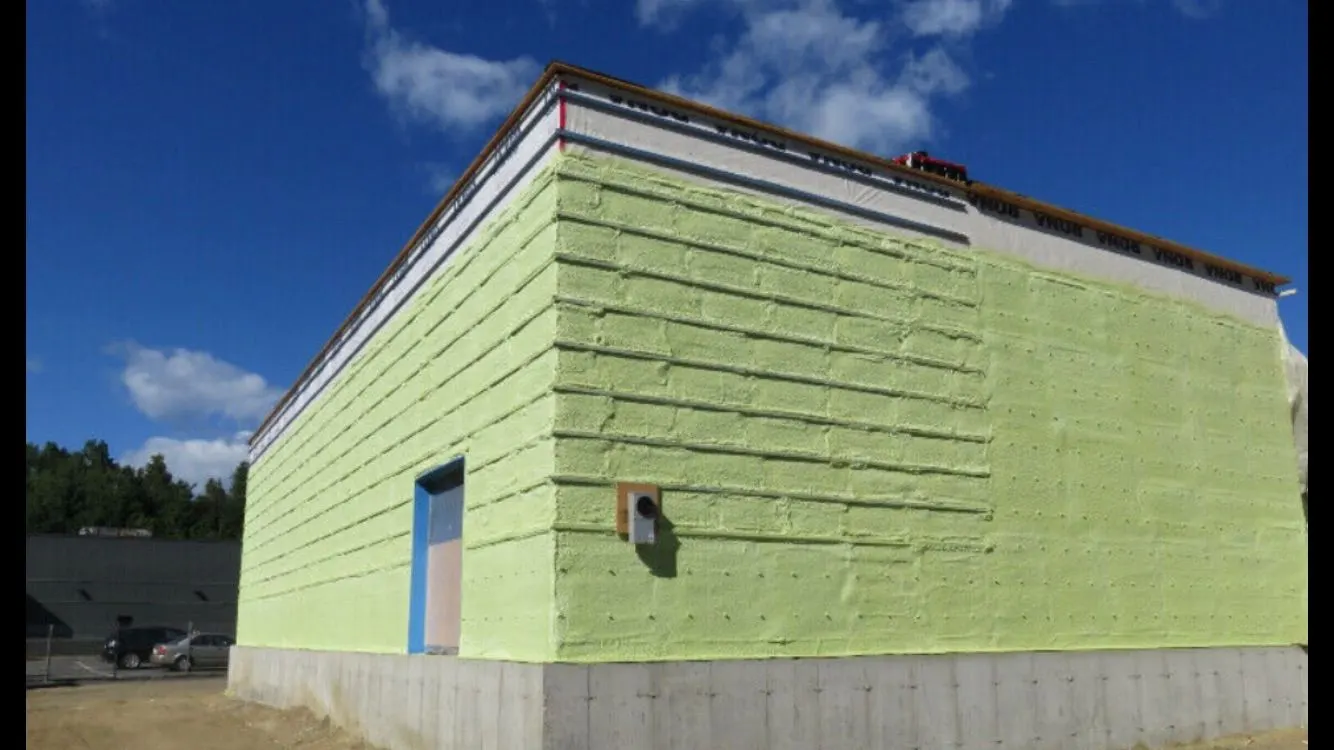
Most building owners want to know one thing first: how long will this shut us down? Nobody can be in the spray zone while we work or while the foam cures. The whole building rarely has to close, though.
You will get a timeline with the quote. Our SECOR-verified process includes site requirements, crew coordination, quality checks and clean-up.
This is the part of commercial foam that catches people out. Spray foam left bare in an occupied space usually doesn't pass inspection on its own.
Codes generally call for foam to be separated from the occupied space by a thermal barrier. Drywall does that, but nobody wants to board the ceiling of a 20-foot warehouse. The usual alternative is a tested intumescent coating sprayed over the foam.
We apply DC315, a 15-minute thermal and ignition barrier that meets IBC/IRC and Canadian NBC requirements and is NFPA 286 tested. For structural steel that needs an hourly fire rating, we also do cementitious work through our fireproofing service. Aires can coordinate the foam and coating under one schedule and one point of contact.
Closed cell is our default for commercial work, but here's how the options stack up in the spots we get asked about.
| Situation | Our usual pick | Why |
|---|---|---|
| Steel walls and roofs | Closed cell | Bonds to the steel and stops condensation |
| Roof deck underside | Closed cell | High R per inch, seals air at every joist |
| Interior demising walls | Open cell | Better at absorbing sound, cheaper per inch |
| Large flat ceiling with attic space | Blown-in | Lower cost to reach high R-values |
| Exposed foam in work areas | Closed cell plus DC315 | Meets thermal barrier requirements |
Warm air collects at the top of a tall building, and if the roof and upper walls leak, that's where your heating money goes. Sealing the shell with foam keeps the heat inside and stops the cold drafts that come in around steel framing and overhead doors.
If your site is more industrial, such as tanks, pipelines or site enclosures, see industrial and pipeline spray foam. Farm shops and Quonsets are covered on our agricultural spray foam page. All of it sits under our insulation services, and every job has a one-year workmanship warranty.
It's priced by the board foot (one square foot, one inch thick), so cost depends on the area, the thickness the design calls for and whether a thermal barrier coating is needed. We measure on site or from drawings and give you a written quote.
Usually, yes. Building codes generally require foam in occupied spaces to be covered by a thermal barrier such as drywall, or by a tested coating. We apply DC315, a 15-minute thermal and ignition barrier, over the foam.
Often, yes, with planning. We can work section by section, after hours or on weekends, and mask off the area we're spraying. Nobody can be in the spray zone, so we'll agree on a plan for access before we start.
Closed cell foam bonds directly to the steel and keeps warm, moist inside air away from the cold panel, which is what causes the dripping. It's the usual fix for sweating metal roofs and walls.
Aires is based in Edmonton and Calgary. We work across Alberta and take larger commercial projects in British Columbia and the Yukon.
Tell us what you're insulating and where. We'll book a walkthrough, measure it, and send you a written quote. Serving Edmonton, Calgary and across Alberta.