
Sea-cans
Storage, site offices, workshops, pump houses and cabins. Weight rarely matters on a can that sits on the ground, so we can go thicker for a heated space.
Shipping containers, hunting shacks, ice-fishing units, cargo trailers and camper vans. Closed cell foam bonds to the steel and stops it from sweating.
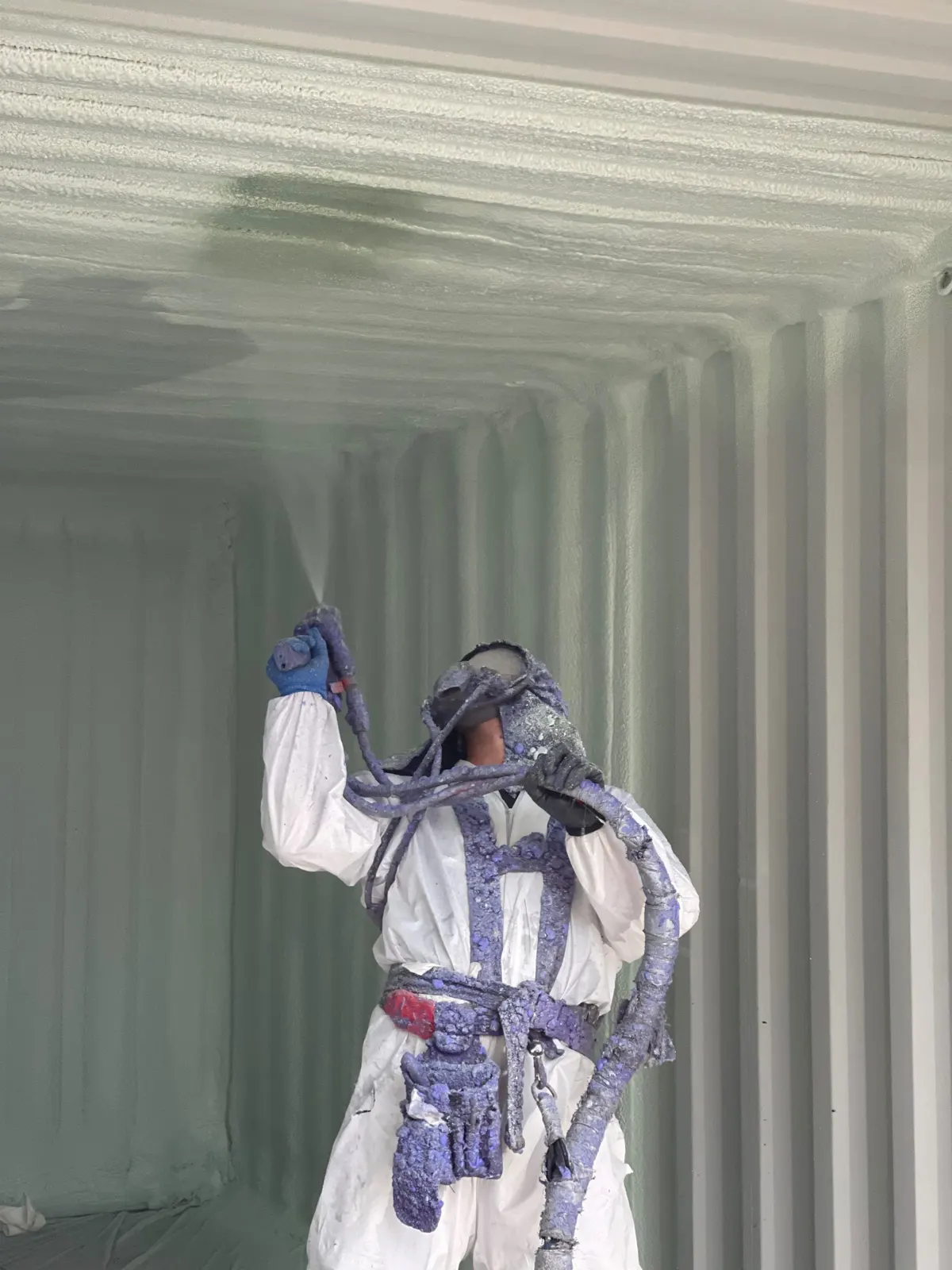 Sea-can, walls and ceiling
Container and van insulation is closed cell spray foam applied to the inside of steel shipping containers, hunting and ice-fishing units, cargo trailers and camper vans. Aires does this work in Edmonton and Calgary to stop condensation on bare steel and keep the space warm.
Anyone who has slept in an uninsulated sea-can in November knows the problem. You heat the inside, your breath and the heater put moisture in the air, and by morning the ceiling is dripping. Steel conducts cold straight through, so every inch of bare metal turns into a cold surface for water to form on.
Batts and rigid board leave air gaps against corrugated steel, and the condensation keeps forming behind them where you can't see it. That's how containers rust from the inside and how mould gets into the framing.
Closed cell foam goes on as a liquid and expands into every ridge of the corrugation. Once cured, it is stuck to the metal with no gap behind it. Warm, moist air can't reach the cold steel, so the dripping stops.
Open cell is lighter and cheaper, but it absorbs water. In a steel box that sweats, that's the wrong choice. More on the material is on our closed cell spray foam page.
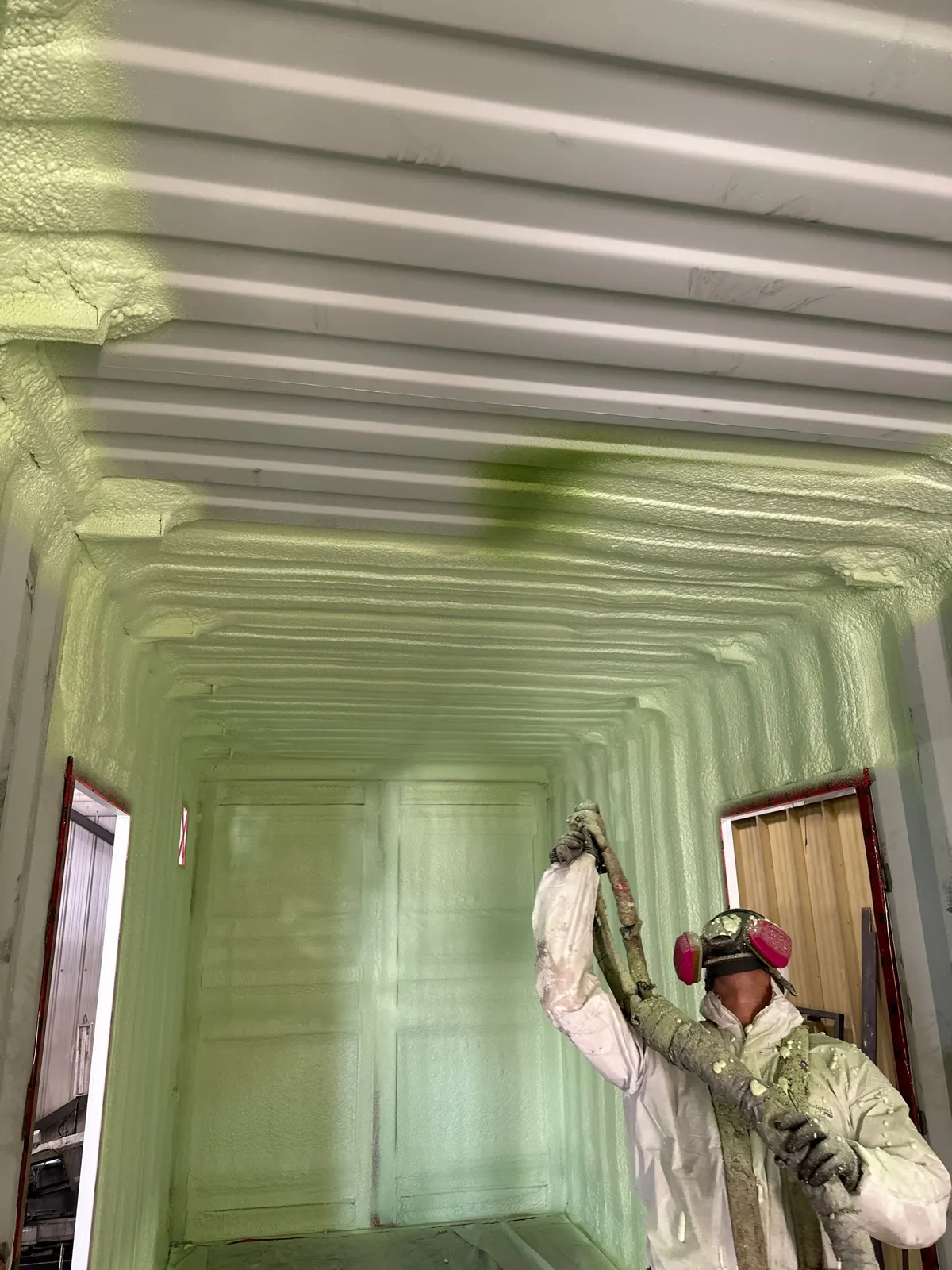
Each one has a different trade-off between R-value, weight and space.
Storage, site offices, workshops, pump houses and cabins. Weight rarely matters on a can that sits on the ground, so we can go thicker for a heated space.
Shacks and bunkhouses that sit empty for months, then get heated hard for a week in the fall. Foam handles the swing without sagging.
A heater, wet boots and a hole in the floor make a lot of moisture. Foam keeps it from freezing on the walls and dripping back down.
Enclosed trailers turned into mobile shops or toy haulers. Thinner coats keep weight down and preserve interior width.
Van builds where every inch of space counts. A thin layer of closed cell on the steel stops condensation behind your panels.
More foam is warmer but takes more room and adds weight. Here's how we usually think about it.
| Unit | Main goal | What we watch |
|---|---|---|
| Storage sea-can, unheated | Stop condensation | A thinner coat is often enough |
| Heated sea-can or cabin | Hold heat in winter | Thicker walls and ceiling, interior space |
| Hunting or ice-fishing unit | Warm fast, stay dry | Weight if it's towed, floor insulation |
| Cargo trailer | Dry, usable shop space | Payload and interior width |
| Camper van | No sweating behind panels | Headroom, weight, wiring runs |
Cured closed cell foam is hard. Cutting it back to add a wire or a vent later is messy, so get the layout settled before the job.
Install any studs or furring, and cut openings for windows, doors, vents and fans.
Run cable, conduit and boxes. Foam seals around them tight once they're in place.
Rust scale, grease and loose paint need to come off so the foam bonds to bare, dry metal.
We mask what stays uncovered, spray to the agreed depth and trim. Most units are done in a day.
Panel over it, or ask us about a DC315 thermal barrier if the foam will stay exposed in a living or work space.
Our Edmonton and Calgary teams can bring the rig to a sea-can, trailer or job site as long as we can park within hose reach. Local details are on our Edmonton and Calgary spray foam pages, and we take jobs across Alberta.
Container work sits alongside our commercial and agricultural spray foam services, all part of our insulation work. Every job carries a one-year workmanship warranty.
For most sea-cans, closed cell spray foam. It bonds to the corrugated steel with no air gap, so condensation can't form behind it, and it gives about R-6 to R-7 per inch, which saves interior space compared with batts.
It depends on how you'll use it. An unheated storage can needs less than a heated office or bunkhouse. At 2 inches or more, closed cell also acts as the vapour barrier, which makes it a common starting point. We'll recommend a thickness once we know the use and the heat source.
Closed cell foam is light for the R-value it gives, but it does add some weight, and thicker coats add more. On vans and trailers we keep it to the depth that solves the condensation problem without eating your payload or headroom.
Yes. Run wiring, conduit and boxes, and cut in vents, windows and fans before we spray. Foam is hard to cut back once it cures, and it seals around penetrations best when they're already there.
Usually, yes, if we can park the rig within hose reach. Tell us where it is and how the unit is used, and our Edmonton or Calgary team will work out the best option.
Tell us what you're insulating and where. We'll book a walkthrough, measure it, and send you a written quote. Serving Edmonton, Calgary and across Alberta.