
Rim joists
The band of framing where the floor sits on the foundation. It's full of small gaps and it's where you see frost in a cold snap. Foam seals every joist bay in one pass.
Closed cell foam for the parts of a Calgary building that take the worst of the chinook swings: rim joists, basements, crawlspaces, shops and barns.
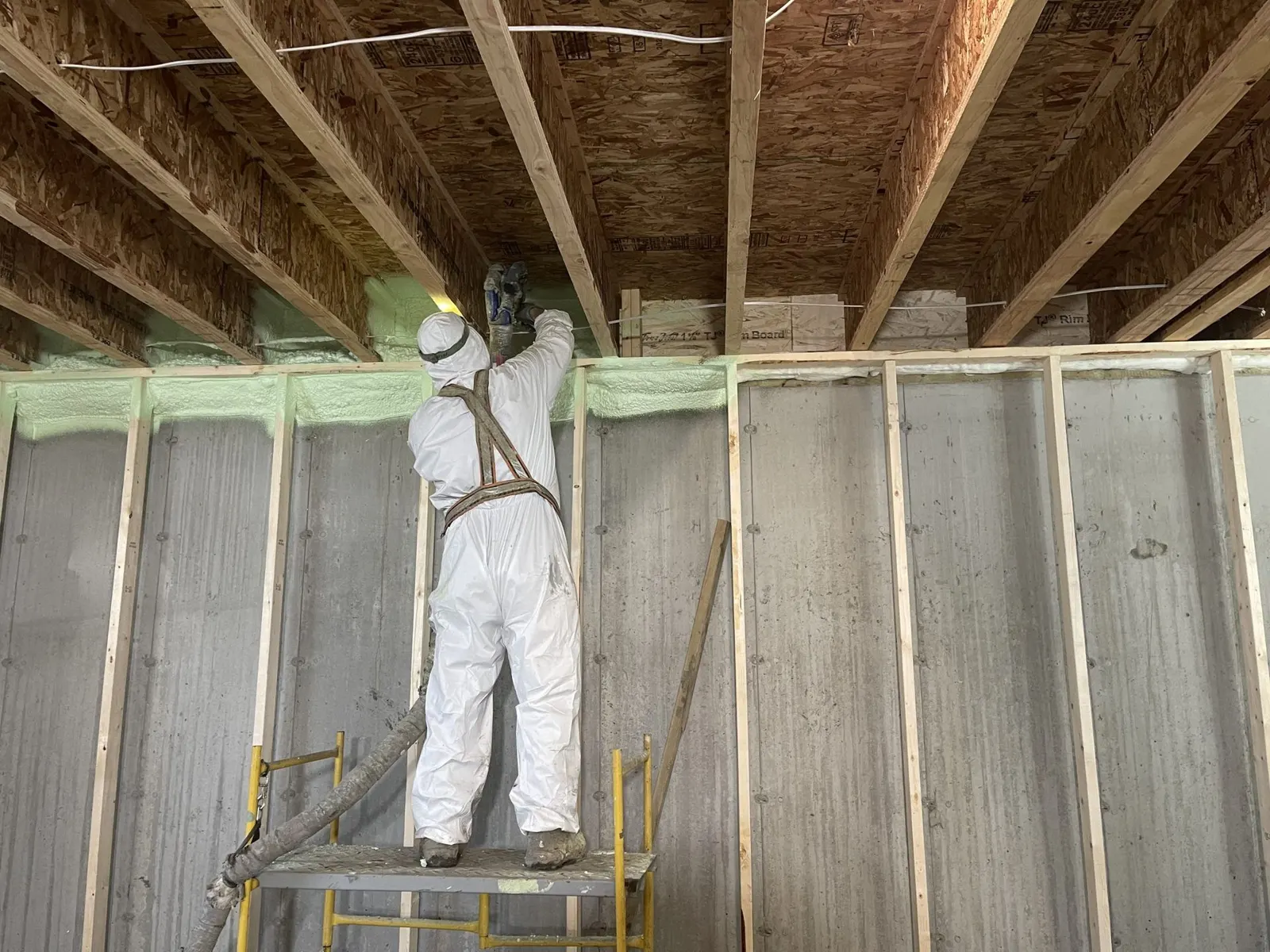 Rim joists, closed cell
Aires Spray Foam & Insulation installs closed cell spray foam in Calgary homes, basements, shops, barns and commercial buildings. We are based in Edmonton and Calgary, with a local team serving the Calgary region.
This page is about Calgary specifically: which spots are worth foaming in this climate and how a local project gets planned. For the basics of how open and closed cell differ, start with our spray foam insulation page.
A Calgary wall doesn't freeze once in November and stay that way until March. It freezes, thaws, freezes again. Each swing moves warm, damp indoor air into the cavity, and each time that moisture condenses on the sheathing. Batts get damp and slump. Loose fill packs down. The R-value you paid for shrinks a little every winter.
Closed cell foam bonds to the framing and sheathing, so there's no gap for air to move through. At 2 inches or more it also controls vapour, which means the moisture has nowhere to collect. And because it's rigid, it doesn't settle no matter how many chinooks it sits through.
It runs about R-6 to R-7 per inch, roughly double fibreglass at the same thickness. That matters in a 2x4 wall or a shallow rim joist where you can't add depth. The closed cell spray foam page has the full spec.
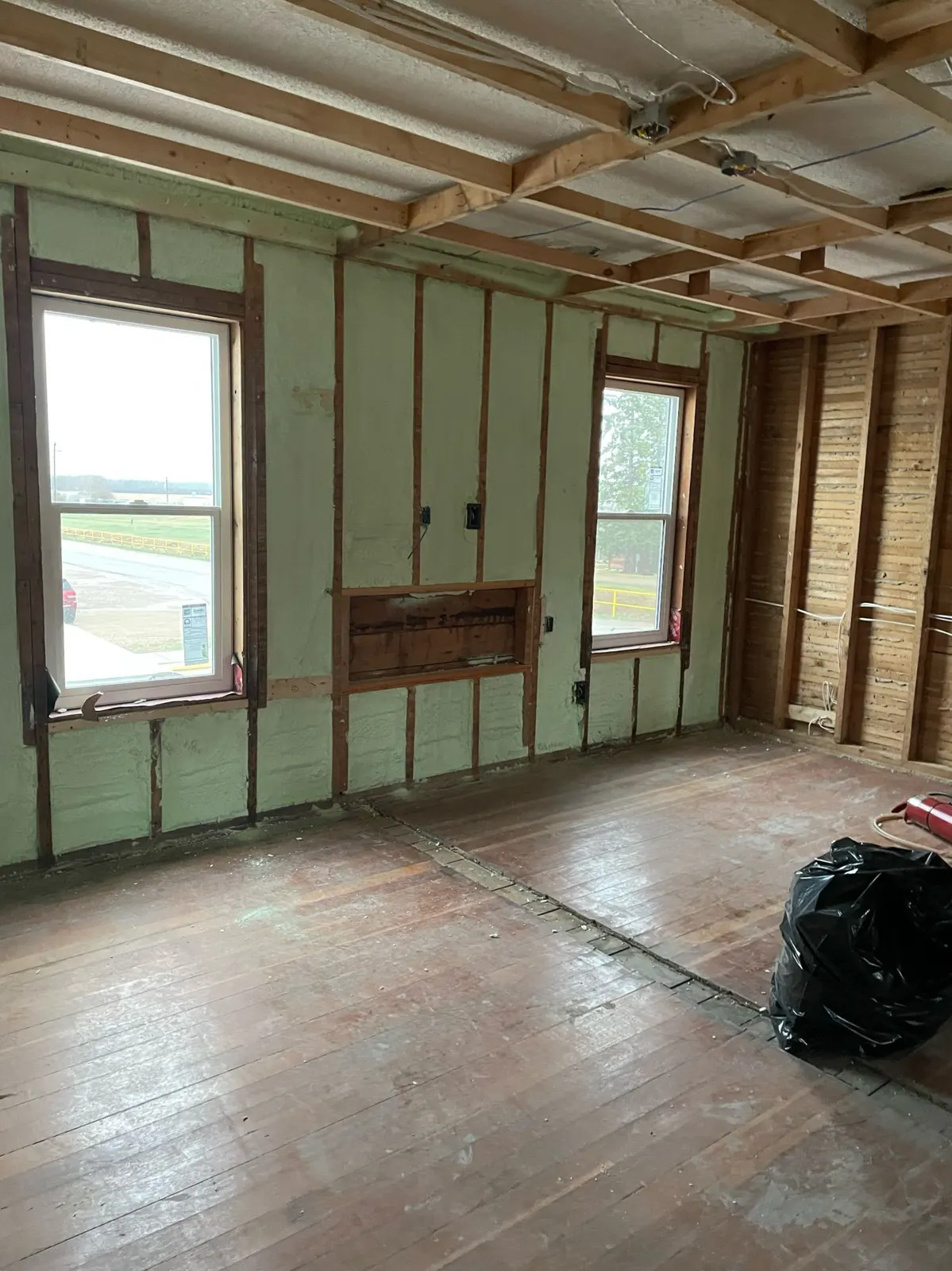
You don't need to foam the whole building. These are the places where foam does work that other insulation can't.
The band of framing where the floor sits on the foundation. It's full of small gaps and it's where you see frost in a cold snap. Foam seals every joist bay in one pass.
Foam goes straight against the concrete between the studs. There's no poly to tear and no gap behind a batt for damp air to sit in.
Cold floors over a crawlspace are a common complaint. Foam on the crawlspace walls and rim keeps that space closer to indoor temperature and cuts the drafts coming up through the floor.
Where a new addition ties into an older house, the joint is usually the leakiest spot in both. Foam fills the odd shapes where old framing meets new.
Finishing a basement is the one time the exterior walls are wide open. Foam them then, before drywall, and you won't have to open them again.
Steel buildings sweat when the outside skin swings from cold to warm. Foam on the inside keeps the skin warm enough that it stops dripping on equipment and animals.
The easiest time to foam a house is during a renovation, a basement development or a new build, when the studs are bare and nothing's in the way. Retrofitting foam into a finished wall means opening it up, so the timing matters.
For a basement development, call after the framing and rough electrical are in, and before your insulation inspection. We'll spray the walls and rim joists, trim the foam flush with the studs and leave it ready for drywall. More detail is on our residential spray foam page.
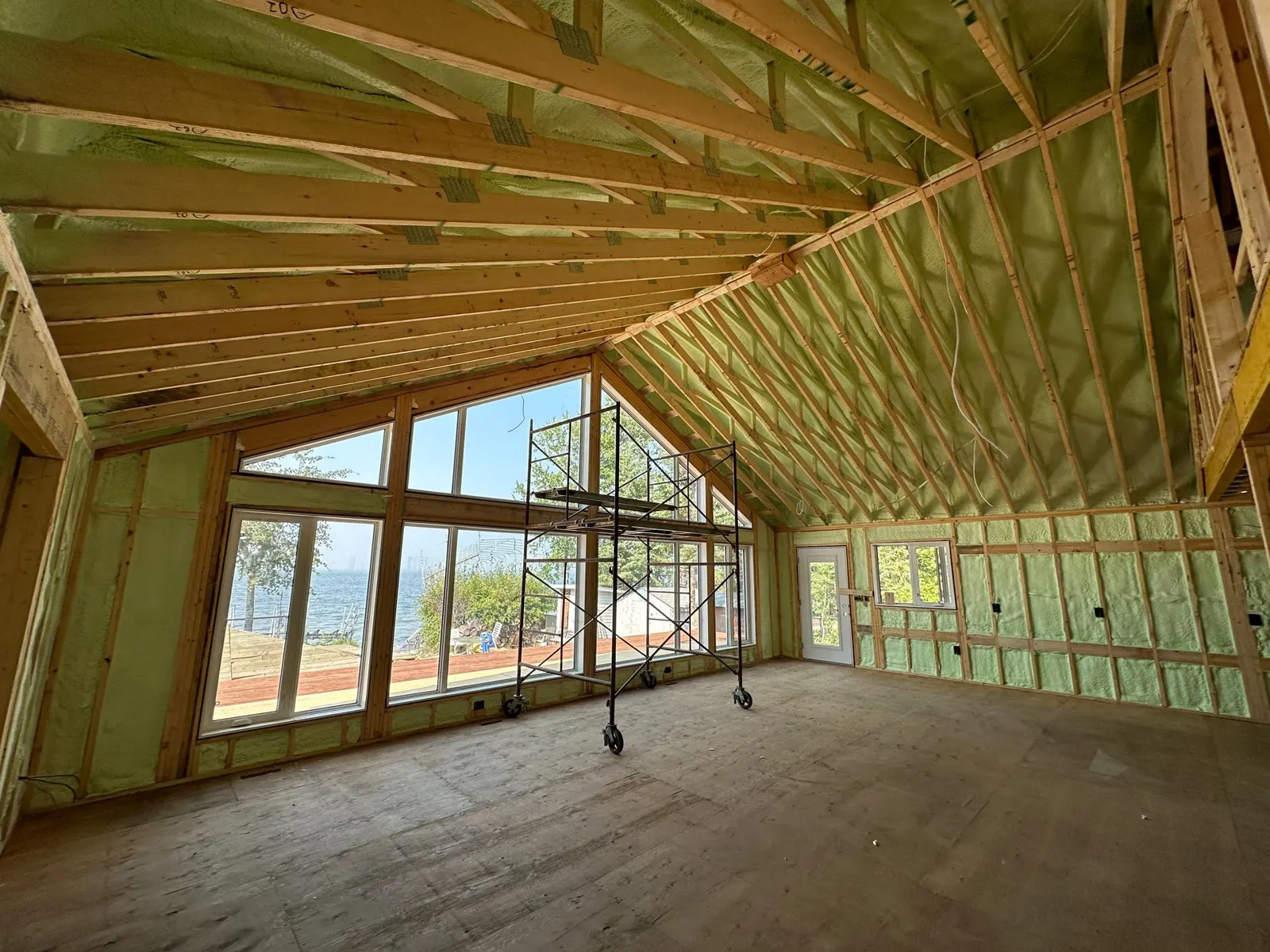
Out past the city limits, a lot of the buildings are steel. Steel skins go from -30°C to above freezing as fast as the air does, and warm, humid air inside a barn or a heated shop condenses on them. You end up with frost on the ceiling that melts and rains on whatever's underneath.
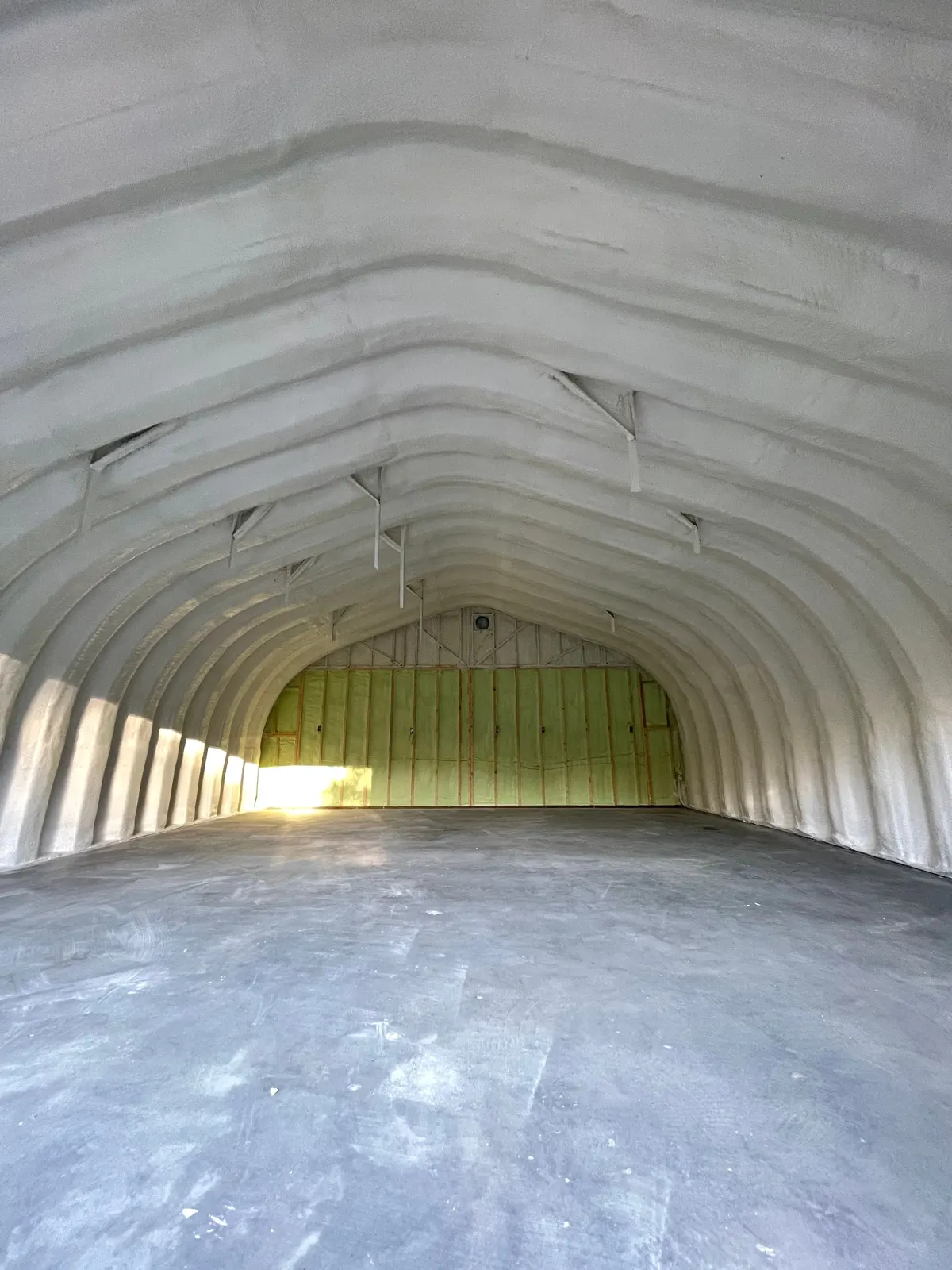
Closed cell foam on the inside of the skin stops that. It bonds to the steel, keeps the inner surface warm and keeps rodents from moving into the walls. In a building with exposed foam we can add a DC315 fireproof coating over it where code calls for a thermal barrier.
We insulate barns, machine shops and Quonsets across Alberta, and our agricultural spray foam page covers what we do for livestock and equipment buildings.
Our Calgary team plans each job around the scope, site access and equipment required.
Call as early as you can. We schedule the right crew and equipment for the project scope.
Photos, the address and rough measurements let us start the estimate by phone. We reply within 24 hours.
Priced by the board foot, with the areas, the thickness and the date. Free.
Most spray foam jobs are completed in one day, with quality and safety checks built into the work.
We walk the job with you, trim overspray and leave the site clean. One-year workmanship warranty.
For everything else we do in the city, including attics and fireproofing, see our Calgary insulation page. Our Edmonton spray foam page covers that region.
For rim joists, basement walls, crawlspaces and metal buildings, usually yes. It seals air and controls vapour in one layer, and it doesn't settle when chinooks freeze and thaw the cavity over and over.
Spray foam is priced by the board foot, one square foot at one inch thick. The total depends on area, depth and access. We measure, then give you a written quote. Estimates are free.
At 2 inches or more, closed cell foam generally acts as the vapour barrier, so you don't need separate poly. Your building inspector has the final say on your assembly.
Call as early as you can. Our Calgary team schedules by project scope, site access and equipment needs. Larger jobs receive a written schedule with the quote.
Yes, as long as the space is heated so the surfaces are in the right temperature range for the foam. Basements and enclosed new builds are usually fine. We check conditions before we spray.
Tell us what you're insulating and where. We'll book a walkthrough, measure it, and send you a written quote. Serving Calgary.