
Open cell spray foam in Edmonton and Calgary
The softer, lighter spray foam. It seals air and soaks up sound, and it costs less to fill a deep cavity. It isn't the foam for cold, damp spots.
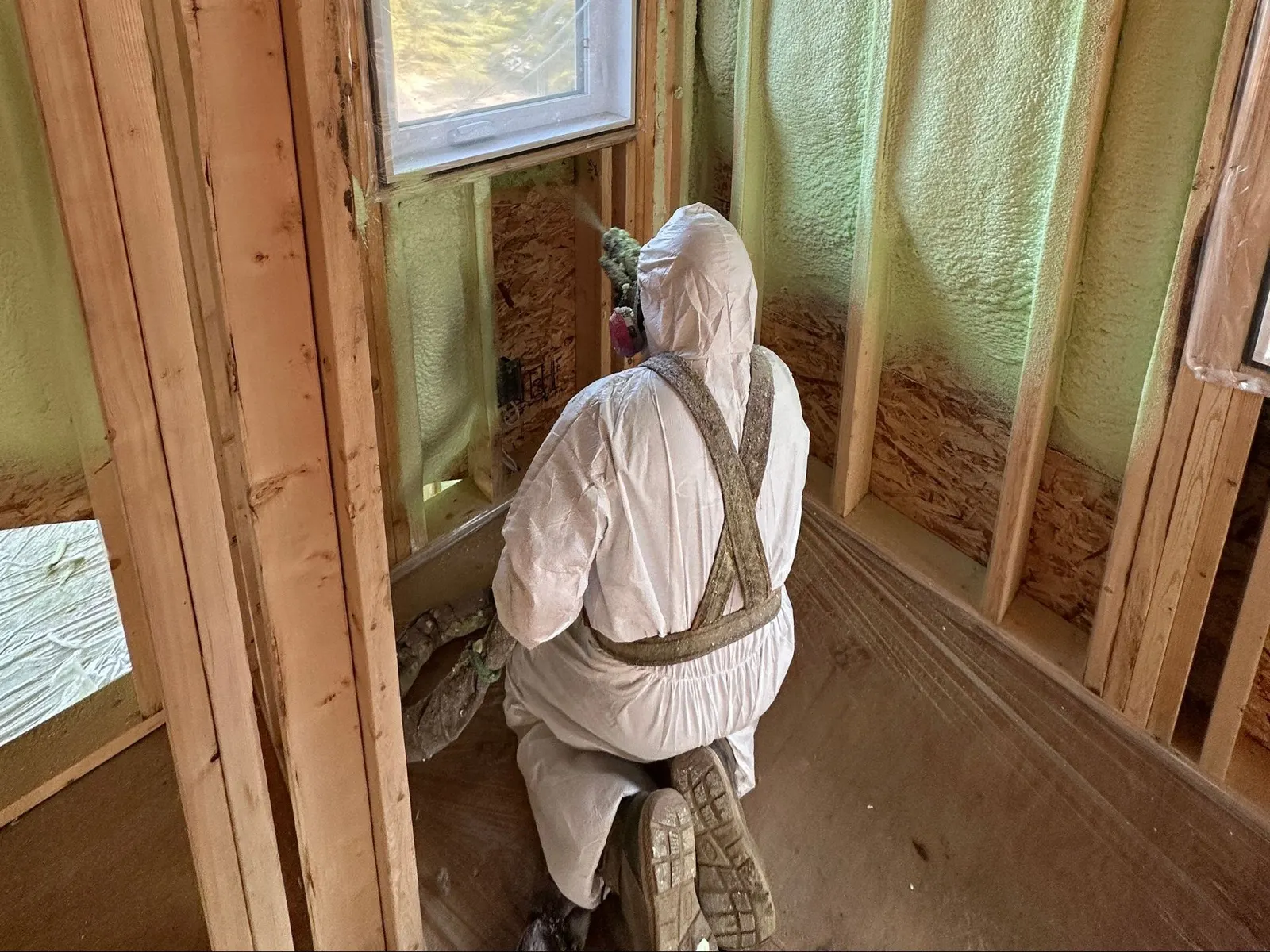 Spray day
Open cell spray foam is a soft, lightweight polyurethane insulation rated about R-3.5 to R-3.8 per inch that seals air leaks and absorbs sound but lets vapour pass through. Aires installs it in interior walls and some roof lines in Edmonton and Calgary.
The cells in open cell foam are left open, a bit like a sponge. That's why it's soft to the touch and why it lets vapour through. It expands about 100 times its liquid volume or more, so it fills a deep stud or rafter cavity with very little material.
Most of what we spray is closed cell, because so much Alberta work is basements, rim joists and steel buildings. Open cell is the other half of spray foam insulation, and in the right spot it's the better buy.
Open cell at a glance
Approximate figures. Products vary.
| Property | Open cell | Closed cell |
|---|---|---|
| Approx. R per inch | R-3.5 to R-3.8 | R-6 to R-7 |
| Density and feel | Light, soft, flexible | Dense, hard, rigid |
| Vapour | Passes through | Barrier at 2 in or more |
| Sound absorption | Better | Less |
| Adds structural strength | No | Yes |
Good jobs for open cell foam
Interior walls and floors
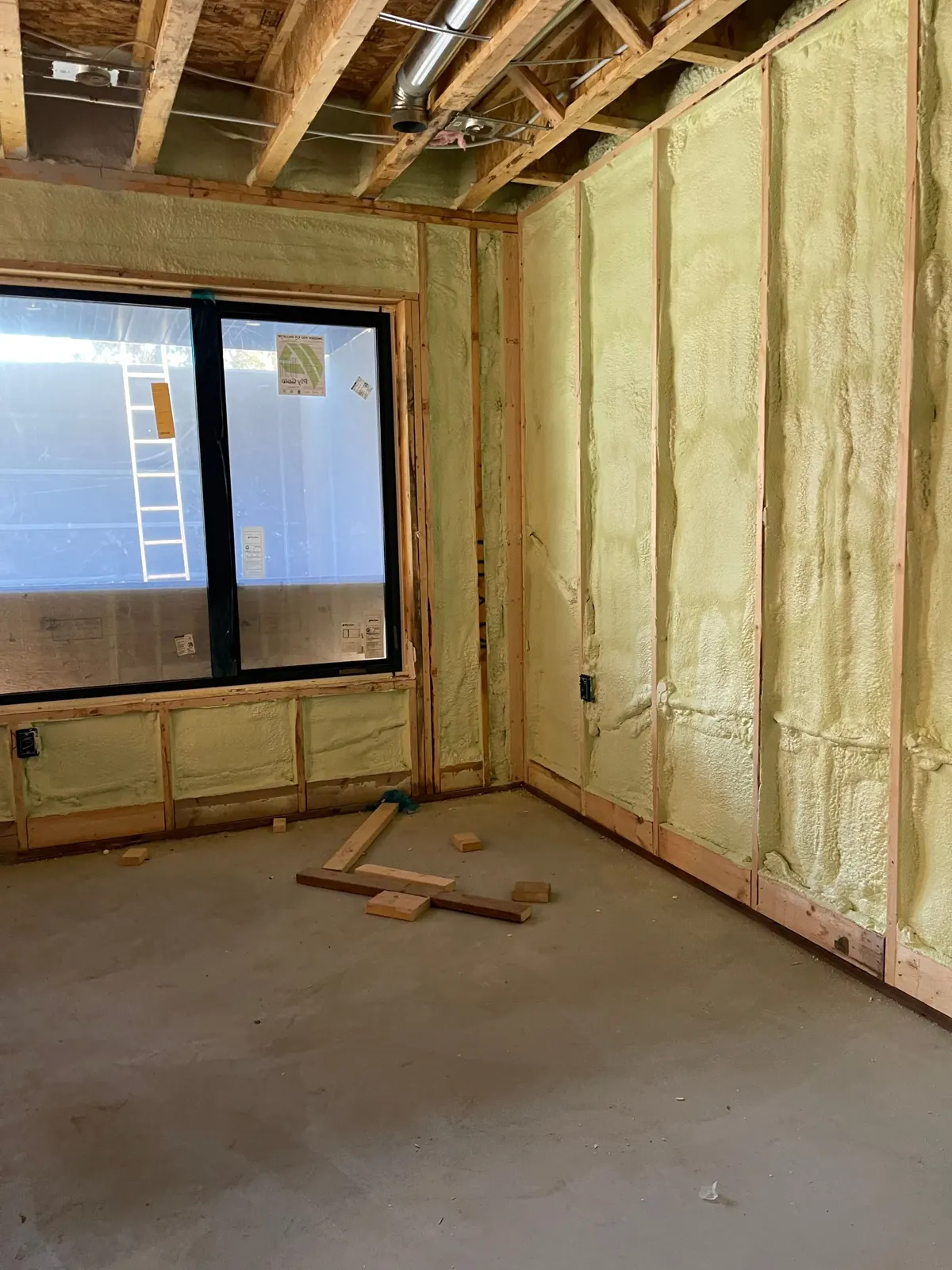
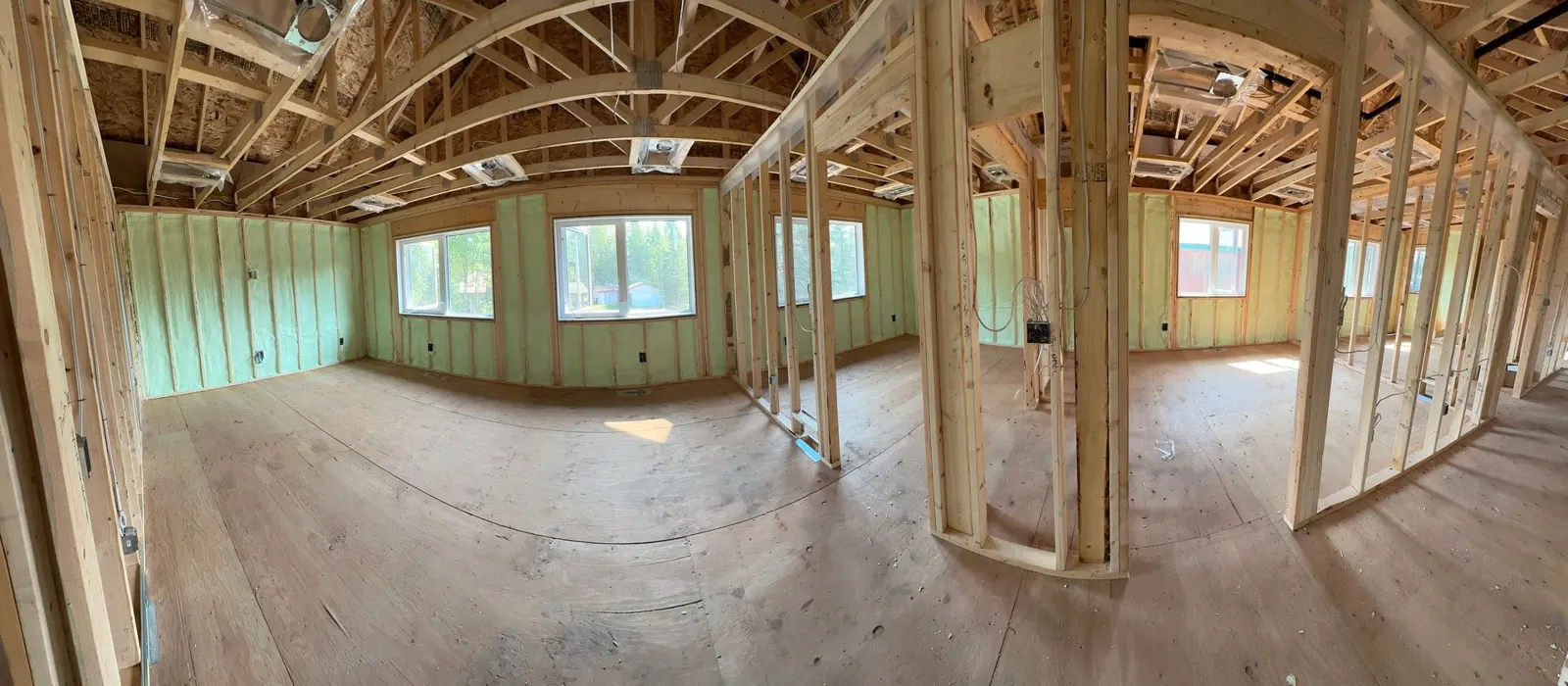
A bedroom next to a family room, a home office, a basement suite under the main floor. Open cell fills the cavity around wires and boxes and cuts down on sound moving through. Our soundproofing insulation page compares it with blown-in options.
Deep cavities on a budget
Because it expands so much, open cell fills a 2x8 or 2x10 cavity for less than closed cell would cost at the same depth. You get a full air seal, at a lower R-value per inch. On a big new-build wall that difference in material adds up quickly.
Unvented attic roof lines, in some designs
Some house designs move the insulation up to the underside of the roof deck and leave the attic unvented. Open cell is sometimes specified there. Whether it's allowed depends on the design, the climate zone and your inspector, so we follow the drawings.
Where open cell is the wrong foam
Open cell soaks up and passes moisture. In Alberta, that rules it out of a lot of places.
- Rim joists and basement walls. They're cold and damp, so use closed cell.
- Pole barns, Quonsets and steel shops. Condensation on the steel needs a vapour-closed foam bonded straight to it.
- Sea-cans and vans, for the same reason.
- Anywhere it could get wet from outside, like a crawlspace or below grade.
- Thin cavities where you need high R-value in a few inches.
If you're not sure, we'll look at the space and tell you which foam we'd use. Often the answer is both: closed cell on the rim joists, open cell between floors. Plenty of basement developments end up that way. The cold perimeter gets the dense foam, and the ceiling under the kitchen gets the soft foam so you hear less of the dishwasher.
How an open cell job runs
Same as any spray foam job. A free estimate on site or by phone, a written quote priced by the board foot, then spray day. Most jobs are done in one day, with quality and safety checks built into the work.
Our crew wears respirators and suits while spraying, the area is ventilated, and people stay out while the foam cures. Your installer gives you a re-entry time. Follow it. Work carries a one-year workmanship warranty.
See all our insulation services, or how we handle jobs in Calgary.
Related services
Questions we get asked
What is the R-value of open cell spray foam?
Open cell spray foam is about R-3.5 to R-3.8 per inch. That's about half of closed cell, so you need more depth to reach the same R-value.
Does open cell spray foam need a vapour barrier?
Usually, yes. Open cell lets water vapour pass through, so in most Alberta exterior walls a separate vapour barrier goes on the warm side. Your inspector confirms what your assembly needs.
Is open cell foam good for soundproofing?
It's the better of the two foams for sound. The soft, open structure absorbs noise, so it works well in interior walls, between floors and around bathrooms and home offices.
Is open cell cheaper than closed cell?
Per board foot, generally yes, because it expands much more and uses less material. But it has a lower R-value per inch, so compare quotes on the R-value you end up with, not the inches.
Can open cell foam go in a basement or rim joist?
We don't recommend it there. Open cell absorbs and passes moisture, and rim joists and basement walls are cold and damp. Closed cell is the right foam for those spots.
Get a free quote
Tell us what you're insulating and where. We'll book a walkthrough, measure it, and send you a written quote. Serving Edmonton, Calgary and across Alberta.