
Spray foam insulation in Edmonton and Calgary
Closed and open cell foam for homes, shops, barns and commercial buildings. Most jobs are completed in one day with documented quality checks.
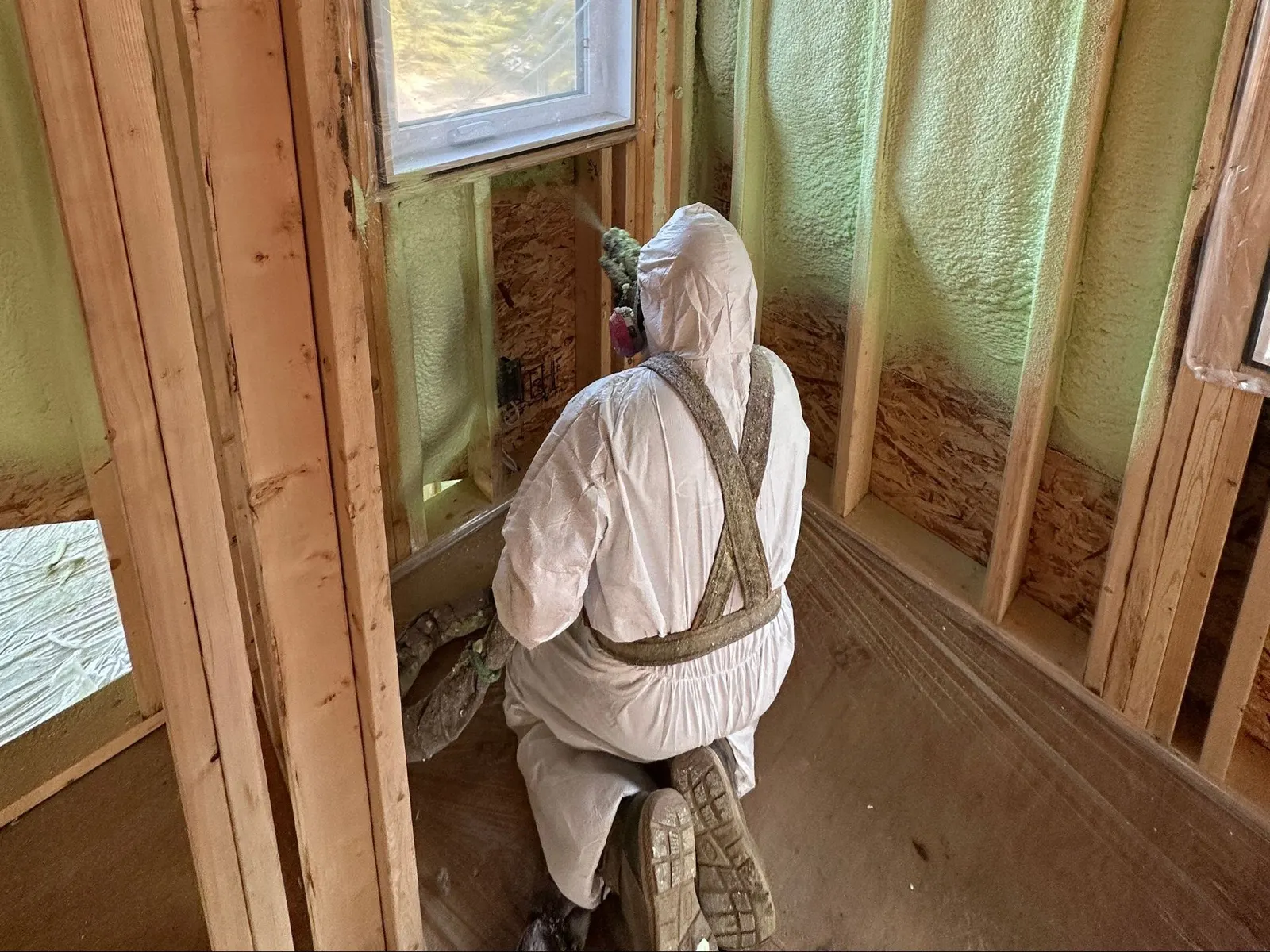 Wall cavities, closed cell
Spray foam insulation is a two-part polyurethane that's sprayed as a liquid, expands in seconds and sticks to the framing, sealing gaps as it insulates. Aires sprays it in homes, shops, farms and commercial buildings across Edmonton and Calgary.
The main reason we use it in Alberta is air. A wall packed with batts can still leak cold air around every wire, electrical box and window frame. Foam fills those gaps in the same pass that adds R-value. When it's -30°C outside for a week, that's the difference between a cold floor and a warm one.
We've sprayed foam for 11 years, mostly closed cell.
Open cell or closed cell
Both are polyurethane. They behave very differently once they've cured.
Closed cell
Rigid and sealed. About R-6 to R-7 per inch, roughly double fibreglass at the same thickness. Expands about 30 to 40 times its liquid volume. At 2 inches or more it's your vapour barrier too, and it stiffens the wall.
Closed cell spray foamOpen cell
Soft and porous. About R-3.5 to R-3.8 per inch. Expands 100 times or more, so it fills big cavities cheaply. Lets vapour through and soaks up sound, which makes it better for interior walls than cold, damp spots.
Open cell spray foamThe spots where foam earns its money
Foam costs more than batts or blown-in, so we put it where it beats them.
- Rim joists, where frost forms on the inside of the band by January
- Basement walls before you frame and drywall
- Cathedral and vaulted ceilings with no room for deep fill
- Shops, Quonsets and metal buildings where steel sweats
- Barns and grain storage
- Garages with a bedroom above
- Sea-cans, hunting units and vans
- New-build exterior walls
See residential spray foam for houses and commercial spray foam for retail units, warehouses and schools.
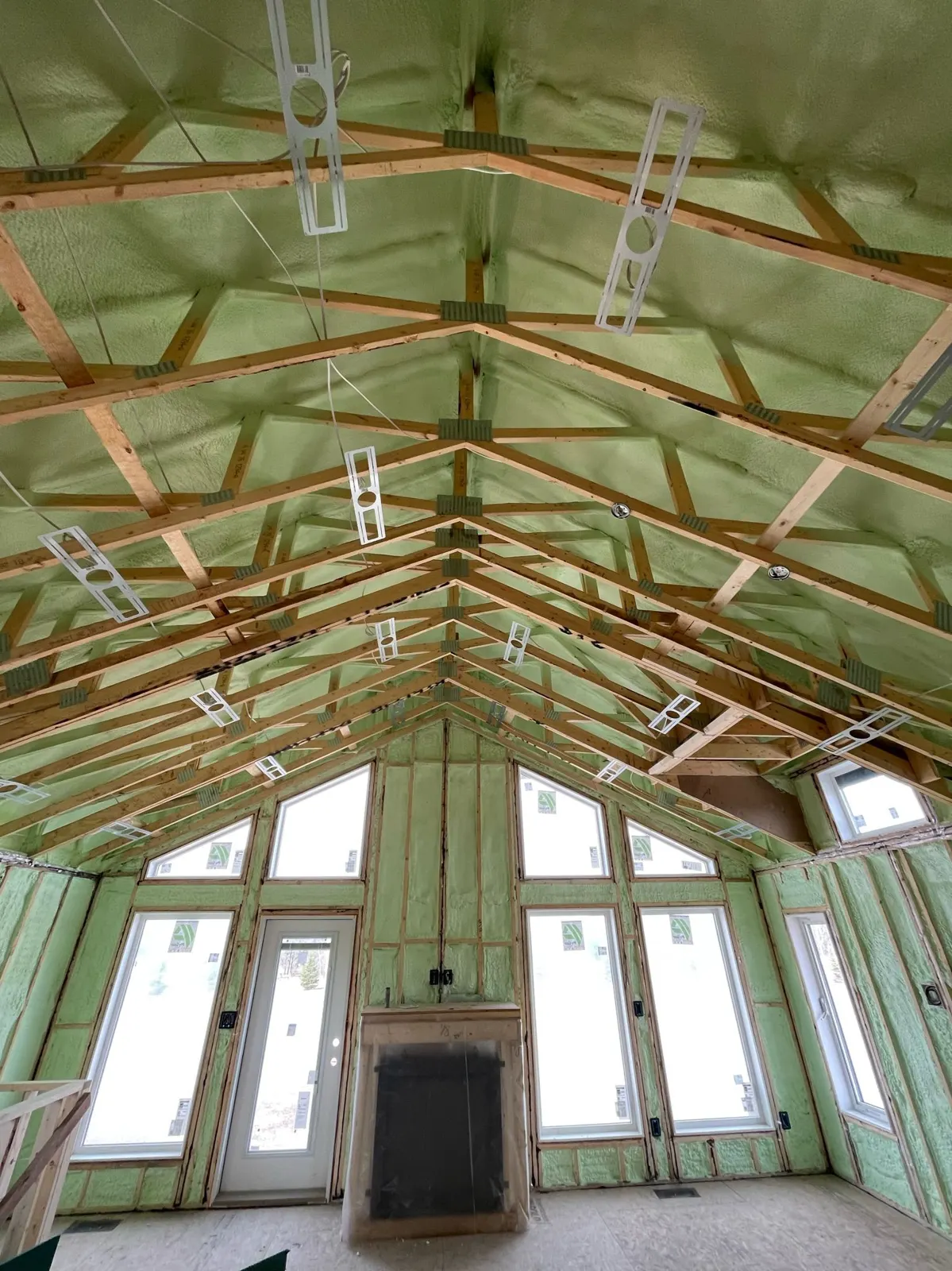
What closed cell foam does that batts don't
Why customers pay more for it.
- Roughly double the R-value of fibreglass at the same thickness
- Seals air leaks around wiring, boxes and window frames
- Removes the need for separate poly at 2 inches or more
- Adds racking strength to walls and roofs
- Not a food source or nesting spot for mice
- Resists moisture, so mould has less to grow on
What happens on spray day
Most spray foam jobs are completed in one day, with quality and safety checks built into every project.
Estimate
Free site visit or phone call. We look at the framing, check for moisture and measure the area.
Written quote
Open or closed cell, how many inches, how many board feet, and the price.
Prep and mask
We cover windows, floors, outlets and anything that shouldn't get foam on it.
Spray
The foam goes on in passes until it reaches the depth on the quote.
Trim and clean-up
Overspray trimmed flush with the studs, debris bagged and hauled away, and a final walkthrough with you.
Curing and getting back in
Spray foam is two chemicals that react as they mix at the gun. While it's being sprayed and while it cures, the area isn't a place for people or pets.
Our crew wears respirators and full suits while spraying. We ventilate the area, and nobody else goes in while the foam cures. Your installer will give you a re-entry time for your job. Follow it, even if the foam looks hard sooner.
Exposed foam in a shop or barn may also need a fire-rated coating over it. We apply DC315 thermal barrier for that.
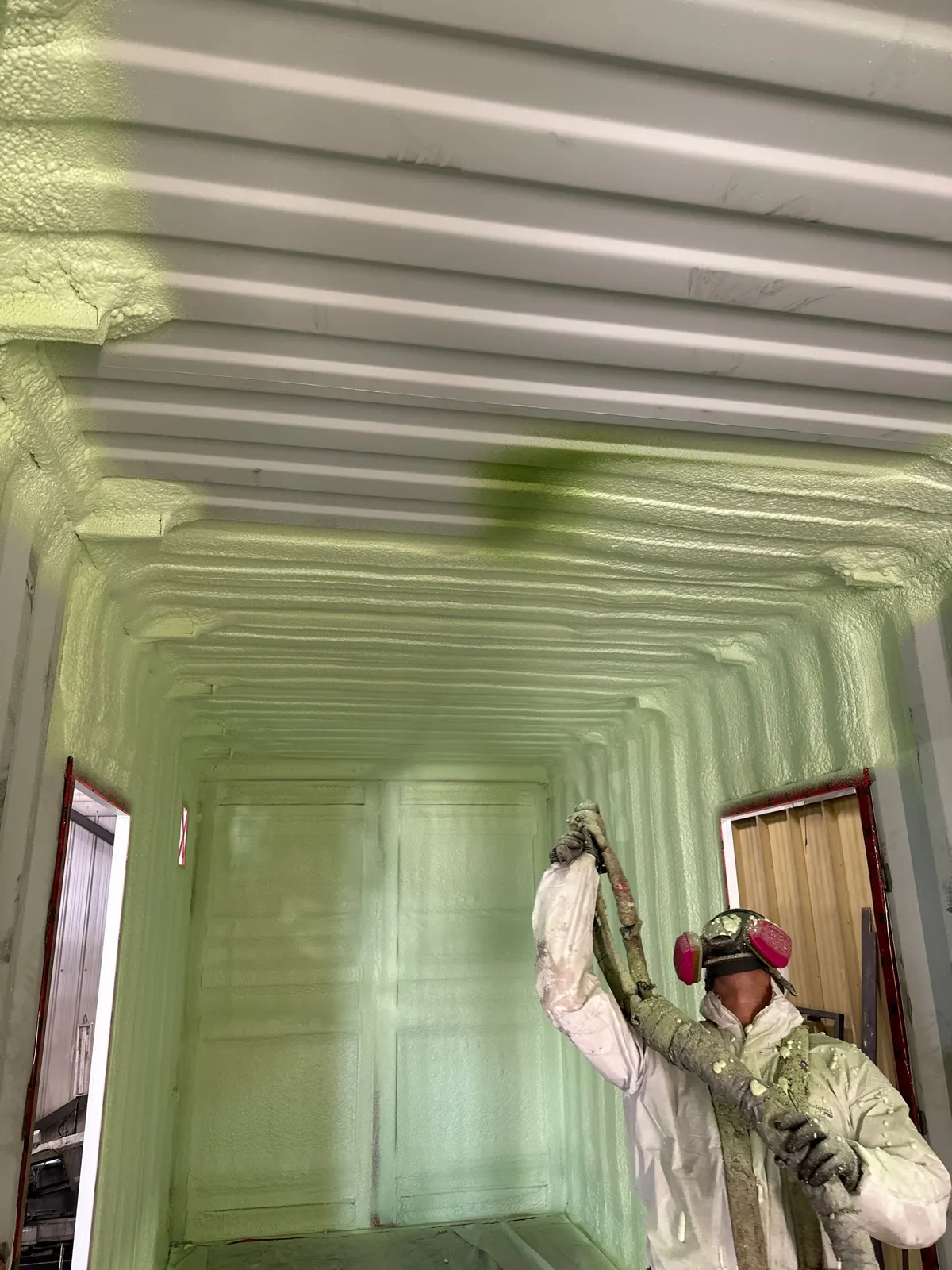
How spray foam is priced
Spray foam is priced by the board foot. One board foot is one square foot of foam at one inch thick. A 100 square foot wall at 3 inches is 300 board feet.
So the price comes down to area, depth and type. Closed cell costs more per board foot than open cell but you need fewer inches for the same R-value. Access matters too: an open new-build wall is quicker than a crawlspace. We don't post prices because no two jobs measure the same. The estimate is free and the quote is in writing.
Homeowners in Edmonton and nearby municipalities may be able to finance insulation through CEIP, repaid on the property tax bill. Aires is a CEIP Qualified Contractor.
When spray foam isn't the best value
A wide-open attic floor is the big one. You can blow in fibreglass or cellulose to R-50 for a lot less than foaming the same area, and it works just as well there. Our attic insulation page covers that.
Foam also isn't the fix for a wet basement. If water is coming through the wall, sort out the drainage first. And if the existing insulation is vermiculite, it needs asbestos testing before anyone, us included, disturbs it.
For the full list of insulation we install, see the insulation services page. Our crew is based in Edmonton and also takes jobs in Calgary.
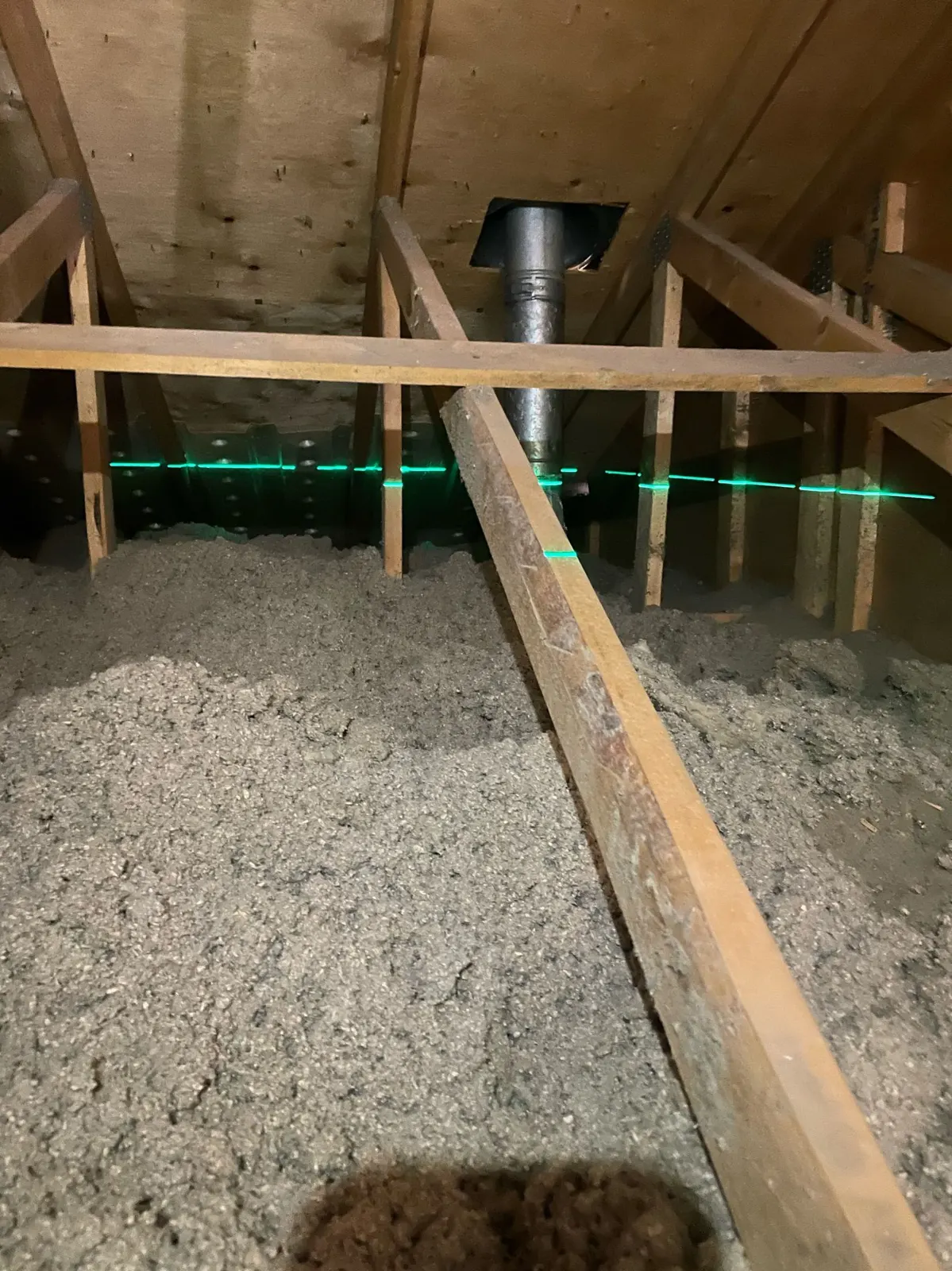
Related services
Questions we get asked
How much does spray foam insulation cost?
Spray foam is priced by the board foot: one square foot at one inch thick. Your cost depends on the area, the depth and whether it's open or closed cell. We measure on site and give you a free written quote.
Is spray foam safe once it's cured?
Our crew wears respirators and suits while spraying, the area is ventilated, and people stay out while the foam cures. Follow the re-entry time your installer gives you for your job before moving back into the space.
Does spray foam need a vapour barrier?
Closed cell foam at 2 inches or more works as its own vapour barrier in most wall assemblies. Open cell lets vapour through and usually needs one. Your building inspector makes the final call.
How long does spray foam last?
Spray foam doesn't settle or sag, and it's expected to last 50 years or more. It stays bonded to the framing, so the R-value you pay for stays in the wall.
Is spray foam worth it compared to batts?
On rim joists, basement walls, cathedral ceilings and metal buildings, usually yes, because foam seals air gaps batts leave open. On a wide-open attic floor, blown-in fibreglass or cellulose is often the better value.
How long does a spray foam job take?
Most of our spray foam jobs are finished in one day. Large shops, barns and commercial buildings take longer, and we'll give you a schedule with the quote.
Get a free quote
Tell us what you're insulating and where. We'll book a walkthrough, measure it, and send you a written quote. Serving Edmonton, Calgary and across Alberta.