
Quonsets
Curved corrugated steel that batts can't follow. Foam goes on in passes across the whole arch, and we can frame and spray the end walls too.
Barns, Quonsets, machine shops and grain storage on farms and acreages. Closed cell foam stops the steel from sweating and gives mice nothing to nest in.
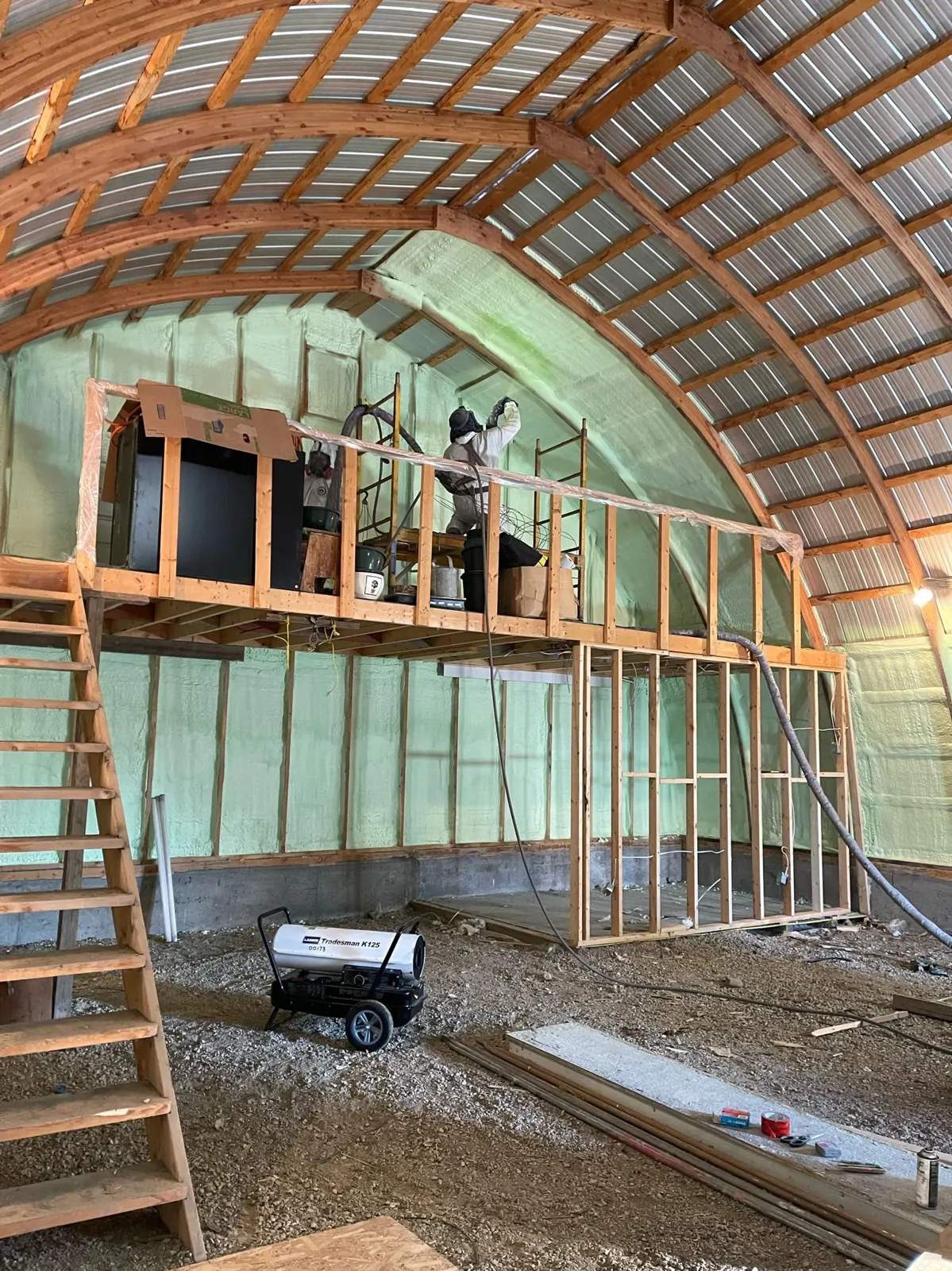 Arched barn, walls and end wall
Agricultural spray foam is closed cell polyurethane foam sprayed onto the walls and roofs of farm buildings to control temperature, humidity and condensation. Aires insulates barns, horse barns, Quonsets, grain storage and machine shops on farms and acreages around Edmonton and Calgary.
The problem in most farm buildings is water, not cold. Warm, damp air from animals, wet equipment or a heater hits the cold steel roof and turns into droplets. Then it drips on the hay, the feed and the tractor. Over a few winters the purlins rust, the wood framing stays damp and any batts you put up go flat and grey.
Closed cell foam sticks straight to the steel. Once the inside face of the panel is covered, moist air can't reach the cold metal, so the dripping stops. It also runs about R-6 to R-7 per inch, so you get real insulation from a fairly thin layer.
Closed cell isn't a food or nesting source for rodents, and it seals the gaps along the base and eaves where they get in. It won't fix an open door, but it takes away a warm place to live inside the wall.
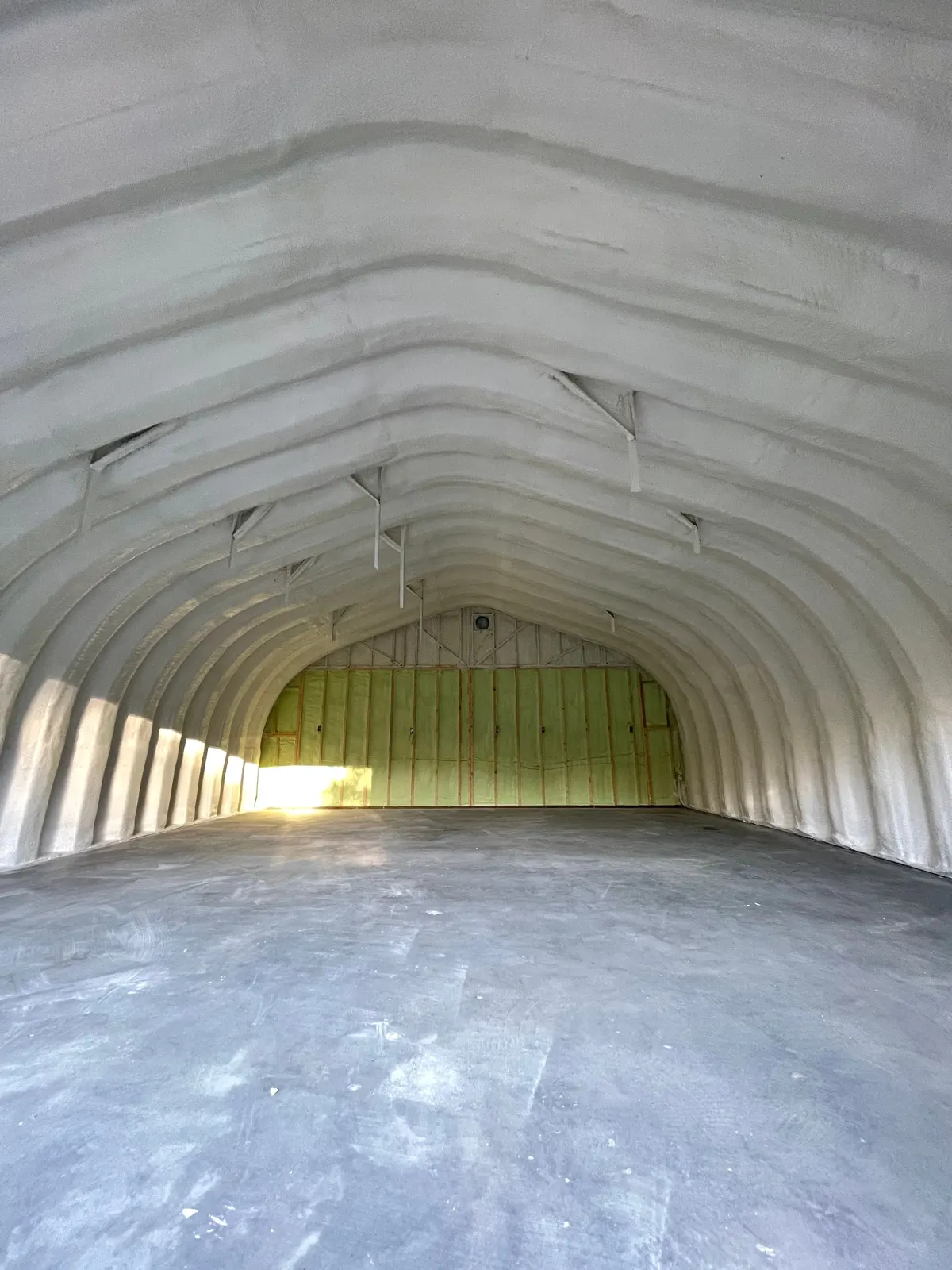
Every farm building has a different reason for wanting foam. These are the ones we quote.
Curved corrugated steel that batts can't follow. Foam goes on in passes across the whole arch, and we can frame and spray the end walls too.
Stalls, tack rooms and lofts. Owners want fewer drafts in the stalls and a tack room that stays dry.
Calving pens need to stay above freezing in February. A sealed, insulated shell makes the heater's job much easier.
Livestock barns run high humidity all year. Closed cell handles the moisture, and we spray around your fans and air inlets, not over them.
Steady temperatures and less condensation mean less spoiled grain along the walls and roof.
Heated shops where you fix equipment in winter. Foam on the walls and roof deck holds the heat and cuts the condensation that rusts tools.
Open cell foam is softer, cheaper per inch and good at absorbing sound. It also takes on water. In a barn with animals breathing, washdown hoses and steel walls at -30°C, that's the wrong material. It holds moisture against the structure, which is the exact thing you're trying to stop.
Closed cell is denser and sheds water, and at 2 inches or more it acts as its own vapour barrier. It also bonds to steel and wood and adds stiffness to the wall. For nearly every farm building we quote, closed cell is the answer. The comparison is laid out on our closed cell spray foam page.
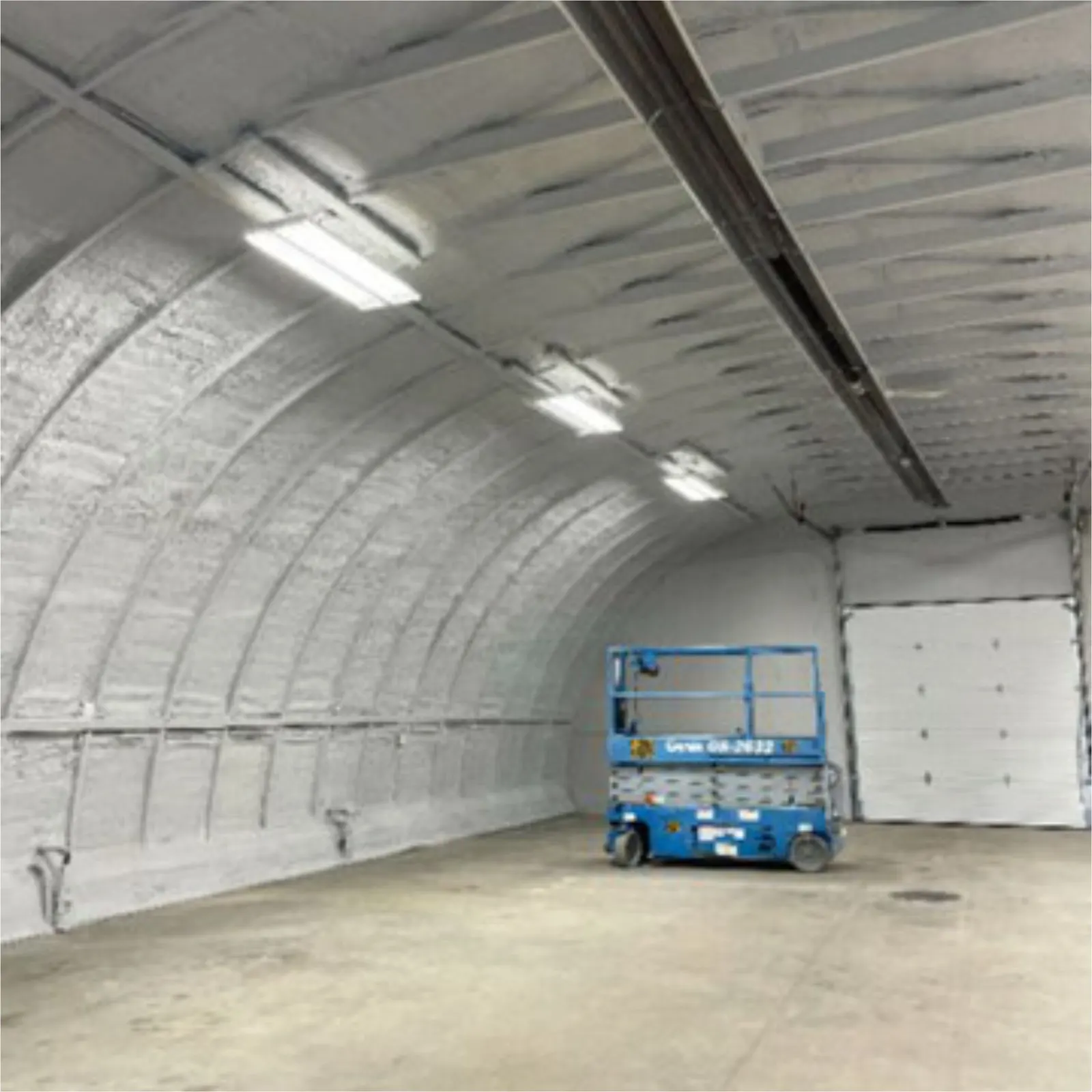
In most barns and shops the foam stays exposed, with no drywall or liner over it. Depending on how the building is used, codes and insurers often want a protective thermal barrier over that foam. We spray DC315, an intumescent coating that works as a 15-minute thermal and ignition barrier. It goes on in a single coat over the cured foam and dries white, which also brightens the inside of a dark Quonset.
Talk to your insurer and local inspector about what your building needs. We'll quote foam and coating together so it's one job.
Our Edmonton team serves acreages around Morinville, Gibbons, Bon Accord, Fort Saskatchewan, Stony Plain, Leduc and Wabamun. Our Calgary team serves acreages near Calgary. See our Edmonton and Calgary spray foam pages. Bigger farm buildings can take more than a day, and we'll give you a schedule with the quote.
For heated shops in town, see commercial spray foam. All of our foam work is part of our insulation services and comes with a one-year workmanship warranty.
Closed cell is the usual choice. It bonds to the curved steel, follows the corrugations and stops the condensation that drips off a bare Quonset roof. Batts and rigid board are hard to fit to that shape and leave gaps.
Usually not. Open cell soaks up moisture, and barns are wet places with animals, washdown and big humidity swings. Closed cell sheds water and holds up much better in those conditions.
Closed cell foam is not a food or nesting source for rodents, unlike batts, and it seals the gaps they use to get in. It won't stop a determined mouse at an open door, but it takes away the comfortable places to live inside the walls.
Often it does, depending on how the building is used. We can apply DC315, a thermal and ignition barrier coating, over exposed foam. Ask your insurer and local inspector what your building needs.
Foam is priced by the board foot (one square foot, one inch thick). The cost depends on the building size, the thickness and whether you need a coating over it. We come out, measure and give you a written quote for free.
Tell us what you're insulating and where. We'll book a walkthrough, measure it, and send you a written quote. Serving Edmonton, Calgary and across Alberta.